

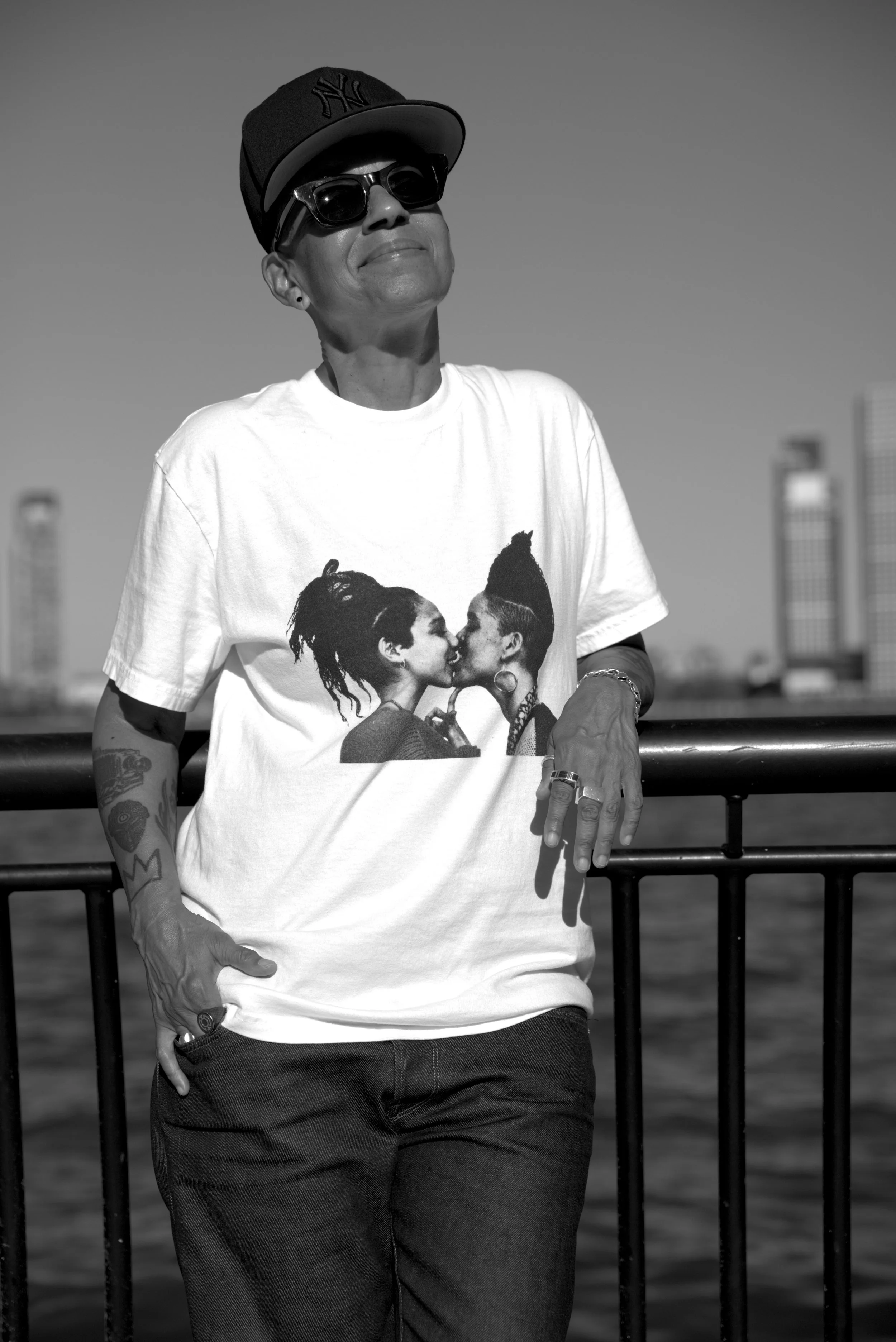
Lola Flash wearing the tee in a self-portrait, 2026.
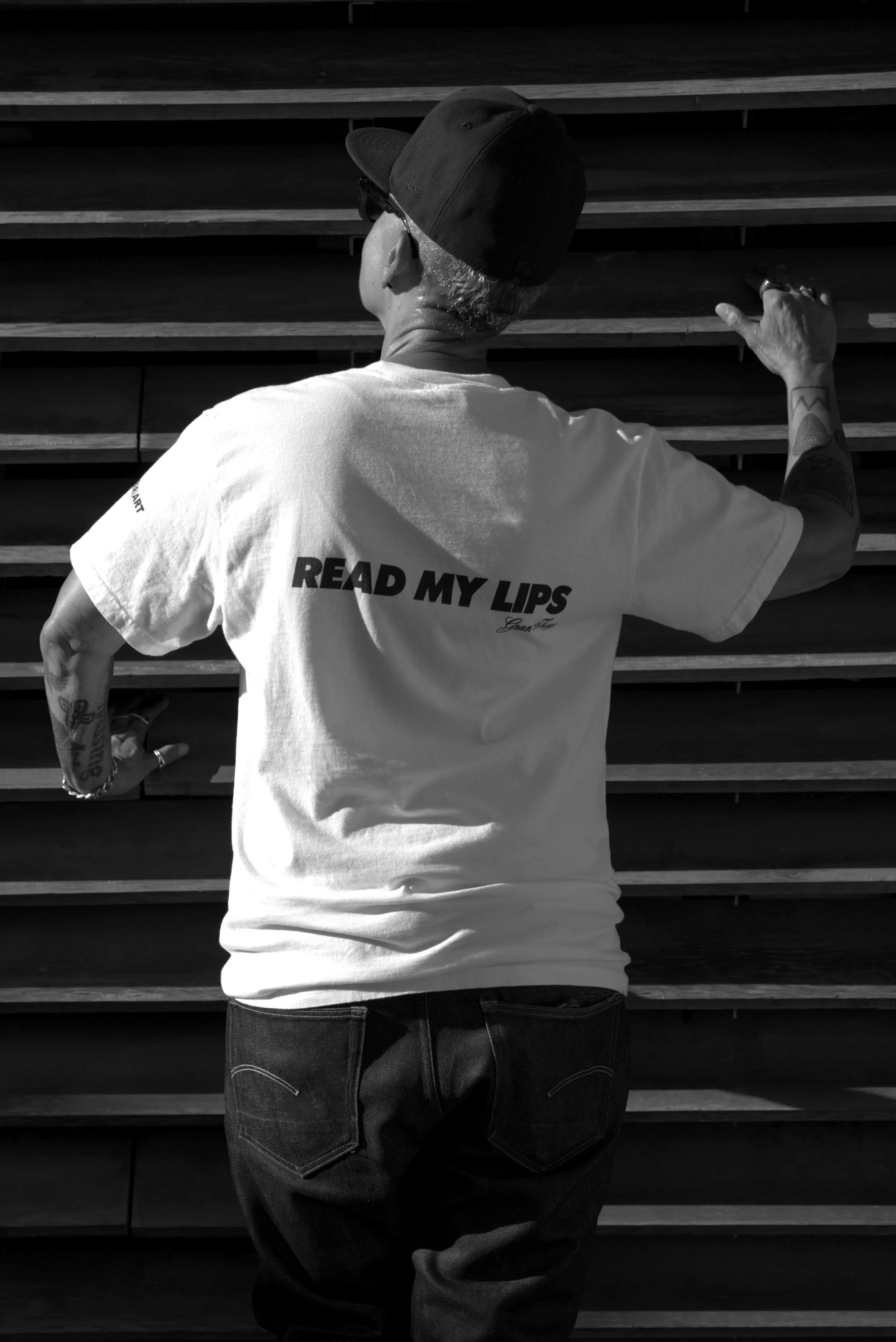
Lola Flash wearing the tee in a self-portrait, 2026.
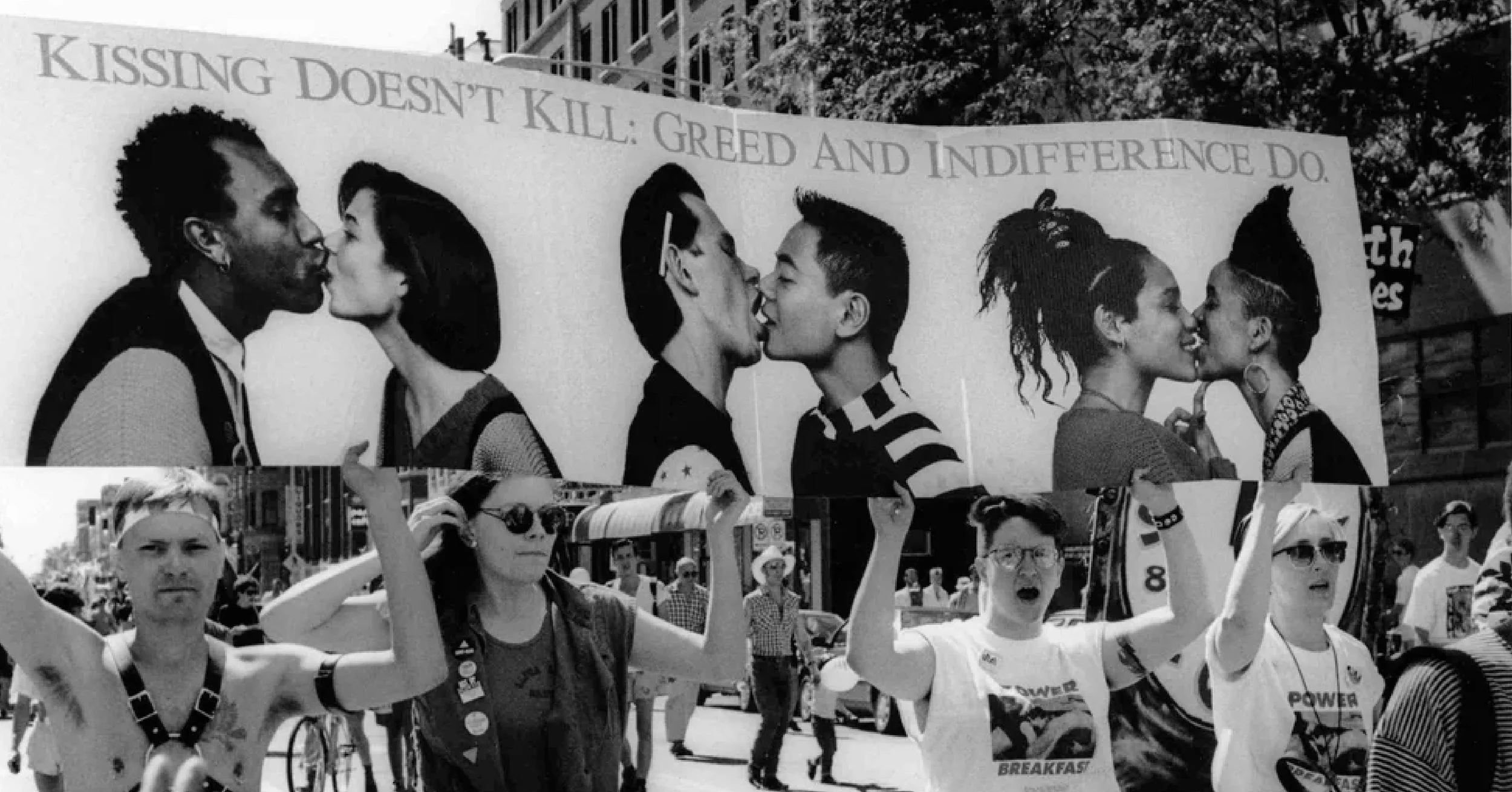
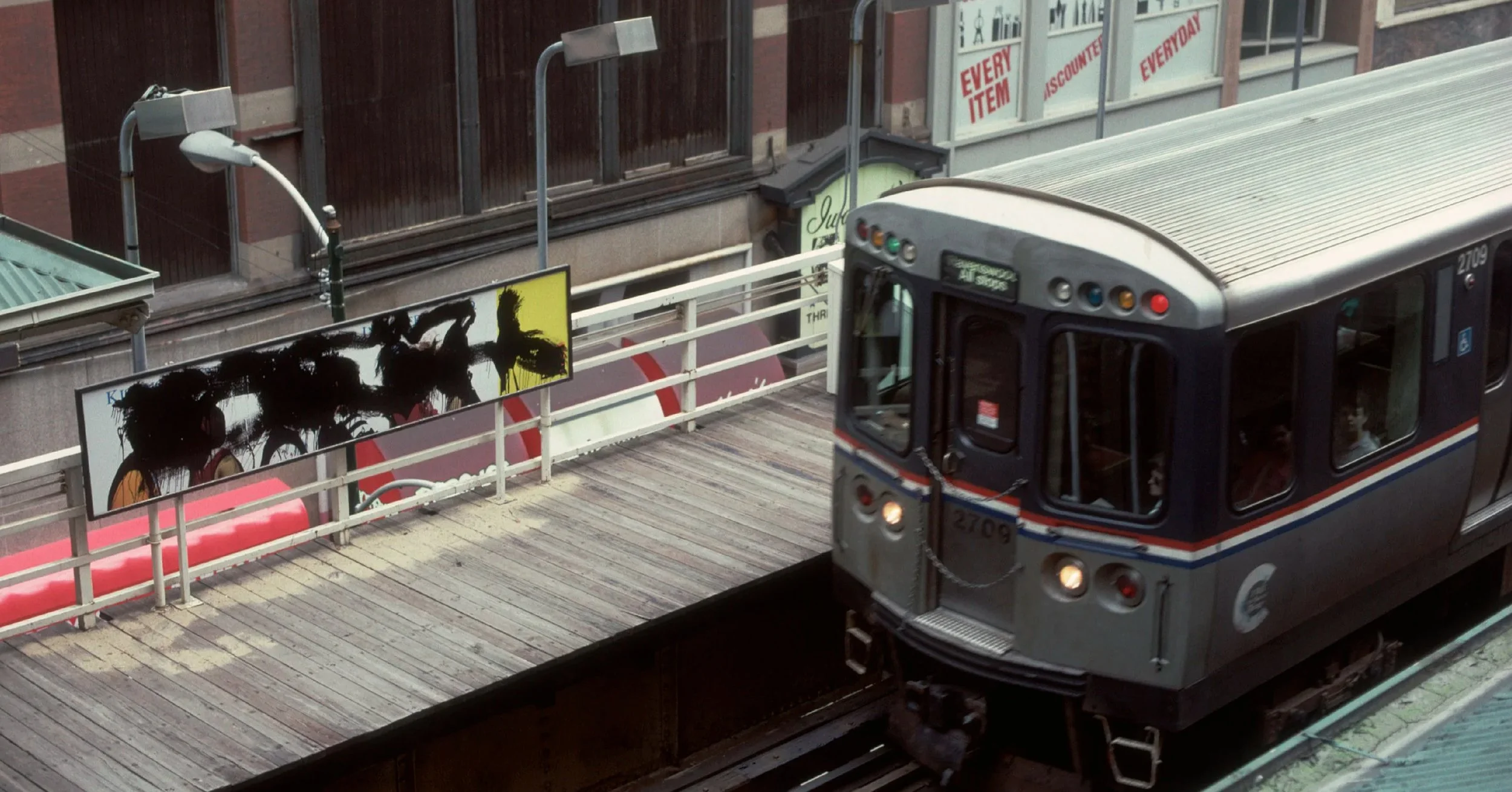
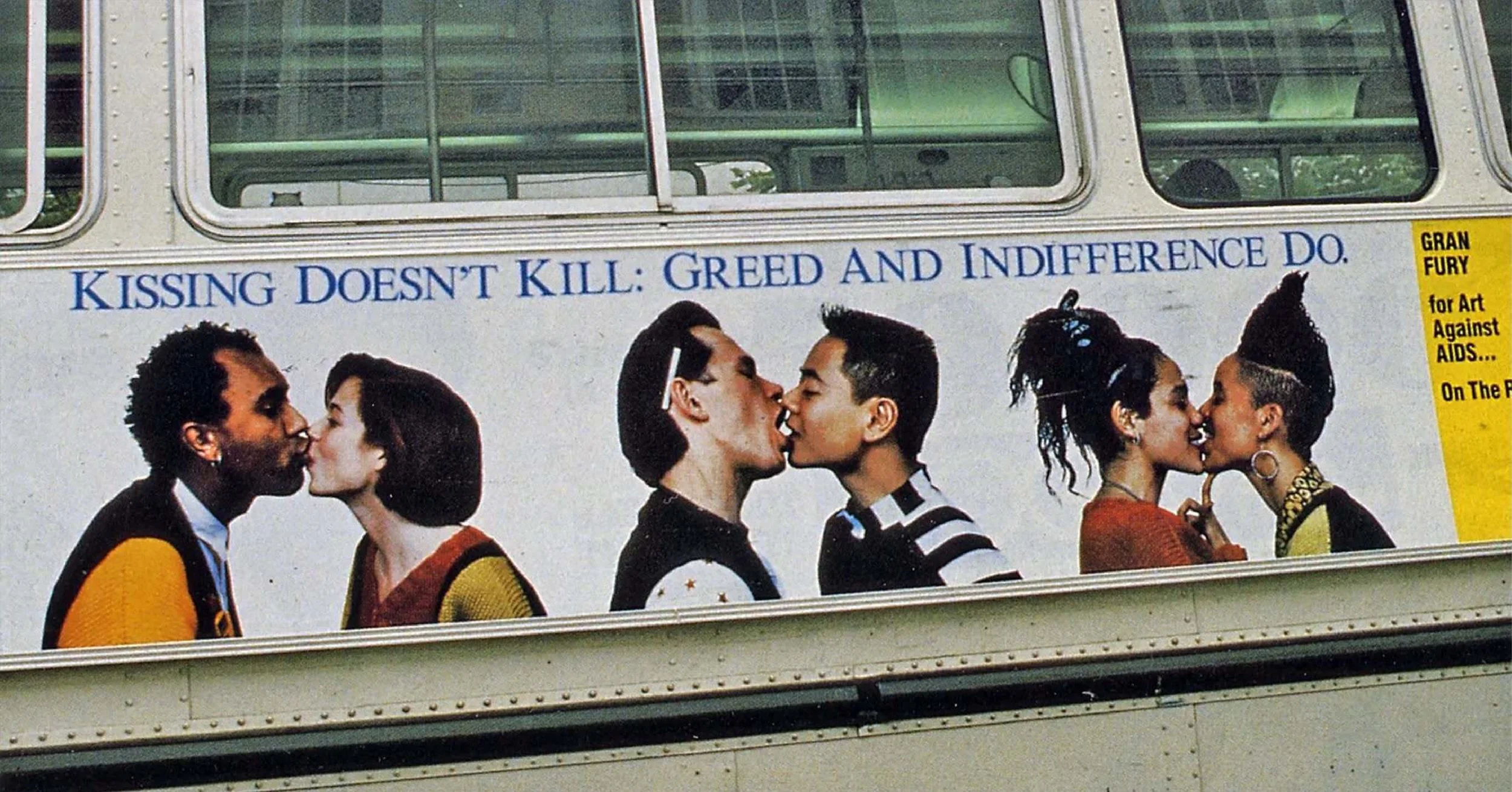
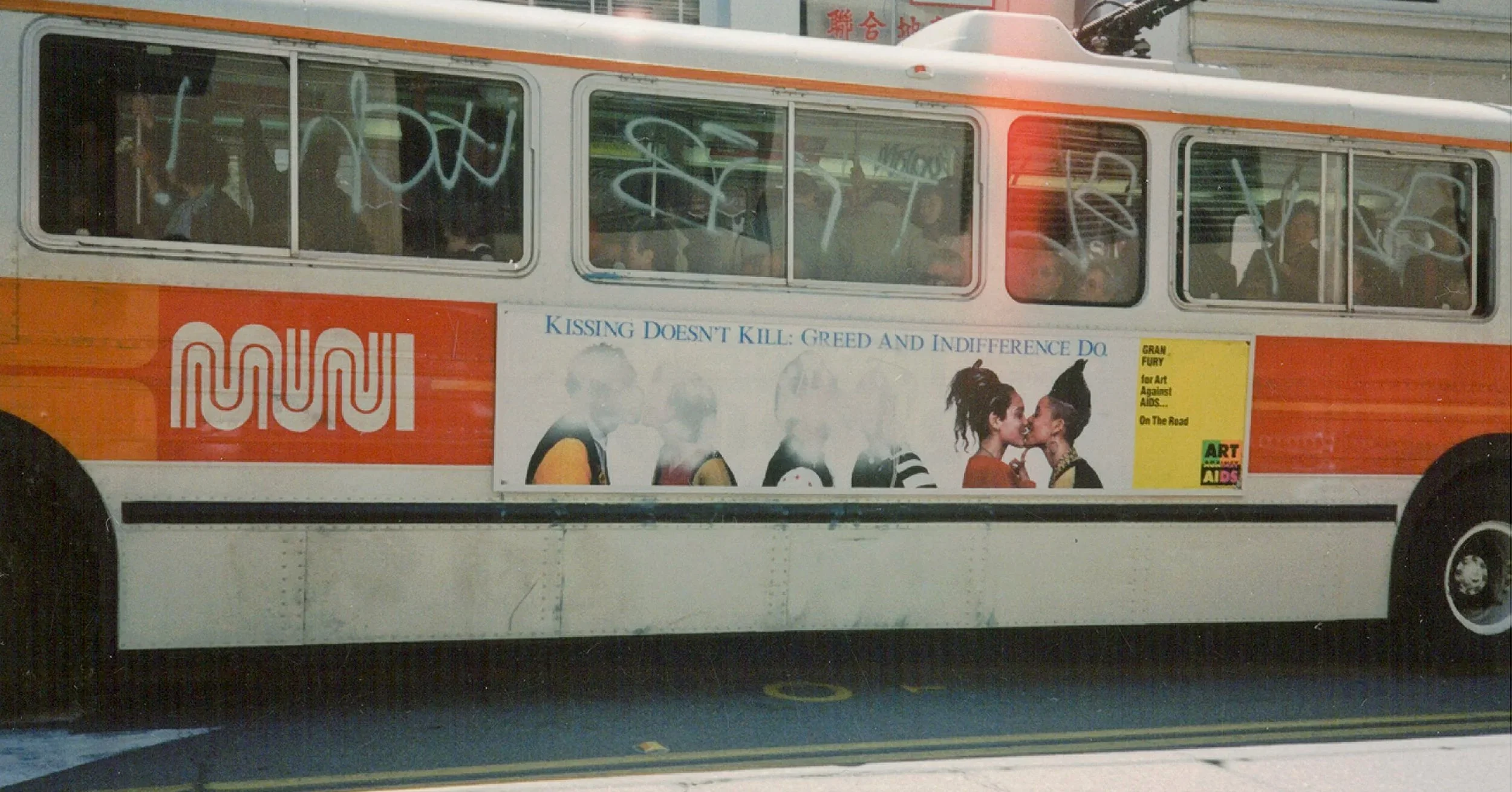
THE QUEER|ART TEE SHOP presents its latest edition, adapted from “Kissing Doesn’t Kill: Greed and Indifference Do,” the 1989 political art action by Gran Fury.
The iconic campaign used advertising strategies to reach a broad audience with information about AIDS and its complex issues. The original campaign featured two Queer|Art|Mentorship Mentors: Julie Tolentino and Lola Flash, who are now depicted on our new shirt. Produced with the collective's blessing, the shirt honors both the urgency of the original action and two of the artists who helped bring it into the world.
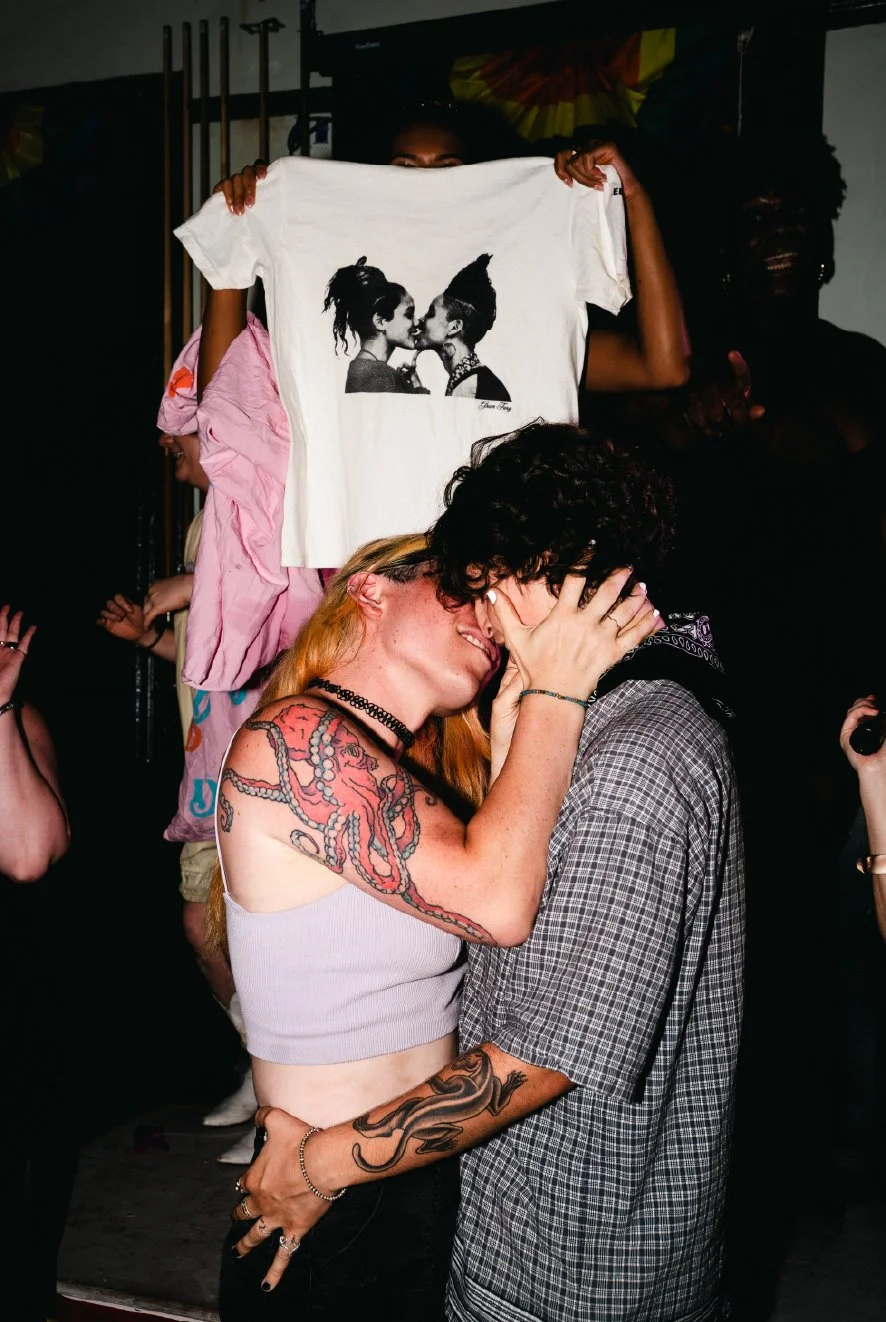
The shirt inspiring spontaneous “kiss-ins” at DYKES 4 DOLLS (2026), photo by Katherine Cardinale.
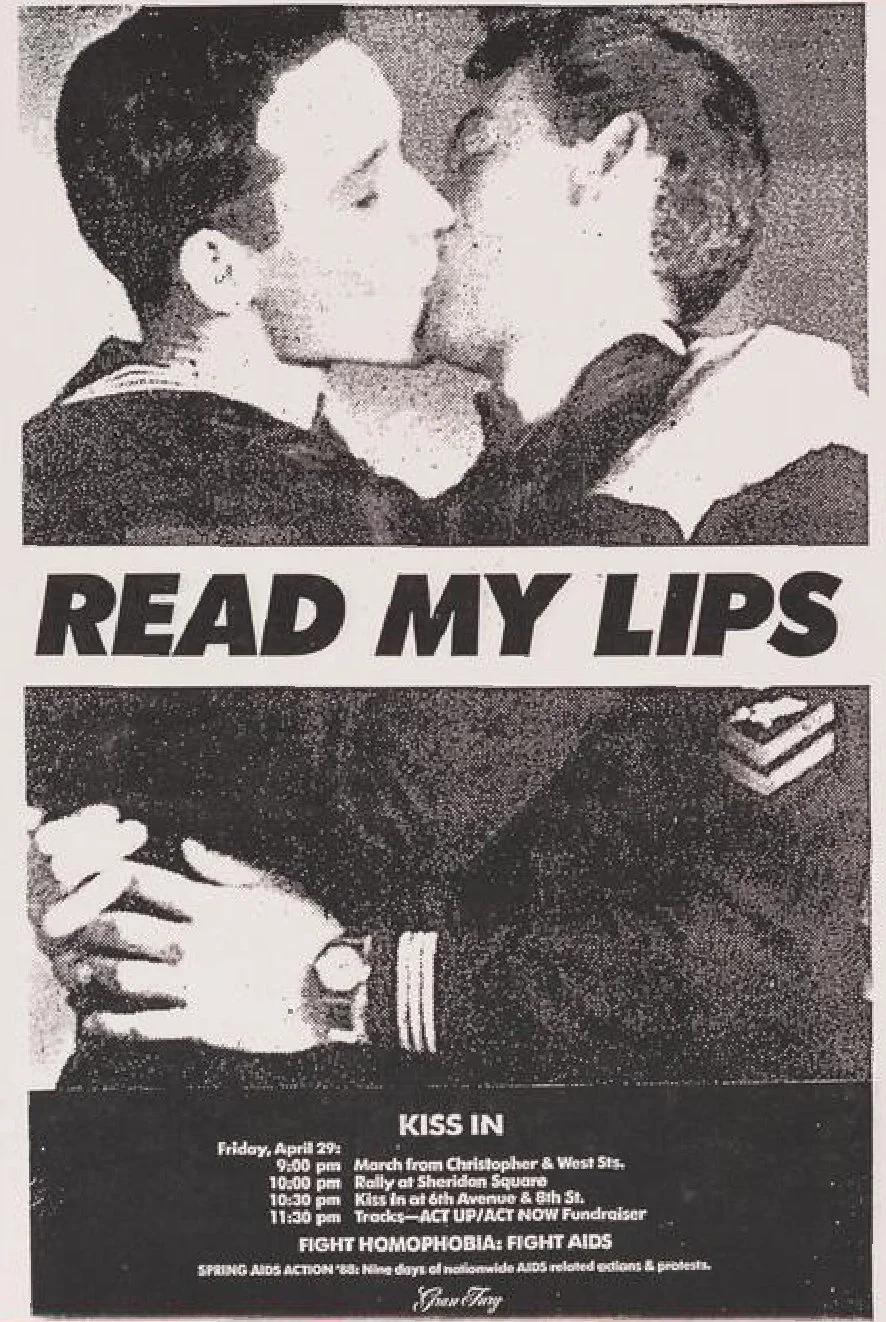
Read My Lips, by Gran Fury
The original image was designed to resemble fashion advertisements, using the visual language of marketing to shift public opinion about AIDS. Here, that legacy of queer activist art is honored, paying tribute to the collectives whose provocations made space for future organizations like Queer|Art to exist. Their strategies of visibility and care continue to inform how we understand what queer art can do in public.
This tee is crafted from 100% ring-spun cotton and garment-dyed for an easy, lived-in softness. It is digitally printed with water-based ink and fits true to size with a relaxed silhouette and minimal shrink. The fabric is sturdy and perfect for everyday wear–not too heavy, not too light.
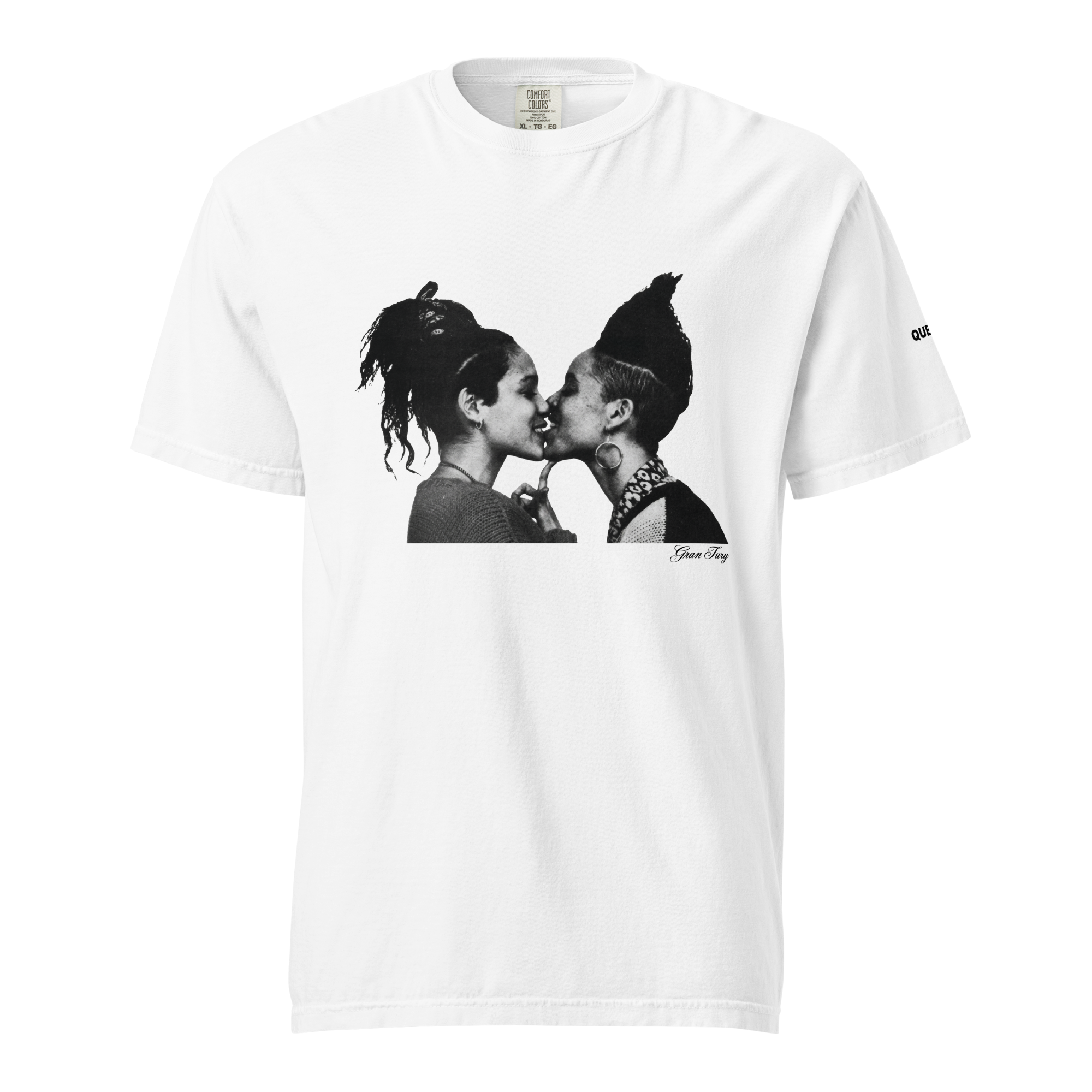
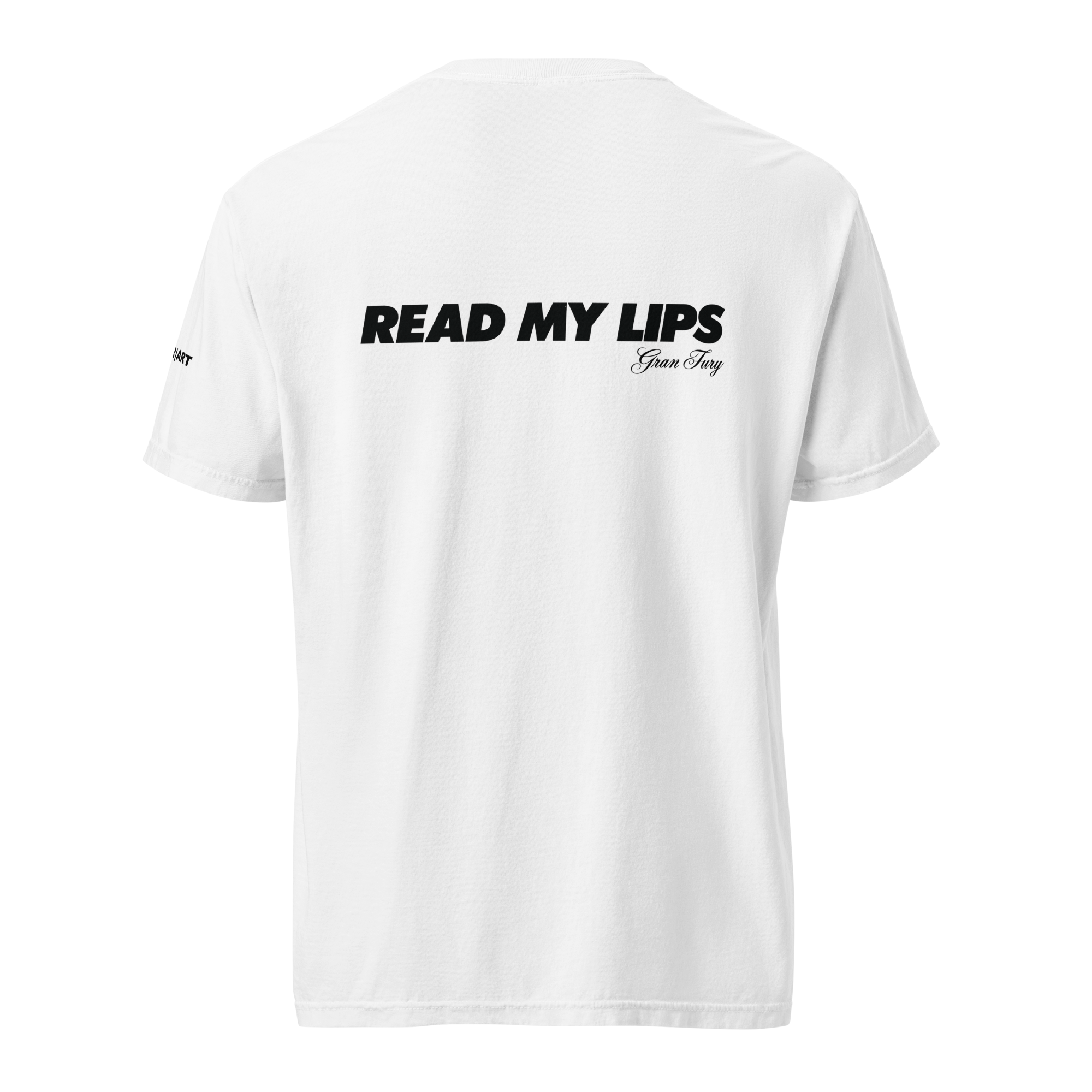

Offered for a limited time, this tee is available in exchange for a donation to Queer|Art beginning at $50, with increased contributions warmly encouraged. All profits from the TEE SHOP will directly benefit Queer|Art's mission of serving a diverse and vibrant community of LGBTQ+ artists across generations and disciplines.

Megami photographed by Davide Laffe
Gran Fury formed out of the AIDS direct action group, ACT UP, to give voice to the political issues surrounding the earliest days of the AIDS crisis in America. This eleven person collective devised appropriation strategies to simultaneously utilize and critique Madison Avenue vernaculars, and circumnavigate questions of access. Named for the automobile used by the New York City police force (and also sounding like "big anger"), Gran Fury created works for the public sphere that drew attention to medical, moral, and public issues related to the AIDS crisis. Gran Fury produced work ranging from flyers announcing AIDS activist demonstrations to billboards, bus sides and bus shelters that challenged medical facts, public perceptions, and political realities. Gran Fury’s work drew critical praise from both the commercial and art worlds, and is notable for the impact it had on the history of the AIDS crisis. The work has been featured in public art commissions for The Whitney, The New Museum, The Venice Biennale, Creative Time and The Public Art Fund, in publications like ArtForum, Bomb and The New York Times, and is in the permanent collections of MoMA, The Whitney and The New Museum.