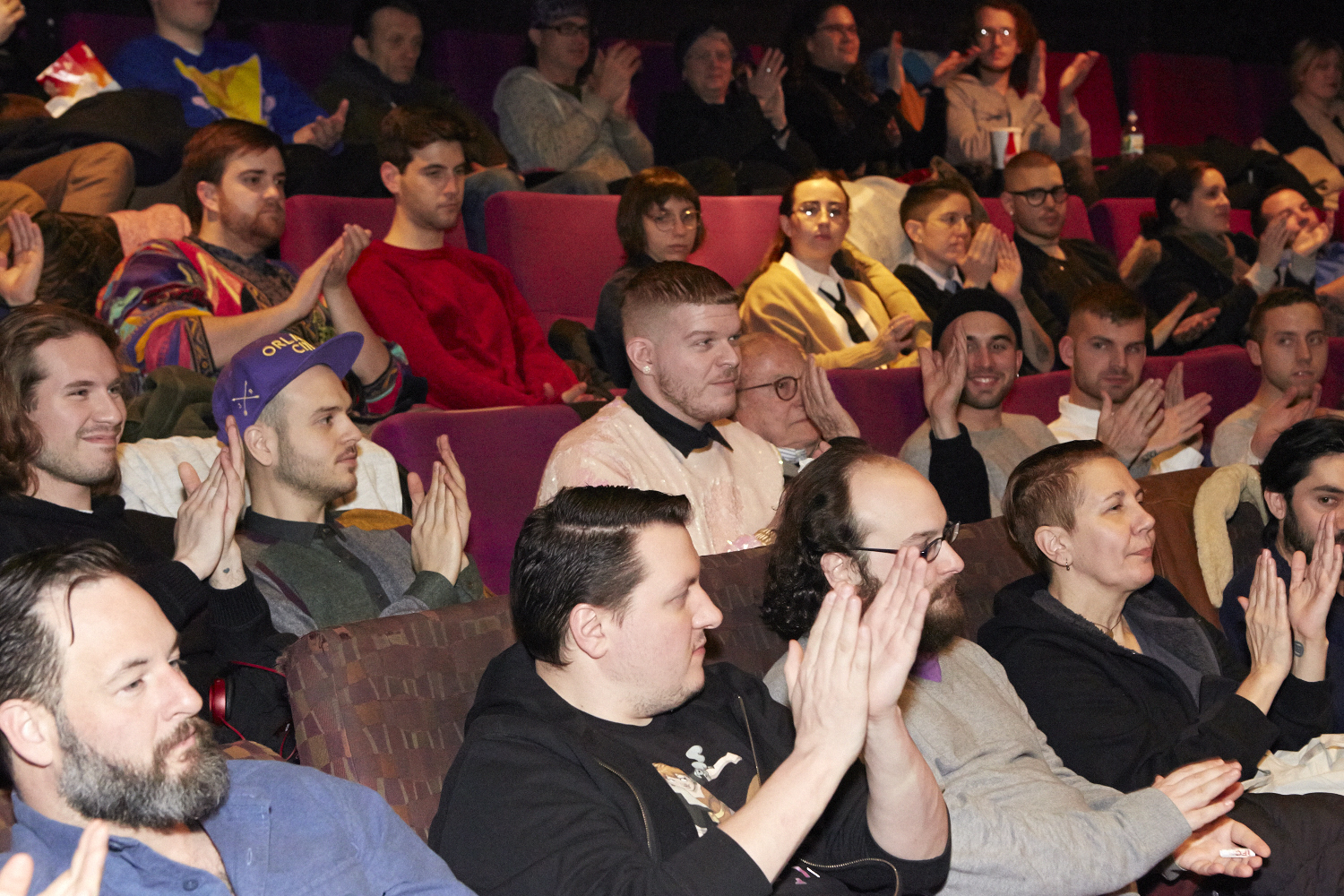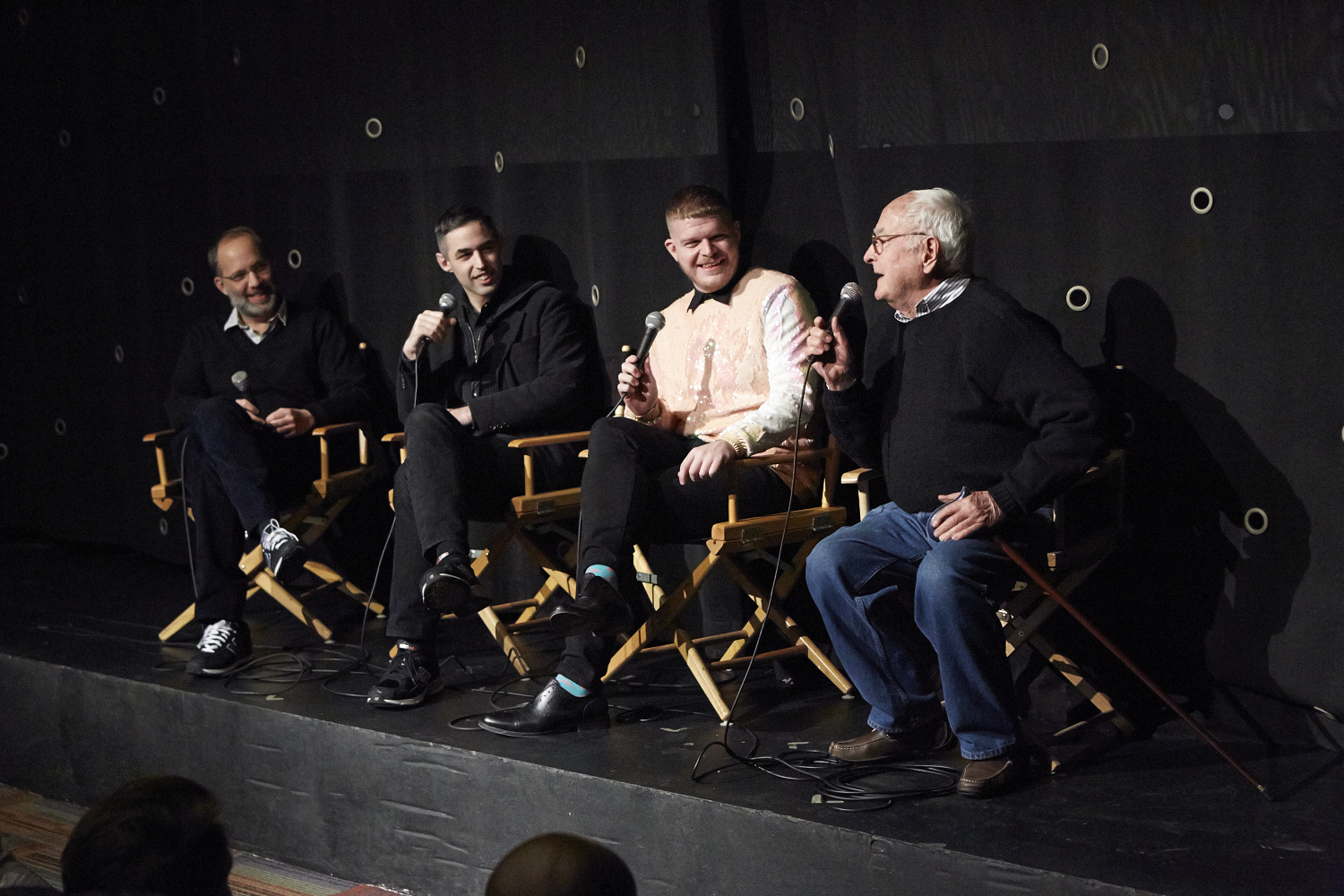

QUEER|ART|FILM is a monthly screening series, traditionally held at IFC Center, in which special guest LGBTQ+ artists present and discuss the films that have most inspired them.

One of the city’s most adventurous repertory programs. The overall picture that emerges from the series is of a queer cinema that is barely, if at all, concerned with the problems of representation and the burdens of identity politics, and that has never been shy to speak its name.
— Dennis Lim, The New York Times
Winter 2022

Poster illustrated by Eric Kostiuk Williams.
Queer|Art|Film returns this Winter at the IFC Center with a season curated by multidisciplinary filmmakers Angelo Madsen Minax and Mev Luna. For both artists, language and autoethnography play pivotal roles in their respective experimental documentary and visual art practices. As such, Minax and Luna have sought out presenters who are deeply invested in the intersection of the written word and visual culture.
Working across various mediums, presenters include T. Fleischmann, CAConrad, Jeffrey Gibson, Legacy Russell, and AnaÏs Duplan. This season considers: Can the narrative fictions that influenced us be an extension of lived experience? From a raunchy nightlife scene in Berlin portrayed in City of Lost Souls, to the outskirts of West Texas in Come back to the Five and Dime Jimmy Dean, Jimmy Dean, to a boozy night spent wandering the streets of downtown LA till dawn in The Exiles, or dreaming of an escape from Queens in Belly, the protagonists in these films are all fleeing to another, different, “better” life elsewhere. Sometimes the longing is for an alternative physical place or state of mind. Other times, this yearning is steeped in fantasy. Together, this collection of films reveals that as much as we aspire and dream otherwise, there are cycles that pull us back.

CAConrad Presents COME BACK TO THE FIVE AND DIME JIMMY DEAN, JIMMY DEAN
Monday, February 14th @ 8PM EST


Our first guests this season are queer Brazilian filmmakers Gustavo Vinagre and Fábio Leal, whose films are unabashedly bold, sexually-explicit and confront the realities of living under repressive dictatorial regimes. Their new documentary GOD HAS AIDS shines a light on the little known history of Brazil’s response to the HIV/AIDS epidemic in the 1980s via interviews and performances by contemporary HIV+ artists. For this program, Vinagre and Leal have chosen to screen Joaquim Pedro de Andrade’s short film VEREDA TROPICAL live, which features a man who develops an erotic obsession with fruits and vegetables. Made during the military dictatorship in the 1970s, the film was quickly banned for its subversive portrait of liberation. Though it features a heterosexual protagonist, Leal and Vinagre both feel it is a queer film which uses humor and sexuality to break down barriers.
To accompany this short, we’ll also be screening Vinagre’s short documentary FILM FOR A BLIND POET, about blind sadomasochistic poet Glauco Mattoso, and Leal’s narrative short THE DAYTIME DOORMAN, about a complicated affair between a gay man and the doorman who works at his building. The program will include a live screening of all three films, followed by a discussion and Q&A with Vinagre and Leal.
Fábio Leal on VEREDA TROPICAL
“VEREDA TROPICAL is a film about deviant sexuality, made in a time where there was a military dictatorship in Brazil. This film was censored for many years until it came out. It has humor. It has a way of dealing and showing sexuality that was very new to Brazil at that time. It made an impact on me by showing that sex and sexuality could be much more open and freeing and funny as well. The humor of it, the explicitness of it, the bizarre being shown as a regular, normal thing, make it a very queer film, although the protagonist is a heteroseuxal man.”
Gustavo Vinagre on VEREDA TROPICAL
“VEREDA TROPICAL has a subtlety to the encounter between the boy and girl characters…the object of desire is displaced. It can be located in other places: carrots, watermelons, and more. To me, that is really sweet and funny and fun and queer in a really good way. Joachim Pedro de Andrade was really interested in talking about strong symbols of Brazilian nationality. He does that in his masterpiece MACUNAIMA, which was a really important modernist book. Here he is also talking about the strong symbols which define our culture. In this case it's tropicalism, and how fruits are a huge symbol of Brazil. Usually this comes with the symbol of the hot woman, but in this case Andrade just dismisses it and talks about the sensuality of the fruits. There is a lot of irony in this and in the way Andrade locates the film in an intellectual middle-class that is really thinking about these symbols and trying to rationalize them. I think it's very interesting because he takes all the possible sex appeal of the "Latin lover" character and he creates this awkward intellectual character that is thinking about that trope. It's kind of ironic because he's frustrating the macho man symbol which is really embedded in our culture.”
About Gustavo Vinagre
Gustavo Vinagre was born in 1985. He studied Literature at São Paulo University and Scriptwriting at EICTV (Cuba). Vinagre has directed several short films and features including NOVA DUBAI (Rotterdam), I REMEMBER THE CROWS (Cinema du reel, Indie Lisboa), The BLUE FLOWER OF NOVALIS (Berlinale 2019), and Divinely Evil (Berlinale 2020).
About Fábio Leal
Fábio Leal is a Brazilian director, writer, actor, and programmer. He has programmed for the festival, Janela Internacional de Cinema do Recife, directed by Kleber Mendonça Filho, since 2013. He wrote, directed, and starred in the short films, THE DAYTIME DOORMAN (2016), shown in 26 film festivals around the world and released on DVD/VOD in 10 countries; and RENOVATION (2018), which premiered at the prestigious 51st Brasília Film Festival, where it was awarded Best Screenplay and Best Actor Prizes, and traveled to over 30 international film festivals, including BFI Flare, IndieLisboa, Outfest, Frameline, NewFest, Provincetown Film Festival, and Iris Prize FF. He is currently writing his first fiction feature, VALLEY OF HOMOSEXUALS. Leal is currently co-directing his first documentary feature, GOD HAS AIDS with Gustavo Vinagre, which is in post-production.

THE MATRIX
1999. 136 minutes. Directed by the Wachowski Sisters.
For our second program this season, activist, filmmaker, and writer Tourmaline will present the Wachoski Sisters’ 1999 cult classic, The Matrix. Starring Keanu Reeves, Laurence Fishburne, and Carrie-Anne Moss, The Matrix renders the liminal space in a future where the oppressors are hidden and the masses are satiated with simulations. Co-director Lilly Wachowski, describes this turn-of-the-century favorite as “a metaphor for transgender identities” and explains that, “when you talk about transformation, specifically in the world of science fiction, which is just about imagination and world-building…the idea of the seemingly impossible becomes possible.” In the Wachowski Sisters’ dystopian future, the physical body is only an avatar to the limitless power of the mind, as many of us on the gender spectrum have realized. For our guest presenter, Tourmaline, The Matrix elicits a “compelling invite to shift the beliefs we hold to be more aligned with the world we want.”
Tourmaline on THE MATRIX
“I’d like to screen The Matrix because it’s a fun and compelling invite to shift the beliefs we hold to be more aligned with the world we want.”
About Tourmaline
Tourmaline is an activist, filmmaker, and writer. Her work highlights the capacity of Black queer and trans people and communities to make and transform worlds. In her films, Tourmaline creates dreamlike portraits of people whose stories tell the history of New York City, including gay and trans liberation activists, drag queens, and queer icons Marsha P. Johnson and Sylvia Rivera (HAPPY BIRTHDAY MARSHA, co-directed with Sasha Wortzel, 2018), Miss Major (THE PERSONAL THINGS, 2016), and Egyptt LaBeija (ATLANTIC IS A SEA OF BONES, 2017). Recent screenings of Tourmaline’s work have been presented at venues including BFI Flare, London; Seattle Transgender Film Festival; Portland Art Museum; New Museum, New York; the Whitney Museum of American Art, New York; the Studio Museum in Harlem, New York; Museum of Contemporary Art Chicago; the Museum of Contemporary Art, Los Angeles; and the Brooklyn Museum.

TEOREMA
1968. 98 min. Directed by Pier Paolo Pasolini
Filmmaker and producer Frédéric Tcheng hosts our third program this season, leading discussions on two films: Pier Paolo Pasolini’s 1968 classic, TEOREMA and François Ozon steamy narrative short, A SUMMER DRESS. The cinematic dreaminess of Pier Paolo Pasolini’s TEOREMA brings a 1968 Italian middle-class family to the silver screen. The film portrays a family, spiritually bereft but living a comfortable life of complacency, social status, and corporate idealization—with no passion for life until a visitor arrives. Known for depicting sexuality as a tool to render everything from hypocrisy to the heroic, in this classic, Pasolini explores sexuality to narrate the 1968 political movement, Il Sessantotto. The movement, which comprised protests driven by the working class, opposed traditional Italian values and called for an end to consumer capitalism and patriarchal structures. For Queer|Art|Film Club: Free Your Mind, guest presenter Frédéric Tcheng will explain how the “sexual tension, the religious overtones, and Silvana Mangano’s glamour” in TEOREMA inspired his personal career as a filmmaker, editor, and producer.
A SUMMER DRESS
1996. 15 min. Directed by François Ozon.
For Frédéric Tcheng, François Ozon’s 1996 narrative short, A SUMMER DRESS, is “an irresistible haiku on the circulation of desire and the fluidity of gender.” Regarded by many as the “first mainstream French queer filmmaker,” François Ozon has inspired generations to come with his flirtatious and evocative portraits of queerness.
Frédéric Tcheng on TEOREMA
“TEOREMA is a riddle that has fascinated me ever since I discovered it as a teenager. The sexual tension, the religious overtones, Silvana Mangano’s glamour... But above all, it’s the complete queerness of the worldview that transfixed me. Pasolini abolishes all boundaries, between gay and straight, between art and sex, between god and man. For the 16-year-old that I was, it was a revelation, a taste of cinematic sublime.”
Frédéric Tcheng on A SUMMER DRESS
“The first LGBT event I ever attended was a screening of short films by François Ozon in my home town of Lyon. A SUMMER DRESS was the gem of the program, an irresistible haiku on the circulation of desire and the fluidity of gender. In 15 short minutes, Ozon manages to pack two sex scenes, skinny dipping, and a campy rendition of the song Bang Bang.”
About Frédéric Tcheng
Frédéric Tcheng is a French-born filmmaker based in Brooklyn, New York. He co-produced and co-edited VALENTINO: THE LAST EMPEROR, which premiered at the Venice Film Festival and was shortlisted for the Best Documentary Oscar. He is the co-director of the acclaimed documentary DIANA VREELAND: THE EYE HAS TO TRAVEL, which the New York Times called “dizzily enjoyable.” His award-winning directorial debut, DIOR AND I, premiered at the 2014 Tribeca film festival and was released by The Orchard. His most recent film, HALSTON, was executive produced by CNN Films and premiered at the 2019 Sundance Film Festival. He has served as a filmmaking mentor for Queer|Art, a non-profit arts organization in New York serving a diverse community of LGBTQ+ artists across generations and disciplines. He studied engineering in France and is a graduate of the film program at Columbia University’s School of the Arts.

THE GRADUATE
1967. 106 min. Directed by Mike Nichols
In Mike Nichols’ groundbreaking 1967 classic, floundering college grad Benjamin Braddock (Dustin Hoffman) is seduced by a married female friend of the family (Anne Bancroft), but complications ensue when his parents pressure him to date her daughter (Katherine Ross). THE GRADUATE’s impact was monumental, making a star out of Dustin Hoffman, becoming the top-grossing film of the year, and scoring seven Oscar nominations and one win for Nichols’ brilliant direction. For acclaimed screenwriter Patricia Resnick (9 TO 5, 3 WOMEN, TALES OF THE CITY), who watched the film repeatedly while working at a movie theater, the film was deeply resonant. Resnick developed a teenage crush on Bancroft and deeply identified with Hoffman’s intense generational anxieties. Resnick writes, “I so related to the main character Ben’s feeling completely lost and adrift post college...Over the years I’ve gone back to THE GRADUATE, showing it to my nieces and nephews and then my own kids. They all loved it. I’ve found that it remains as funny and moving as it ever was and if anything the theme is even more apt for millennials than it was for boomers like me who had way more opportunities.”
Patricia Resnick on THE GRADUATE
“When I was sixteen, living in Miami Beach which I deeply hated, I went to work in a movie theater which was the closest I could get to my obsession: show business. One of the major perks was I got to see the movies playing there for free and some of them I watched over and over. Oh, I also got as much popcorn as I wanted and I got to take the movie one sheets home because back then, no one wanted them. They’re worth a lot now lol. One week a movie came to my theater. It was called THE GRADUATE. I watched it and then watched it again. And again, and again. Part of why I loved it was because I developed a huge crush on one of the actresses. Not Katherine Ross which would have made sense at 16 but the much older Anne Bancroft. But even more than that I so related to the main character Ben’s feeling completely lost and adrift post college. I had recently skipped the last two years of high school and started college at 16 sure that I wanted to be an actress since that was the only job I knew of that existed in show business. To my horror I quickly realized I didn’t like acting and I wasn’t any good at it. Like Benjamin, I was completely lost. For two years I struggled to find my way and thank god by 18 I got to visit on a movie set and I found out there were all sorts of other careers you could have working on movies. I went to film school and began working as a P.A. and then a writer. I even got to briefly work with Anne Bancroft in my twenties although, sadly, she was committed to Mel Brooks. Over the years I’ve gone back to THE GRADUATE, showing it to my nieces and nephews and then my own kids. They all loved it. I’ve found that it remains as funny and moving as it ever was and if anything the theme is even more apt for millennials than it was for boomers like me who had way more opportunities. I hope you enjoy the film.”
About Patricia Resnick
Patricia Resnick is an American writer and producer of films, television and theater. Resnick is best known for writing the original screenplay for 9 to 5, a comedy classic and one of the top-grossing films of all time. After graduating from USC, Resnick, under the tutelage of her mentor Robert Altman, co-authored A WEDDING (British Academy Award and Writer’s Guild nominations) and Quintet starring Paul Newman. Other films include MAXIE (Glenn Close) and STRAIGHT TALK, which reunited her with Dolly Parton. Resnick most recently served as co-executive producer on season 4 of BETTER THINGS for which she wrote two episodes. Prior to that, she wrapped a stint as co-executive producer on Armistead Maupin’s TALES OF THE CITY, which premiered on Netflix, starring Laura Linney and Elliot Page and won the Glaad Award for Outstanding Limited series. Other recent television credits include consulting producer on hour-long dramas like MAD MEN. She has written numerous pilots for television for networks including Showtime, CBS and FX and produced the made-for-television film, THE BATTLE OF MARY KAY, starring Shirley MacLaine and Parker Posey who both gave Golden Globe-nominated performances.
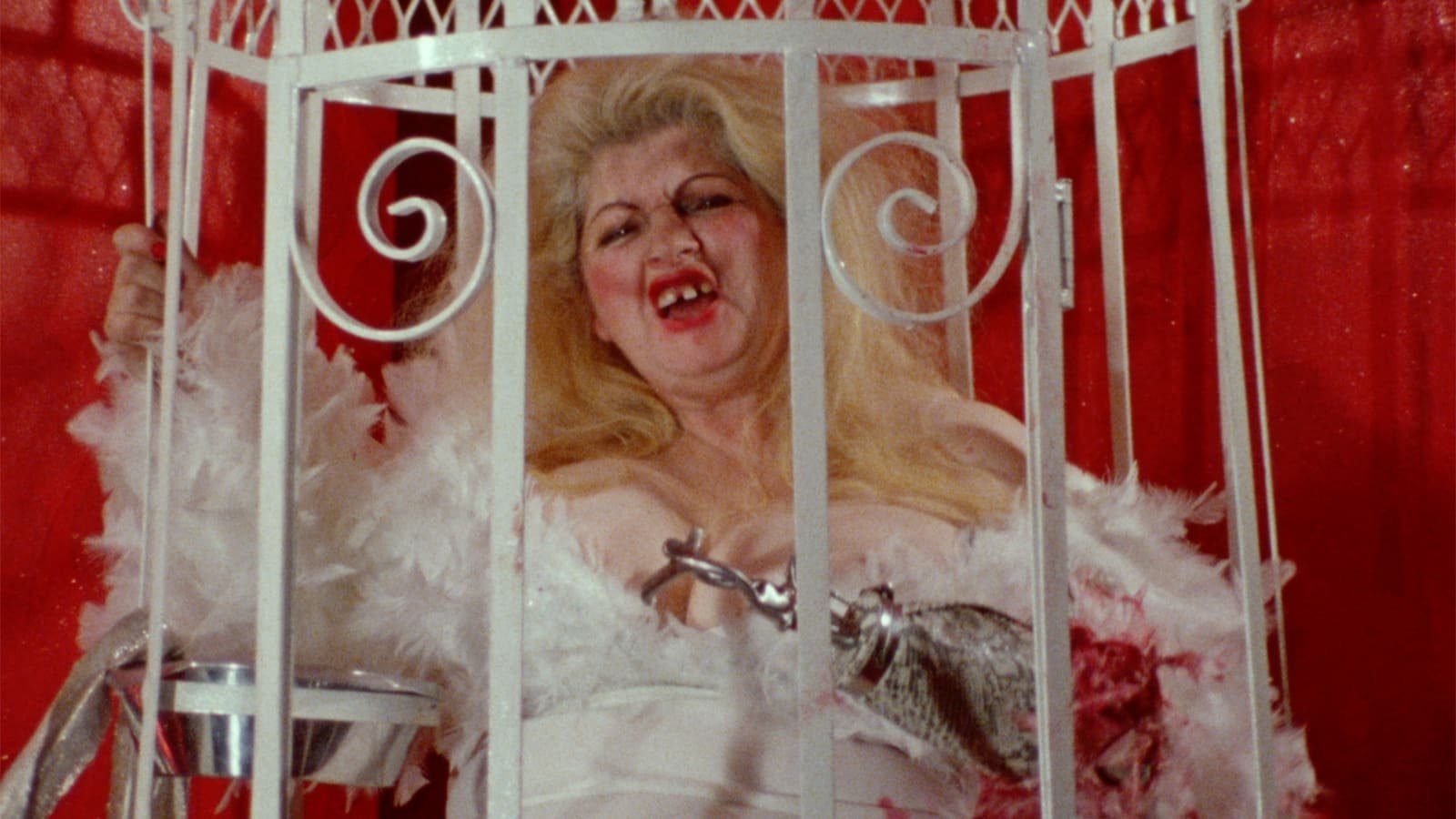
FEMALE TROUBLE
1974. 89 min. Directed by John Waters
In John Waters’ queer comedic masterpiece FEMALE TROUBLE, deranged teen Dawn Davenport (played by the legendary Divine) beats up her parents and runs away from home after she doesn’t get the cha-cha heels she wanted for Christmas. Pretty soon she’s knocked up, down and out, and desperate for superstardom –– which she finds when she befriends a fascistic couple who help turn her into a psychotic performance artist!
For the first month of the summer season of the (still virtual) Queer|Art|Film Club, join us for a fun and frothy discussion about Waters’ still-brilliant cult classic with Brown, queer underground, punk ‘n’ glam rock guitar legend Kid Congo Powers, who first saw the film as a teen in the 1970s at the dawn of the punk rock explosion. Like all misfit queers who encounter Waters’ work, Powers found the film “bratty, hilarious, outrageous, and queer to the bone” and repeated the dialogue constantly with his friends. “We never felt more alive,” he recalls. Powers would soon inspire his own underground queer fan club as an important member of iconic bands like The Gun Club, The Cramps, Nick Cave & The Bad Seeds and as frontman for his own Kid Congo and the Pink Monkey Birds. The group’s latest EP, “Swing From the Sean DeLear,” is a tribute to another great queer punk and nightlife icon in the Waters-mold. After all, as Aunt Ida says in FEMALE TROUBLE, queers are just better!
Kid Congo Powers on FEMALE TROUBLE:
“My reason for picking John Waters’ FEMALE TROUBLE is that I first saw it as a teenager in the late 1970’s, at the dawn (Davenport) of the punk rock explosion, it was a film which gave me every reason to become counter “counter culture”. This movie knew what was on my mind. Bratty, Hilarious, outrageous and queer to the bone. Me and my friends remembered every bit of the dialogue and repeated it verbatim, very often! We never felt more alive. Divine, Edith Massey, Mink Stole, David Lochary, Mary Vivian Pierce, and Cookie Muller all give Douglas Sirk gone mad performances , and let’s not forget the costumes , makeup and the music. “Female Trouble” will always be an all time favorite of mine.”
About Kid Congo Powers
Kid Congo Powers is a Brown, queer, underground punk glam rock guitar legend who grew up in the East L.A. suburb of La Puente, California. His work over decades with worldwide bands like The Gun Club, The Cramps, Nick Cave & The Bad Seeds and now his own Pink Monkey Birds places Kid Congo Powers firmly in the international punk music scene. Kid Congo and the Pink Monkey Birds’ latest release is the 4-song EP “Swing From the Sean DeLear”, which features a musical tribute to the “late, magical and ubiquitous” Sean DeLear, a nonbinary Black LA nightlife legend, artist, punk singer and icon who passed away in 2017.

LET THE RIGHT ONE IN
2008. 114 min. Directed by Tomas Alfredson.
12-year-old Oskar is regularly tormented by bullies at school and fantasizes about revenge at night. Things change when he befriends his mysterious new neighbor Eli, who only comes out after dark, has a very pale complexion, and (surprise) just may be the vampire responsible for a string of deadly local attacks. Could their bloody bond be the key to each of their survival? This 2008 Swedish coming-of-age-horror-drama is a favorite of author Torrey Peters, whose debut novel Detransition Baby is an absolute must-read book of 2021. She writes, “LET THE RIGHT ONE IN is a film that has meant many different things to me, depending on what point in my life I watched it. It is something like a cipher––a film that reflects back at me my current preoccupations... It's been a couple years now since I've watched it, and I'm excited to discover now what it will reveal to me this time about itself, and perhaps, myself."
Torrey Peters on LET THE RIGHT ONE IN:
LET THE RIGHT ONE IN is a film that has meant many different things to me, depending at what point in my life I watched it. It is something like a cipher--a film that reflects back at me my current preoccupations. The first time I watched LET THE RIGHT ONE IN, I was transfixed, and just kept on saying to my friend: "I didn't know I liked horror films, but wow, I guess I do," and then there came an ambiguous moment, an intimation (no spoilers), that perhaps the vampire is trans. Or that something is going on with her gender. This was before I came out, and I realized that I had spent the first hour of the movie-viewing experience unwittingly, but truthfully, proclaiming how this film really spoke to me--this film about a maybe-trans child vampire. Oops, I divulged too much! I think after it was over, I took it home, and then watched it again, alone, some parts over and over, trying to figure it out. Then, during a brief stint as an adjunct professor I tried to use it to teach about the Gothic--which was really just cover for talking about transness and otherness. Then I finally came out, and I watched it again, and it seemed like yet another film all together--a film about xenophobia and the abject. It's been a couple years now since I've watched it, and I'm excited to discover now, what it will reveal to me this time about itself, and perhaps, myself."
About Torrey Peters
Torrey Peters (she/her), is the author of the novel Detransition, Baby, a national bestseller, longlisted for the Women's Prize for Fiction, and currently in development for a TV adaptation. She also wrote the novellas Infect Your Friends and Loved Ones and The Masker. Torrey rides a pink motorcycle and splits her time between Brooklyn and an off-grid cabin in Vermont.
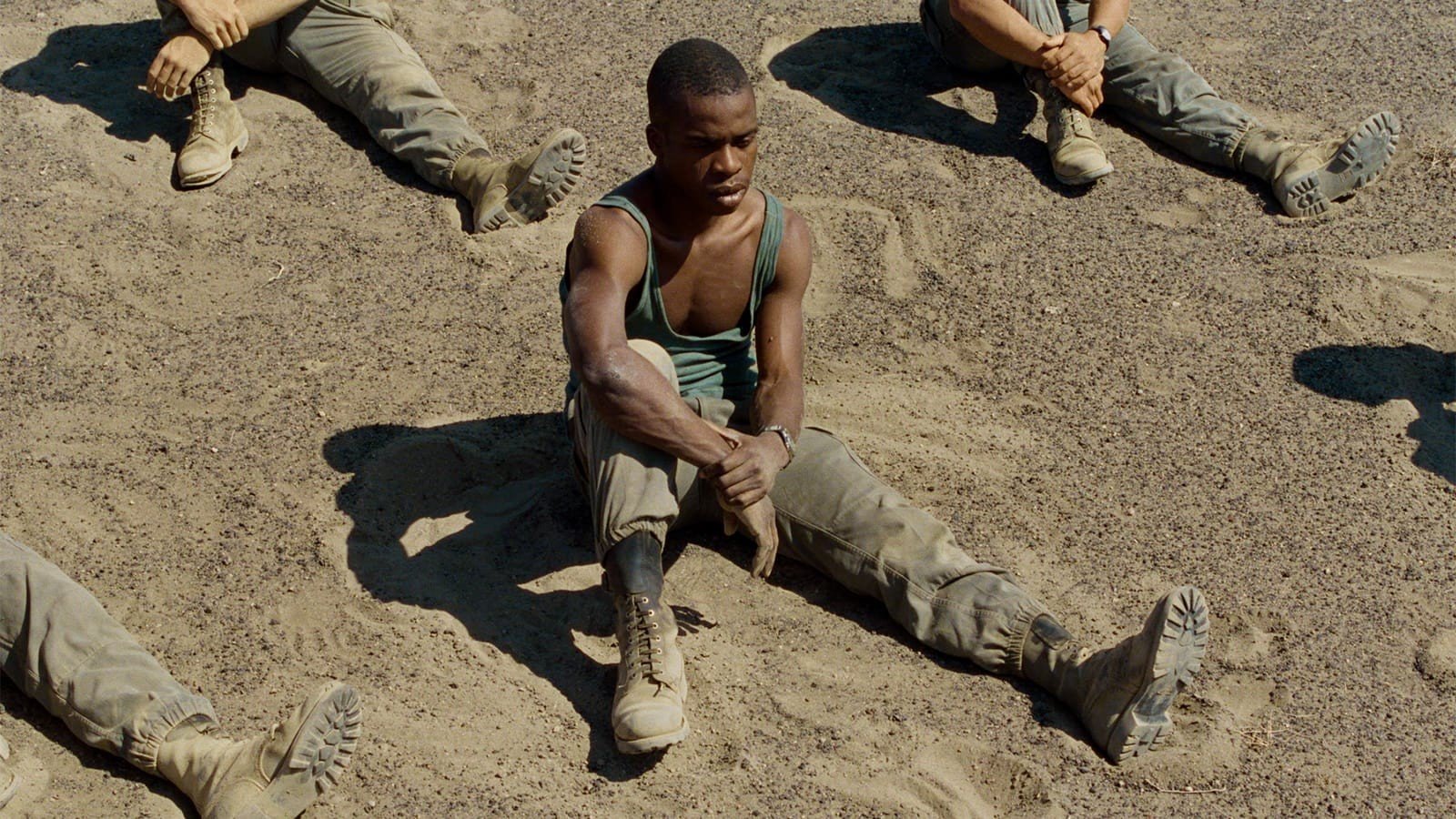
BEAU TRAVAIL
1999. 92 min. Directed by Claire Denis
Claire Denis created BEAU TRAVAIL in response to a request by the French government to develop a film on the subject of “being foreign.” Set in Djibouti, Africa, the film follows soldiers in the French Foreign Legion, and is loosely based on Herman Melville’s 1888 Billy Bud. BEAU TRAVAIL is a movie that marries alterity and difference, tracking the crumbling self-worth of an experienced military leader on one of his last tours. Rendering perplexing and overlapping states of disillusion, the viewer can hardly decipher between dream, fantasy, and memory in the film and Denis toys with these boundaries, shooting in a way to keep these states in constant motion. Our guest presenter, performance artist Julie Tolentino, describes Beau Travail as “the piece [she’s] always wanted to make,” wherein “attractions are tangled with jealousy or envy” and “memory is lost to fantasy.”
Julie Tolentino on BEAU TRAVAIL:
“I can’t stop thinking about this soldier dehydrated on the salty white sandy beach — this reminds me of David Wojnarowicz for some reason. So much sound and movement is bound in their bodies: ready to burst, already outsiders and distant but still youth both radiant yet deceiving — like the desert, like the sea — all close kin & distance! Attractions are tangled with jealousy or envy. Memory is lost to fantasy. The dance at the end - this miserable emptiness in the wonderful empty swirling light disco — it is like the piece I always wanted to make / or that I want everyone to do. Endless hours of spinning lighted spots, a body that can’t be penetrated by them, and I am always attracted to distance.”
About Julie Tolentino
Julie Tolentino is a performance installation maker whose work draws from a variety of visual, archival, and movement strategies. Her work has been presented at many venues, including the New Museum, The Kitchen, Danspace Project in NY; Volume, Los Angeles Contemporary, Broad at UCLA, Honor Fraser, Cypress Gallery, The Sphaerae/AXS Festival, Commonwealth & Council, The Night Gallery, Pieter, High Desert Test Sites, The Reanimation Library, The Palms in Southern California; The Lab, Joe Goode Annex, PSi Stanford in Northern California; The Wexner Center, Performa '05 and '13, and internationally in the UK, France, Germany, Philippines, Singapore, Abu Dhabi and Greece. In 2020, Tolentino was awarded the Queer|Art|Prize for Sustained Achievement.

BLUE VELVET
1986. 120 min. Directed by David Lynch
HEN HIS WIFE
1990. 13 min. Directed by Igor Kovalyov.
In David Lynch’s 1986 neo-noir thriller BLUE VELVET, a young man returns home and happens upon a dismembered human ear, a discovery that brings about many strange occurances, criminal encounters, and psycho-sexual awakenings. A self-fashioned detective (played by seemingly innocent Kyle MacLachlan), the young man’s obsession with solving the mystery leads to a romance (with the enigmatic and tortured Isabella Rosselini) that excites and disturbs his sense of self, culminating in a emotional collision course between the straight and perverse.
For the final month of the summer season of Queer|Art|Film Club, join us for a conversation about Lynch’s enduringly creepy cult classic with video artist Aimee Goguen, whose porn aesthetics and B movie style videos document kinky sexual subjection and bullying. Goguen was first introduced to the film in the 5th grade by her Aunt Janet, who gave her a VHS tape of BLUE VELVET along with a copy of William Burroughs’ 1959 novel, Naked Lunch. “I knew I was on to something if I loved it and my mom hated it,” Goguen says of Lynch’s “slow moving action film.” Blue Velvet’s play of darkness and shadow felt strangely familiar to Goguen’s internal sensibility and her physical surroundings in a gloomy military town in rural Washington state. She tried to figure out the lighting on her own, filming on her family’s Hi-8 camera, which she still uses to shoot analog video today. Along with Blue Velvet, we will discuss the Kafka-esque short experimental animation, HEN, HIS WIFE by Russian artist Igor Kovalyov, about a couple that receives an unexpected visitor and unwelcome revelation of the inhuman in the home.
Aimee Goguen on BLUE VELVET:
“You know when you watch something and it’s in you for a long time, and as an adult you can still feel that special feeling? It confused me that something could be so slow and so addictive, that a slow moving picture could captivate me. BLUE VELVET was the first real, perverse adult movie I saw, before getting into Araki’s NOWHERE and Waters’ PINK FLAMINGOS. It illuminates something that’s in everybody: the strange, weird, obsessive, and romantic.
Aimee Goguen on HEN, HIS WIFE:
“I always pay attention to the way animators imagine movement. In HEN, HIS WIFE, Kovalyov generates depth in two dimensions, creating a psychedelic horror that collapses background and foreground into a delirious play of psychic surfaces. Like Lynch’s BLUE VELVET, the timing generates a high energy space for the viewer to inhabit.”
Aimee Goguen is a video artist who combines analog video with animation elements. Her work often re-imagines scenarios of bullying and putrefaction as staged, repetitive actions. Her work has shown internationally including at CASSTL, Panel LA, LAXART, Vox Populi, Participant Inc., and White Columns. She co-curated Afterglow: summer video series with Harry Dodge. Recent residencies include Human Resources Los Angeles and the ONE Archives. She is currently making an experimental animation of Debbie’s Barium Swallow, a short story by Laurie Weeks, in collaboration with Olivia Taussig. She earned a BFA in Film and Video and an MFA in Fine Art at The California Institute of the Arts. She lives and works in Los Angeles.
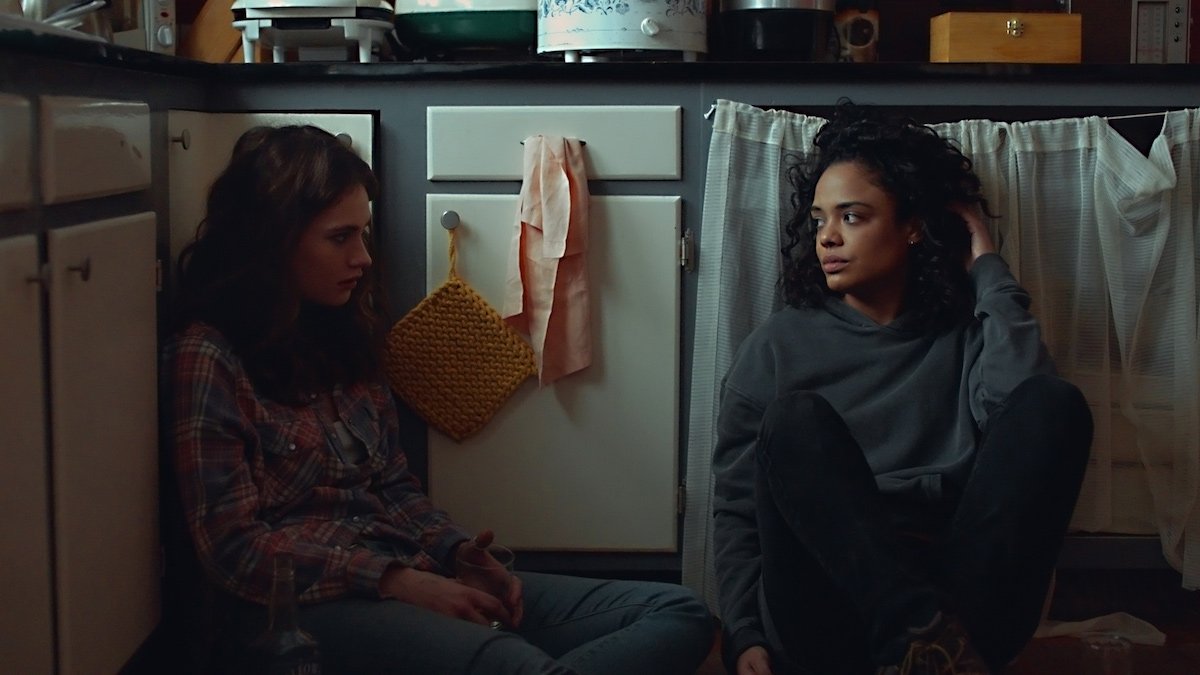
LITTLE WOODS
2018. 105 min. Directed by Nia DaCosta
LITTLE WOODS is a film about two sisters taking matters into their own hands and refusing to be another statistic of a country that does not support them. Director Nia DaCosta does not shy away from taking a stance on political hot topics such as abortion, fracking, and the opioid crisis. The desolate landscapes of this gritty small-town thriller reflects the bleak realities of sisters, Ollie (Tessa Thompson) and Deb (Lily James), as they navigate low-income living and the American healthcare system where choices become more limited and the danger more real. Guest presenter Roxane Gay will explain how LITTLE WOODS’ portrayal of the unique challenges women face has impacted her creative development and work as a writer, professor, and social commentator.
Roxane Gay on LITTLE WOODS
“LITTLE WOODS is a haunting, layered film, written and directed by Nia DaCosta. I chose to present LITTLE WOODS at the IFC Center because of the gritty and compelling story it tells; the prescience with which the film lays bare the harsh realities of American poverty; and how women often have to make impossible choices to survive. With incredible performances by Tessa Thompson and Lily James, LITTLE WOODS is a reminder that when you’re living in precarious circumstances, it doesn’t take much at all to be pushed over the edge.”
About Roxane Gay
Roxane Gay’s writing appears in Best American Mystery Stories 2014, Best American Short Stories 2012, Best Sex Writing 2012, A Public Space, McSweeney’s, Tin House, Oxford American, American Short Fiction, Virginia Quarterly Review, and many others. She is a contributing opinion writer for the New York Times. She is the author of the books Ayiti, An Untamed State, the New York Times bestselling Bad Feminist, the nationally bestselling Difficult Women and the New York Times bestselling Hunger. She is also the author of World of Wakanda for Marvel. She has several books forthcoming and is also at work on television and film projects. She also has a newsletter, The Audacity.
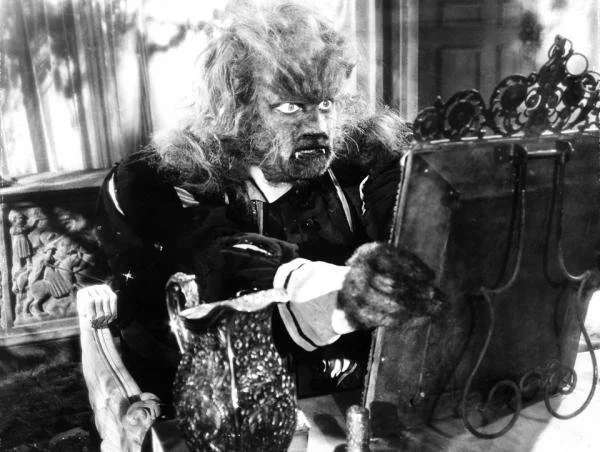
BEAUTY AND THE BEAST
1946. 93 min. Directed by Jean Cocteau
Jean Cocteau, a French poet, novelist, filmmaker, and director of the 1946 rendition of BEAUTY AND THE BEAST, uses magical realism and queer nuance to illustrate the many forms in which beauty manifests itself. A major figure in the Surrealist and Dada art movements, Cocteau’s dreamy special effects create a mise-en-scene that is so lush with Freudian symbolism and homoeroticism, like the wall of muscular arms holding candelabras, that the set feels like another character in the poetic and haunting love story between Belle and The Beast. Jean Marais, Cocteau’s muse and lover, plays the monstrous beast as well as three other roles in this film, while Josette Day, as Belle, plays a convincingly horrified and orgasmic damsel. Richard Haines, our guest presenter, will talk about how this film not only shaped his life but also his love of art, design, fashion and all things queer.
Richard Haines on BEAUTY AND THE BEAST:
“As a queer kid, there was nothing harsher than the reality of daylight. I felt exposed, seen in a dangerous way...getting through the day was an accomplishment that was rewarded by the night. The play of light and dark in BEAUTY AND THE BEAST is one of its many appeals. The precision of a Vermeer painting vs the darkness of Gustave Dore, the 'hand' of Jean Cocteau and Christian Bèrard, the pain and loneliness of The Beast: all these fantastic and relatable elements make it one of my favorite films. I'm so excited to see it on the big screen and to share it with my QueerIArtlFilm community.”
About Richard Haines:
To Richard Haines, New York City is an endless runway. He first moved to the city to pursue illustration and instead found a successful career as a fashion designer. Through fashion design, working for such brands as Calvin Klein, Perry Ellis and Bill Blass, he developed a keen eye for the often overlooked details of form, fabric and how a garment falls on the body. This laid a foundation for his illustration work and after years in the world of fashion design, his career has now come full circle allowing him to emerge as one of today’s most sought after fashion illustrators.
2020
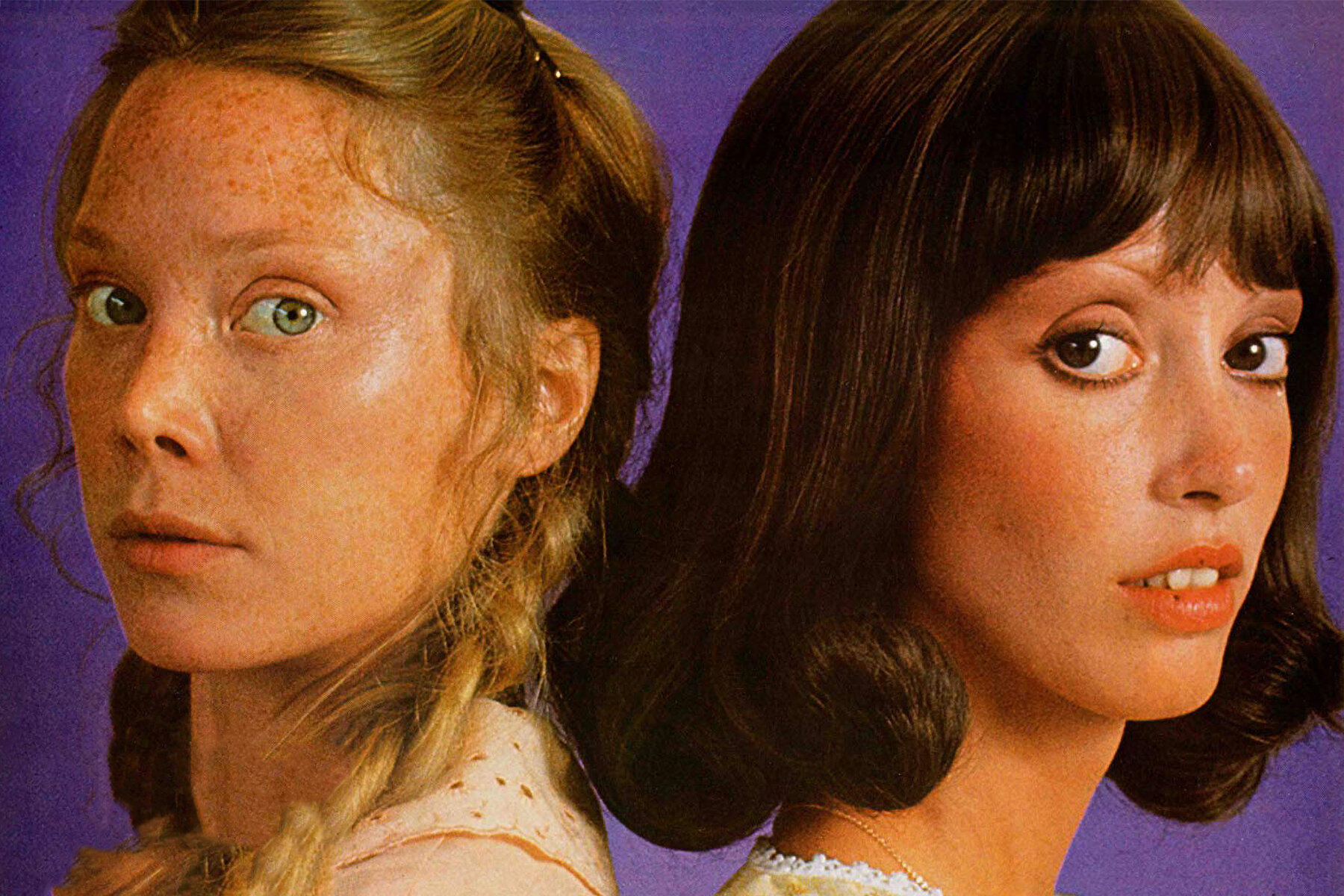
3 WOMEN
1977. 124 min. Directed by Robert Altman.
On her first day of work, naive Pinky Rose meets chatterbox Millie Lammoreaux, and the two quickly become roommates. Things are good at first, but after the women’s first quarrel, Pinky has a bad accident. When Pinky recovers, the two women's identities begin shifting in mysterious ways. Robert Altman’s queerest film boasts brilliant performances from Shelly Duvall, Sissy Spacek, and Janice Rule; a dreamlike narrative similar to PERSONA and MULHOLLAND DRIVE; and a haunting score by gay composer Gerald Busby. Our guest presenter, acclaimed electronic musician and artist Gavilán Rayna Rossum (“The Envoy”, LCD Soundsystem) finds inspiration in the “complex inner feminine worlds the film investigates, the way its ultra witchy version of maid, mother, and crone operates outside of heteronormative rigidity and its ability to elucidate the deeply haunted nature of white American life.”
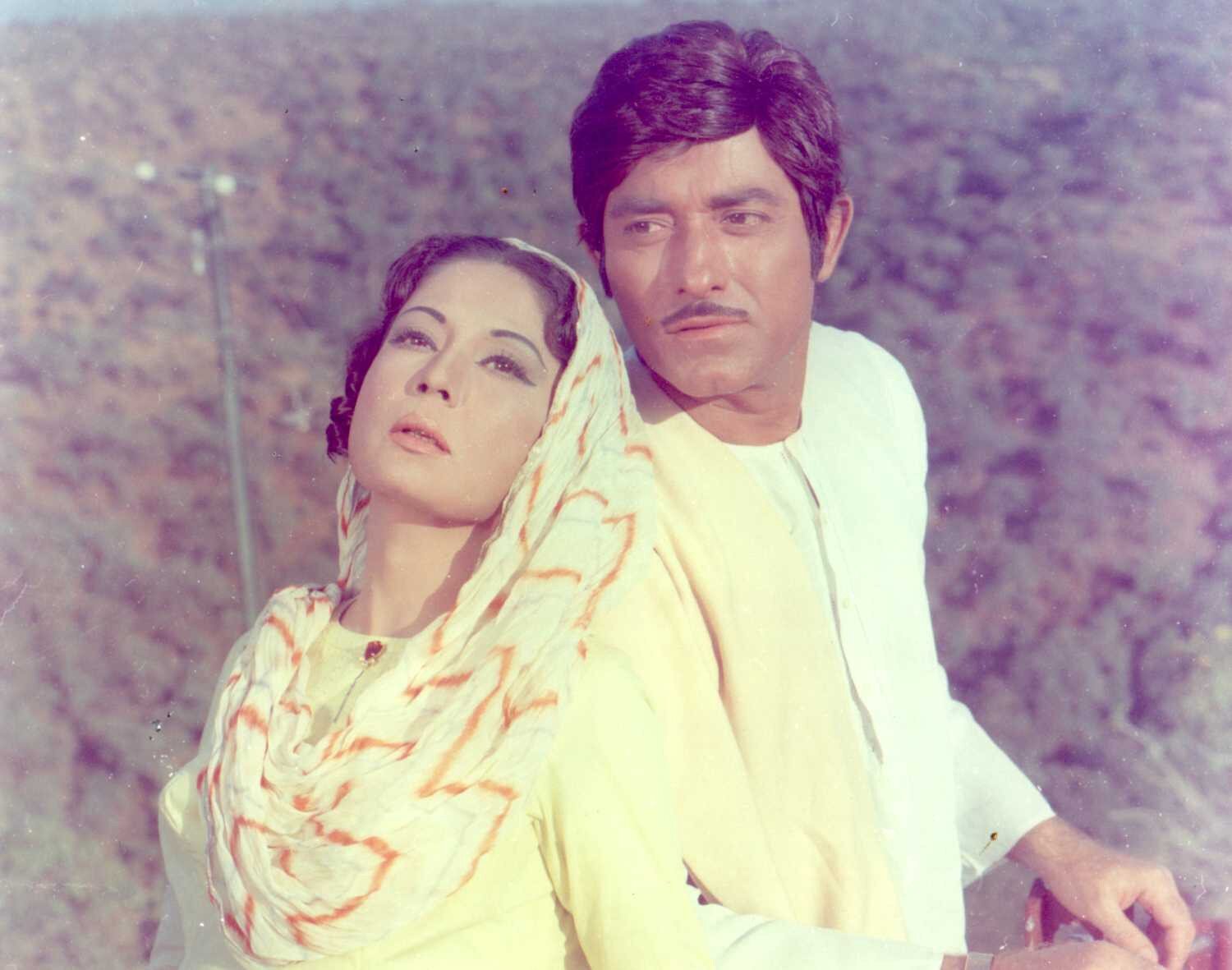
PAKEEZAH
1972. 154 min. Directed by Kamal Amrohi.
This 1972 Bollywood musical love story set in turn-of-the-century India stars Meena Kumari as an Indo-Islamic tawai’if (courtesan) who is trained in the art of love but forbidden to fall into it. Director Kamal Amrohi relies on the suffocating, deeply entrenched battle between traditional values and the fear of difference (in this case, an independent woman) suggesting that safety and respectability is only found in the arms of a husband. The legend around the making of this film and the tortured romance between director and star adds to the salacious delight of PAKEEZAH, which translates into “the pure one”. As a native-born Muslim American artist, guest presenter Baseera Khan will explain how this film “became her coat of arms and system of protection,” while growing up in Texas.

THE HUNGER
1983. 100 min. Directed by Tony Scott.
This erotically charged vampire film, directed by Tony Scott, has all the delights and horrors of 80s era excess, including shoulder-pads, David Bowie, gothic nightclubs, flowing curtains, slow-motion doves, and rapid aging. Susan Sarandon and Catherine Deneuve play star-crossed lovers whose fates become intertwined in what photographer and artist Deborah Bright recalls as “one of the absolute BEST lesbian love scenes in mainstream film.” Beautifully sublime sets, art directed by Clinton Cavers with Stephen Goldblatt’s cinematography, elevates the horror genre into a poetic artifice of decadence and decay. Commended for its queer themes at the height of the AIDS epidemic, Bright saw this movie soon after coming out and found this “visually over the top, very noir, and creepy” cult favorite resonating with her and other “adventurous lesbians.”

THE THING
1982. 109 min. Directed by John Carpenter.
In horror legend John Carpenter’s gory 1982 masterpiece, scientists in Antarctica unearth a frozen alien parasite with shape-shifting abilities. When “the thing” begins imitating the appearance of the scientists, suspicion and paranoia turn everyone against each other in a gruesome hunt to stop it from escaping. Acclaimed non-binary artist Nayland Blake first watched the film in 1983, initially interpreting it as an AIDS analogy, then later as a metaphor for fears of homosexuality. “The body eruptions, mutating orifices, and emotional standoffs between the male characters speak to straight fears of queerness as a disease in itself,” Nayland writes. “THE THING told a horror story at the beginning of the decade that the rest of the world would catch up to over the ensuing years.”

CABIN IN THE SKY
1943. 98 min. Directed by Vincente Minnelli.
When Little Joe is killed by a rival gambler, the angels offer him a second chance. If he can change his sinful ways in six months, he’ll get a pass to enter the Promised Land. But Satan’s son won’t make it easy for Little Joe, placing Lena Horne and other temptations in his path. As the angel and devil battle for Joe’s soul, viewers are treated to show stopping performances by Horne, Ethel Waters, Duke Ellington, and “Bubbles” aka John W. Sublett. For our guest presenter André de Shields, viewing Vincente Minnelli's musical at age nine led to an epiphany that set him on the path to becoming a celebrated Broadway icon in shows like The Wiz, Ain’t Misbehavin’, and Hadestown, for which he won the Tony Award in 2019. De Shields writes “While watching "Bubbles" strut through an incandescent performance of the race song "Shine," I suffered a crucifixion of all of my senses. "Shine" has won me the audition for each of the three Tony nominated roles I've had the honorable pleasure of creating.”
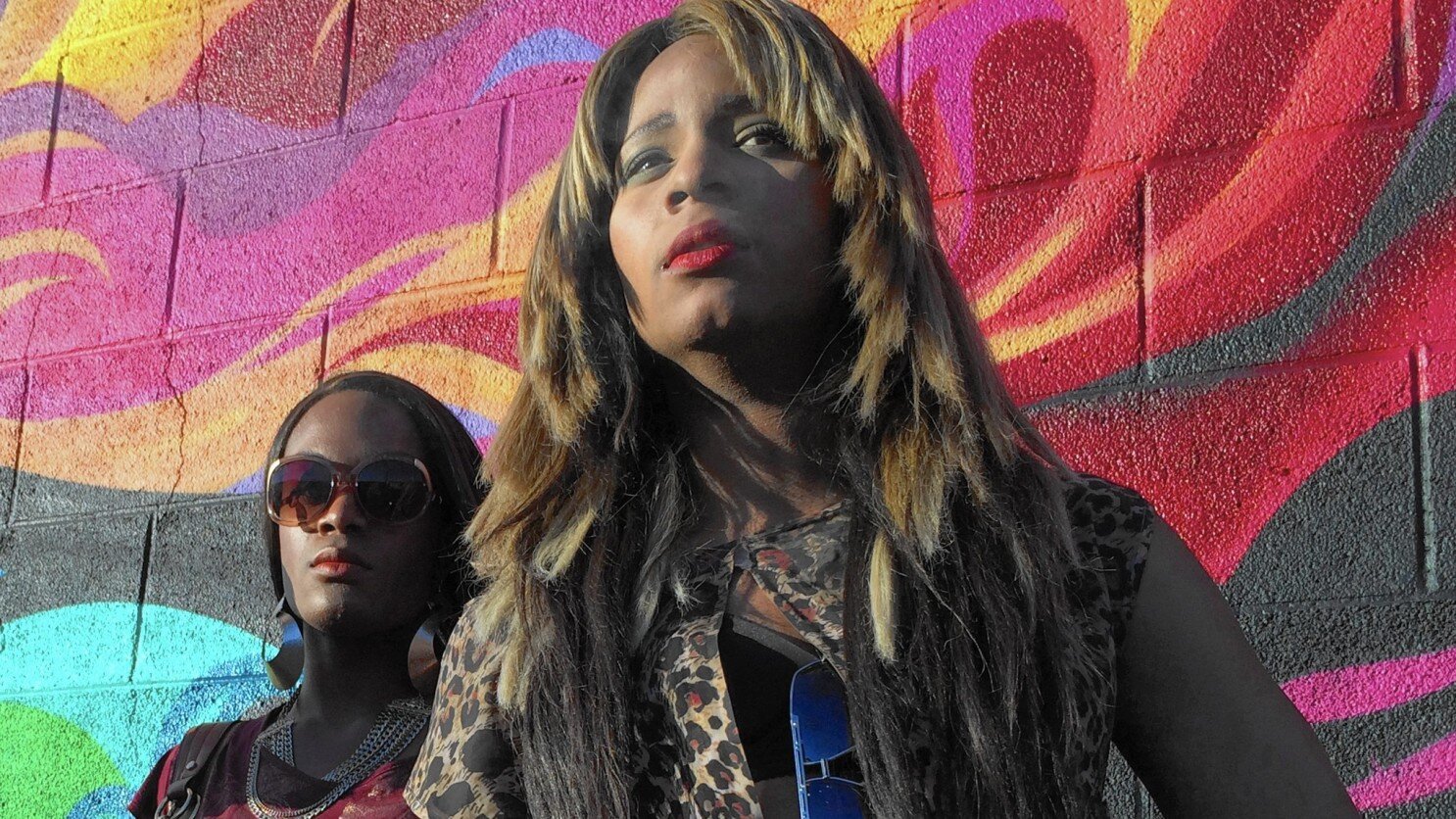
TANGERINE
2015. 88 min. Directed by Sean Baker.
Tangerine is an irresistibly chaotic buddy film that chronicles the friendship of two Black trans women sex workers, Sin Dee Reel (Kitana Kiki Rodriguez) and Alexandra (Mya Taylor). Their friendship and loyalty to each other anchors the film as we traverse a 2015 West Hollywood where infidelity, a mysterious clear plastic stiletto, and the many personalities we meet push the film forward. Directed by Sean Baker, the script for TANGERINE was co-created with the lead actors, Kitana and Mya, based on their life experiences. Organizer and healer Jewel the Gem presents this film because “Black Trans Lives Matter. Black Sex Workers Matter. Black Trans Visibility in Media Matters.” Tangerine garnered a lot of attention for not just being recorded entirely on an iPhone, but for also having two trans women play the leading roles.

TOTALLY F***ED UP
1983. 78 min. Directed by Gregg Araki.
Totally F**ed Up is a “rag-tag story of (the) fag-and-dyke teen underground…a kind of cross between avant-garde experimental cinema and a queer John Hughes flick,” explains Gregg Araki, who wrote and directed this 1992 cinematic ode to queer adolescent angst. But unlike a Hughes film, these teens aren’t worried about losing their virginity or going out with the most popular person in school. Instead, they are dealing with homophobic violence, the tyranny of being different in the homogeneous backdrop of Los Angeles, and the ecstasy and nightmarish pain of young love. Brontez Purnell remembers “watching this as a teenager in my shitty southern town and praying that I would move to California one day and be as cool as the kids in this movie.” Totally F**Ed Up is the first film in Araki’s "Teen Apocalypse trilogy" of the 1990s, queer teenage nihilism with a heart of gold.
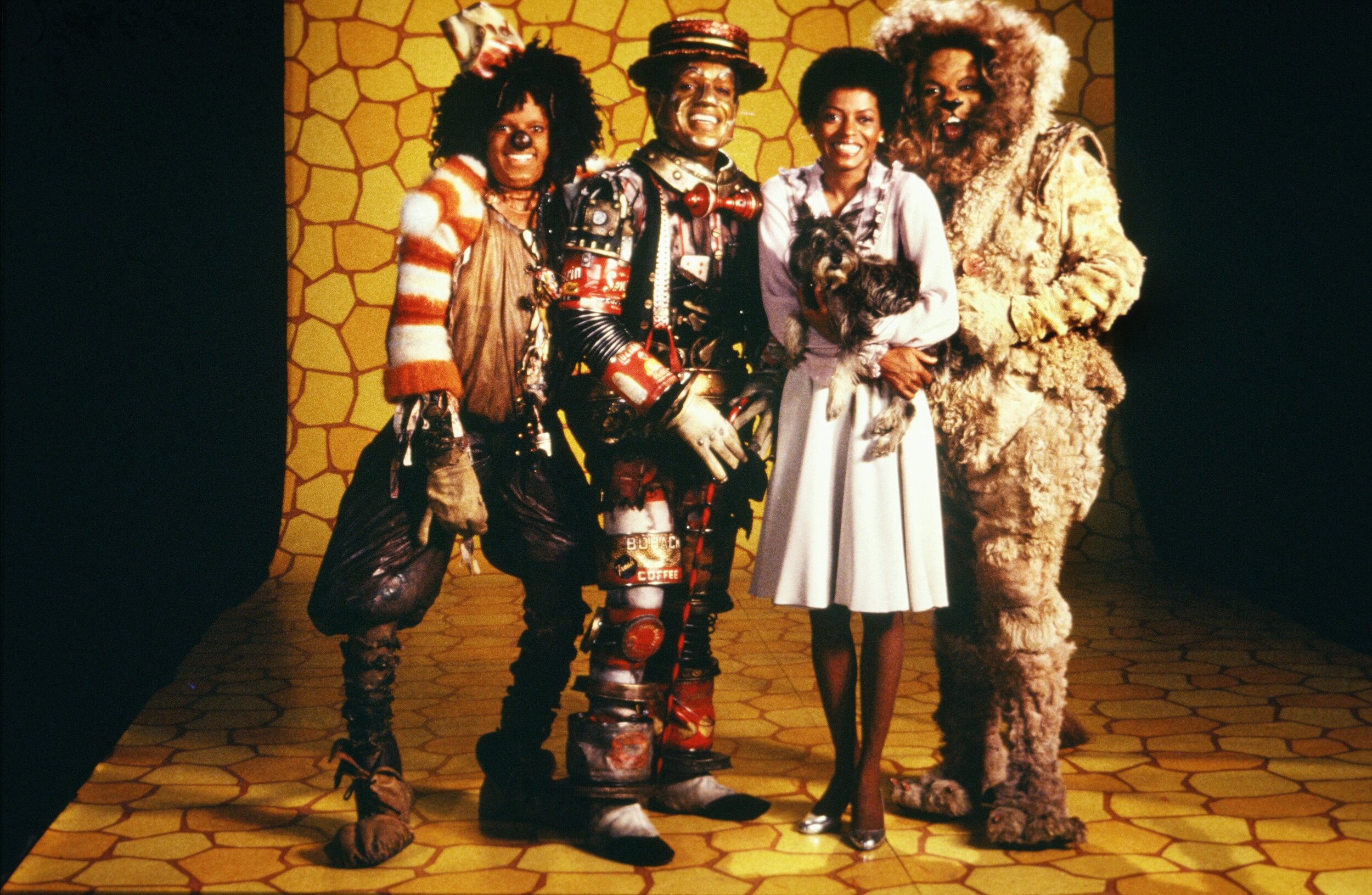
THE WIZ
1978. 134 min. Directed by Sidney Lumet.
We began our season with Andre DeShields - who originated the role of “The Wiz” on Broadway - presenting Lena Horne’s debut film Cabin in the Sky. We come full circle by ending with Horne’s final film - The Wiz - presented by an emerging artist whose life was forever changed by it. It’s fitting that in this terrible year, when so many of us have longed to be whisked away to a magical land, overthrow an evil despot, and sing and dance with our friends, that we’re gathering to watch a film where the characters do just that. The Wiz’s remaking of a white Hollywood classic for Black audiences also offers a chance to reflect on this year’s acceleration of the movement for racial justice and conversations surrounding Black representation in media. Guest presenter The Uhuruverse’s fiercely political music, art and activism celebrates Black Trans Lives, and for them seeing the artistry of Black icons like Diana Ross and Quincy Jones was transformative. “I grew up in the projects," they write, "and you don't see that kind of magic there. The Wiz gave me my imagination, gave me hope, gave me art and gave me life!”
2019

MOSQUITA Y MARI
2012. 85 minutes. Directed by Aurora Guerrero.
Yolanda Olveros and Mari Rodriguez are high school classmates who discover they live in the same predominantly Mexican neighborhood in Los Angeles. The two teenagers forge a friendship while negotiating the expectations of their migrant parents. The intense social and personal pressures to belong bring them both intimately closer to one another. As visual artist Felipe Baeza, tonight’s guest presenter, notes, “MOSQUITA Y MARI is not your standard coming out story,” but rather a layered meditation on migration, sexuality, and working-class family life, all themes that are near to Baeza’s personal experience.

VELVET GOLDMINE
1998. 123 minutes. Directed by Todd Haynes.
Arthur Stuart is a British journalist writing an article about Brian Slade, a 1970s rock star who disappears from the spotlight after faking his own murder. As Stuart interviews people in Slade’s past, the unfolding series of flashbacks reveals what really happened to the famed glam star. For interdisciplinary filmmaker Ela Troyano, VELVET GOLDMINE “queers pop music culture of the ‘70s and ‘80s—from its fairytale Oscar Wilde origin story to the raw musical performances by Ewan McGregor and Jonathan Rhys-Meyers, inspired by the legendary sexual antics of David Bowie, Iggy Pop, and Lou Reed.”

GHOST IN THE SHELL
1996. 82 minutes. Directed by Mamoru Oshii.
Major Motoko Kusanagi is a cyborg living in the fictional Japanese city of Niihama, circa 2029. As commander of a task force in search of hackers overtaking the cyberbrains of cyborg-human hybrids, she is made to confront her own identity and alienation. For video and performance artist Elektra KB, GHOST IN THE SHELL presents “technological possibilities for some disabled humans, that, like me, fantasize often about getting a functional robot body.” In Elektra’s words, the film prompts us to “think of speculative trans-feminist technologies while showing elements of a radically tender, liberatory future in an AI cybernetic-dysphoria-hacking cyberpunk world.”

SHOWGIRLS
1995. 131 minutes. Directed by Paul Verhoeven.
Nomi Malone is running from her past and chasing stardom as a showgirl in Las Vegas. She finds her way through “a tornado of thrusting and rhinestones” navigating the dance world’s dark underbelly of misogyny and exploitation. Guest presenter and visual artist Martine Gutierrez describes this box-office-flop-turned-cult-classic as a “sexy, sexy mystery,” oozing with campy excess and a glittery dash of film noir. A capital-d Diva armed in “Versayce,” Nomi is aggressive in her sexuality, gender performativity, and ambition. Gutierrez reflects on how Nomi’s dreams push her to obscene extremes, asking us to consider: Is it possible to over-realize a world?

9 TO 5
1980. 109 min. Directed by Colin Higgins.
With special guest host Moe Angelos!
For anyone who has been overworked, underpaid, and pushed to the edge by an ungrateful boss, tonight’s your night! In 9 TO 5, three working women say enough is enough, stick it to the man, and take the office into their own hands. Jane Fonda, Lily Tomlin, and Dolly Parton form a winning alliance in this hit 1980 comedy, remembered fondly by tonight’s presenter, playwright and director Brooke O’Harra.

THANK GOD IT’S FRIDAY
1978. 89 min. Directed by Robert Klane.
It’s Friday night, 1978, and a crowd of cool cats are headed to LA’s hottest disco looking for love, lust, drugs, and dancing! Most famous among them is Donna Summer, who plays an aspiring singing trying to convince the disco’s DJ to let her perform her new song “Last Dance” (which became Summer’s biggest hit and won an Oscar). Tonight’s guest presenter, music journalist and essayist Christian John Wikane, is a veritable scholar of disco and an expert on all things related to tonight’s film. Post-screening, Wikane will be interviewing Casablanca Records’ disco legends Felipe Rose, the Original Co-Founder and Native of Village People and D.C. LaRue (“Cathedrals”), who both have songs on the TGIF Soundtrack! Rose & LaRue will discuss their experiences being a part of the film, Donna Summer’s legacy, Paul Jabara and Casablanca Records. For disco-philes and everyone who loves to boogie, there’s no other place to be. Thank God It’s Monday!
—
Presented by Christian John Wikane! Post-screening Q&A with Casablanca Records disco artists Felipe Rose (original co-founder and native of Village People) and D.C. LaRue!

DEATH BECOMES HER
1992. 104 min. Directed by Robert Zemeckis
Some people will go to any length to be young forever. Hollywood socialites Madeline Ashton (Meryl Streep) and Helen Sharp (Goldie Hawn) are lifelong rivals, competing for men, fame, and beauty. When Helen appears to have the final upperhand, Madeline will stop at nothing to change that—paying the ultimate price to do so. This wickedly funny cult classic has had an immense impact on tonight’s presenter, choreographer Raja Feather Kelly.

TO WONG FOO, THANKS FOR EVERYTHING! JULIE NEWMAR
1995. 109 min. Directed by Beeban Kidron.
New York City drag divas Noxeema, Vida, and Chi Chi (played by Wesley Snipes, Patrick Swayze, and John Leguizamo) take a road trip to the Miss Drag Queen of America Pageant in Hollywood—but hit a few major speed bumps along the way. This star studded hit comedy includes cameos by RuPaul, Lady Bunny, Flotilla DeBarge and, of course, Julie Newmar. As a child, TO WONG FOO made a big impression on Brooklyn drag artist Untitled Queen, who writes, “It made me laugh, it made me curious, confused, and enthralled. Back when I started performing, I also began a deep friendship with two other queens, and have thought so much about the parallels to this film.”

SPLIT
1993. 58 min. Directed by Ellen Fisher Turk.
GAG! WINTER’S A DRAG is extended with a screening of this 1993 documentary about East Village legend International Chrysis. Kicked out of her Bronx home at age 14 for what she said were “differences in taste” with her family concerning her wardrobe, she flourished downtown during the 70s as a singer and showgirl. She was daughter to Flawless Sabrina and a mother to many queens including our guest presenter, Perfidia, who remembers her fondly. “She literally was the first person to put me in full drag...from there we shared our lives.” We’ll screen SPLIT, plus other rare clips (including clips by photographer John Simone), followed by a panel on Chrysis’ legacy with some of her closest friends and biggest fans.

THE LANDLORD
1970. 112 min. Directed by Hal Ashby.
When wealthy Elgar Enders (Beau Bridges) decides to buy a run-down building in Brooklyn, his plan is to evict the black tenants and build himself a luxury home. But Elgar quickly realizes he can use his purchase to rebel against his racist parents and begins clumsily trying to befriend his new tenants (including the amazing Diana Sands & Marki Bey). Can Elgar really bridge the racial divide? Or will this gentrifier get his comeuppance? Hal Ashby’s brilliantly subversive satire of privilege, gentrification, and racial perceptions is a favorite of drag empress Flotilla DeBarge, who calls it a “heartfelt and hilarious film” that resonates even more today.

VEGAS IN SPACE
1991. 85 min. Directed by Philip R. Ford.
When Captain Dan Tracey and his spacemen learn that the all-female planet of Clitoris has had its precious gem Girlinium stolen, they take a pill to switch genders and go undercover. But there are evil schemers among the Clitori determined to thwart Tracey Daniels’ mission! Featuring a who’s-who of San Francisco legends, including Doris Fish, Tippi, Miss X, and Ginger Quest, this campy skewering of BARBARELLA and BUCK ROGERS-style sci-fi flicks became a gay cult favorite in the early 90s. The film is a favorite of our guest presenter, RuPaul’s Drag Race Season 9 Winner Sasha Velour, who even shares a last name with two characters in the film!

EATING RAOUL
1982. 83 min. Directed by Paul Bartel
Paul and Mary Bland live in a building full of swingers, but they both find sex thoroughly repulsive. Until, of course, they come up with an absurdly diabolical scheme to profit off it! Gay director and star Paul Bartel’s 1982 cult camp classic shares a subversive sensibility with tonight’s presenter, Linda Simpson (hilarious hostess, bingo queen, and drag herstorian). Linda writes, “I love that the film is so politically incorrect, but in such a ridiculous manner that it’s impossible to be offended. Mary Woronov is hilarious and sexy, which is the type of drag queen I’ve always aspired to be.”
2018

"THE HAMMER MIX: GENERATIONS"
plus announcement of 2018 Barbara Hammer Grant winner
Special guests for post-screening discussion include Peggy Ahwesh, A.K. Burns, and Lynne Sachs!
December 3, 2018
Tonight we celebrate legendary experimental filmmaker BARBARA HAMMER as we announce the winner of the second annual grant named in her honor supporting lesbian experimental filmmakers. Hammer’s nearly 50-year career has spanned disciplines, broken boundaries, and reached viewers far and wide across generations of moving image artists. In tribute to her legacy and influence we will screen a selection of short films made by women who have been inspired by Hammer’s career including PEGGY AHWESH, A.K. BURNS, CHERYL DUNYE, DANI LEVENTHAL RESTACK, LYNNE SACHS, and CAULEEN SMITH. Hammer writes, “I am honored to have inspired these genius filmmakers. It truly amazes me for when you are young and working hard you just think about getting the work out. Then to find years later that your films meant a whole lot to certain artists, these and others, just takes your breath away. I am delighted to have their selected works gathered together for tonight’s program.”
“The Hammer Mix: Generations” coincides with the announcement of the winner of the 2018 Barbara Hammer Lesbian Experimental Filmmaking Grant, who will be recognized at the screening. The Barbara Hammer Lesbian Experimental Filmmaking Grant is an annual grant awarded to self-identified lesbians for making visionary moving-image art. The $5,000 grant is supported directly by funds provided by Hammer’s estate and administered through Queer|Art by lesbians for lesbians, with a rotating panel of judges. This year’s judges include moving image archivist and curator Carmel Curtis, video artist Cecilia Dougherty, and video artist Ayanna U’Dongo.
The lineup includes:
Barbara Hammer – STILL POINT (1989, 9m)
Dani Leventhal ReStack – RECITATION (2007, 2m)
Peggy Ahwesh – THE COLOR OF LOVE (1994, 10m)
Lynne Sachs – CAROLEE, BARBARA, AND GUNVOR (2018, 8m)
Cauleen Smith – CHRONICLES OF A DYING SPIRIT (by Kelly Gabron) (1992, 7m)
Cheryl Dunye – VANILLA SEX (1992, 4m)
A.K. Burns – LOSS IN EXCHANGE (2005, 2m)
Program curated by Vanessa Haroutunian. Films courtesy of Electronic Arts Intermix (EAI), New York; Video Data Bank (VDB); Canyon Cinema; First Run Features; and Lynne Sachs.

THE TEMPEST
1979. 95 min. Directed by Derek Jarman.
November 5, 2018
“Derek Jarman's THE TEMPEST rips the stuffing out of Shakespeare's play and puts it back in all wrong,” writes this month’s presenter, author and poet Kay Gabriel. Jarman’s ecstatically queer third feature stars new wave singer Toyah Willcox as Miranda, poet Heathcote Williams as Prospero, flamboyant mime Jack Birkett as Caliban, and Elisabeth Welch singing ‘Stormy Weather’ while decked in gold lamé for a crew of giddy sailors. “I came to this film young and didn't get it,” Gabriel continues. “Then I figured out I liked gay derangements of the canon, then I started writing them myself. As perverse adaptations go, I'm all in.” So are we.

VALLEY OF THE DOLLS
1967. 123 min. Directed by Mark Robson.
October 15, 2018
Fame, booze, pills, and men consume the lives of three fierce young Hollywood hopefuls (Patty Duke, Barbara Parkins, and Sharon Tate!) in this iconic film adaption of Jacqueline Susann’s best-selling novel of the same title. For tonight’s presenter—composer and lyricist Michael R. Jackson—the film enchanted him with its multi-layered depiction of women in the entertainment industry: “The range and expression of their emotional vulnerability and violence in a patriarchal, cisgender, heterosexual white male system...has long been a useful analog to understanding my own queer black experience and, as such, is a duality that I explore in nearly all of my work.”
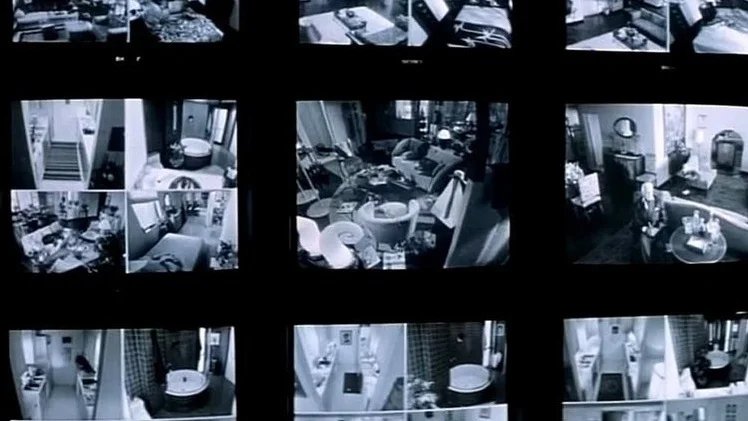
SLIVER
1993. 106 min. Directed by Phillip Noyce.
September 17, 2018
“The view from the outside is nothing compared to the view from the inside,” teased the trailer for this 1993 erotic thriller starring it-girl Sharon Stone as Carly. Following a recent divorce, Carly moves into the elite Sliver building and becomes entangled in an intrigue involving a pair of suitors, a suspicious suicide, and a stranger who spies on her via hidden cameras. For artist WangShui, a secret VHS viewing of the film provided his first erotic cinematic memory: “Since I was homeschooled and raised in a cultish conservative Chinese immigrant family...it was moments like this, alone in other people’s homes, where I caught glimpses of the outside world.”

STORME: OUR LADY OF THE JEWEL BOX & DREAMS DEFERRED: THE SAKIA GUNN FILM PROJECT
1987/2008. US. Directed by Michelle Parkerson and Charles B. Brack.
August 20, 2018
Poet, mother, and educator JP Howard presents two rarely screened must-see films that offer contrasting images of black lesbian identity and experience. DREAMS DEFERRED tells the story of Sakia Gunn, a masculine-presenting teen who in 2003 was stabbed to death on the streets of Newark in a brutal act of hate. STORMÉ, meanwhile, offers a portrait of 1950s male impersonator, civil rights pioneer, and emcee of the legendary Jewel Box Revue: Stormé Delavarie. “Gunn’s death did not receive the same attention as Matthew Shepard,” Howard notes, while finding it “empowering to see Stormé, a biracial, butch-presenting lesbian, talk confidently about her life's path."

SCHOOL DAZE
1988. US. 121 min. Directed by Spike Lee.
July 23, 2018
This early ‘deep cut’ from Spike Lee depicts political and emotional turmoil between radically conscious frat and sorority members of a fictional black college. Tonight’s presenter, playwright Robert O’Hara, remarks on the portrayal of “physical intimacy of men all up in each other’s faces, violating private space, paddling each other...and being--as my mother would say--‘tooted up’.” Despite its glittering cast of men, it is the struggles depicted by the women of SCHOOL DAZE that resonate most profoundly as they battle the misogyny and toxic masculinity of the Greek System. A dramedy with song and dance numbers--made with love for the Michelle/Barack generation!

PARIAH
2011. US. 86 min. Directed by Dee Rees.
June 11, 2018
Groundbreaking for its compelling and unique portrait of a black lesbian coming of age in Brooklyn, PARIAH was the directorial feature debut of Dee Rees (who was recently nominated for an Academy Award for MUDBOUND). The film is not only remarkable for how it addresses topics of identity, freedom, acceptance, and sexuality, but for its depiction of complex relationships within an African American family structure. For tonight’s presenter, writer and Black Lives Matter activist Erica Cardwell, the film “helped to end my dance with shame and really freed something inside of me." Join us for this powerful film with breakout performances by Adepero Oduye and Kim Wayans!

NAZ & MAALIK
2015. US. 89 min. Directed by Jay Dockendorf.
May 14, 2018
NAZ & MAALIK centers around two closeted Muslim teens living in Bed-Stuy, Brooklyn whose daily mix of family responsibilities, street life, and raging hormones is interrupted by an undercover FBI agent who suspects them as terrorists. For tonight’s presenter, New York Times bestselling author David Barclay Moore, the film challenges many clichés of gay coming-of-age storylines associated with its genre. “Black queer people navigate our lives while wearing a multitude of masks, depending upon their circumstances,” Moore writes. “The two young actors in this film portray a wide variety of emotion and perspective throughout, helping it feel sympathetic, real, and timely.”

ll était une fois dans l’Est (André Brassard, 1974)
April 9, 2018
A masterpiece of Quebec and Queer World Cinema, Andre Brassard’s extraordinary comedic-drama weaves together in Altman-esque fashion a diverse group of characters enmeshed in 1970s Montreal’s queer nightlife, including drag queens, lesbian couples and more. Based on the plays of Michel Tremblay, Il était… has been compared to The Boys in the Band, La Cage aux Folles and Outrageous! but with a more gritty, social realist edge. Canadian queer film critic Thomas Waugh also calls the film “a pioneering manifesto of queer desire...as cruel and exhilarating, loud and tender, as when it was released.” Il était... has almost never been screened in New York since it premiered at MOMA in 1975, so we’re especially thrilled to partner with Queer Media Database Canada-Québec to present a brand-new restoration you won't want to miss.
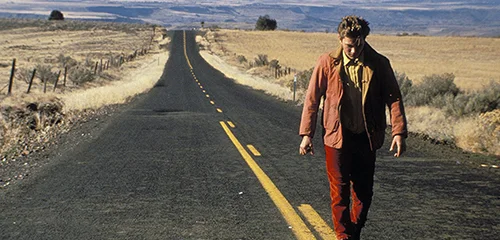
My Own Private Idaho (Gus Van Sant, 1991)
March 12, 2018
After almost two decades of writing and revisions, Gus Van Sant shared the screenplay of MY OWN PRIVATE IDAHO with Keanu Reeves, who then drove his motorcycle from Canada to Florida in order to hand-deliver the script to River Phoenix. Both actors would go on to star in this landmark film of the New Queer Cinema. The film follows Mike Waters (Phoenix), a narcoleptic street hustler, and his best friend Scott (Reeves) as they journey from Idaho to Italy in search of connection and personal discovery. For tonight’s presenter, award-winning queer theater artist and resident playwright at New Dramatists Mashuq Mushtaq Deen, seeing the film for the first time was transformative. Deen writes, “It opened my mind both to how stories were told, as well as to what stories were told. I can remember vividly the final image of the fish swimming up river, and just staring at it trying to process what I had just seen, knowing I had been moved profoundly by something, and at the same time, not really sure what had happened to me.” Screening on 35mm, this iconic queer adventure movie is not to be missed!
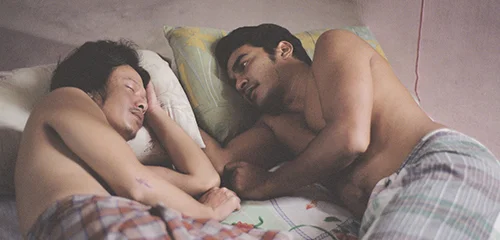
I Don't Want to Sleep Alone (Ming-liang Tsai, 2006)
February 12, 2018
Director Tsai Ming-liang (The River), one of the most celebrated Second New Wave film directors of Taiwanese cinema, returned to his birthplace in Malaysia to make I DON’T WANT TO SLEEP ALONE, a romantic drama about a young man who nurses an injured homeless man back to health after being brutally beaten. For tonight’s presenter, visual artist, filmmaker, and curator—Tiona Nekkia McClodden—the film “rocked me to my core with the way it presented desire and loneliness”. McClodden’s work explores and critiques issues at the intersections of race, gender, sexuality, and social commentary. McClodden writes, “As a queer filmmaker I'm always looking for a way to bend the narrative of my work in a way that challenges the form and structure of film… Ming-liang has taught me how to enter a narrative by leaving what comes before and after up to your imagination.”
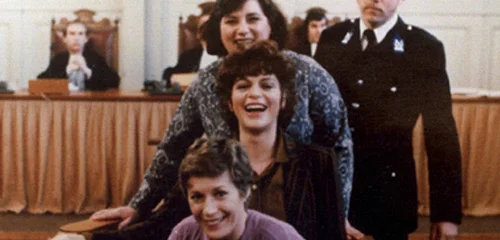
A Question of Silence (Marleen Gorris, 1982)
January 8, 2018
Can murder ever be justified? That’s the central question at the heart of this controversial 1981 feminist classic by Marleen Gorris (Antonia's Line). A QUESTION OF SILENCE follows a psychiatrist (Edda Barends) as she interviews three female strangers who mysteriously joined together to kill a male shop owner in a fit of spontaneous rage. The film is a favorite of legendary theater artists Peggy Shaw and Lois Weaver, together known as Split Britches (who will be at LaMama ETC with their new show Unexploded Ordnances (UXO) January 4th-22nd). Shaw and Weaver write, “A QUESTION OF SILENCE has had huge impact on our work in terms of finding a queer feminist solution to issues and problems. We always refer to it at some point in our process.” Rarely screened in theaters, Gorris’ film should provoke a fascinating conversation in the wake of the recent surge of the #MeToo movement.
2017
"The Hammer Mix" (Various Artists)
December 4, 2017
Tonight we celebrate legendary experimental filmmaker BARBARA HAMMER with a special mix of the lady-made movies that have inspired her prolific career. Some of the avant garde’s most influential women will be represented: Valie Export, Nancy Holt, Martha Rosler, Carolee Schneeman, among others. Hammer writes, “As a young female filmmaker I looked for predecessors. And they were there with gorgeous work that taught and inspired me. These short films are timeless and can give both aspiring and accomplished filmmakers of today the same jolt of energy and investigative curiosity they did for me in the 70s. Let's enjoy together once again!”
In addition to our normal Queer|Art|Film screening format, the evening will include the announcement of the first annual Barbara Hammer Lesbian Experimental Filmmaking Grant!
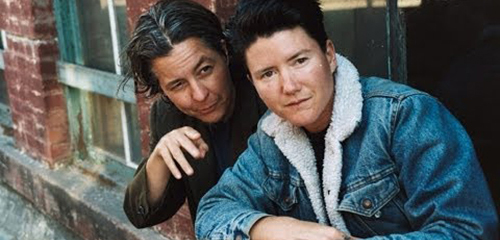
By Hook or By Crook (Harry Dodge & Silas Howard, 2001)
November 6, 2017
Tonight we are thrilled to screen BY HOOK OR BY CROOK, the very queer and scrappy tale of outsider buddies written, directed by, and starring the brilliant Harry Dodge (2008 Whitney Biennial) and Silas Howard (Transparent, A Kid Like Jake). Winner of the Best Feature Audience Award at SXSW in 2001, BHOBC tells the story of two trans-butches, Shy (Howard) and Valentine (Dodge), who collide by chance and stumble into a series of shenanigans in the San Francisco streets. For tonight’s presenter, filmmaker Elisabeth Subrin (Shulie; A Woman, A Part) the film “anticipates the genderqueer/trans cinema explosion, and amazingly stands the formal tests of time.” Join us for this rarely viewed film with its unique vision, clever dialogue, and effusive charm.
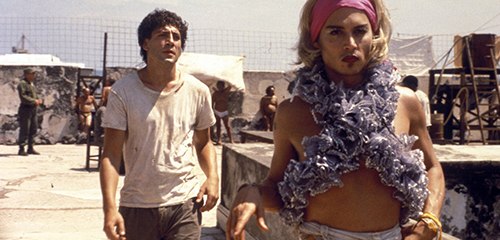
Before Night Falls (Julian Schnabel, 2000)
October 2, 2017
Julian Schnabel’s riveting adaptation of Reinaldo Arenas’ memoir follows the gay Cuban poet and novelist (portrayed by Javier Bardem) from childhood to death. Stops along the way include copious amounts of sexual exploration, fighting with Castro’s rebels, and an escape from prison (with a cameo assist from Johnny Depp in drag). His struggles continue when he arrives in NYC at the dawn of the AIDS crisis. For our guest presenter, photographer Luna Luis Ortiz, Arenas’ life story echoes his own experiences as “being gay, an artist, Latino and living with HIV." Ortiz’ photos are currently featured in the exhibition AIDS at Home at the Museum of the City of New York.
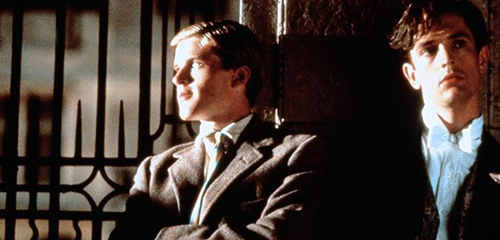
Another Country (Marek Kanievska, 1984)
September 11, 2017
“Convention outraged...a class abandoned...a country betrayed!” Julian Mitchell’s 1984 film ANOTHER COUNTRY stars Rupert Everett and Colin Firth as outcasts united in a battle for truth and honor at an all-boys boarding school in 1930s England. Loosely based on the youth of real-life spy Guy Burgess, the film made a deep impact on tonight’s presenter—fiction writer, poet, and journalist—Alexander Chee. Inspired by Everett’s portrayal of a young man who lives in full possession of his sexuality and is unwilling to “play the game”, Chee says, “the film set me on fire to live openly as a gay man, to fight for what I believed in, and to make art that reflected this.”

A Glass and a Cigarette (Niazi Mostafa, 1955)
August 14, 2017
We wrap up our Summer season with a captivating classic from the Golden Age of Egyptian Cinema. Tonight’s presenter is Tarab NYC whose mission is to foster an inclusive and safe community for queer Arab and MENA people. A Glass and a Cigarette features several of the era’s brightest stars, including Samia Gamal who plays a woman transitioning from bellydance stardom to domestic bliss. For Tarab NYC this film is a perfect fit for QAF, as it takes “careful consideration of gender in relation to class, career, and performativities of sexual availability.”

The Salt Mines & The Transformation (Susana Aikin, Carlos Aparicio, 1990/1995)
July 24, 2017
These astonishing depictions of trans life on the margins in 1990s NYC follow three homeless Latinx trans women living on the West Side Piers who must engage in sex work to support their drug addictions. But things get much darker when a Christian preacher forces one of the women to renounce her trans identity in exchange for treatment for HIV. The films are a favorite of our guest presenter Bianey Garcia, a prominent trans Latinx activist with Make The Road NY. Bianey writes, “When I saw these documentaries, it broke my heart to see how my trans sisters lived during that time. Nowadays, there are people like me who fight for a better life for our future generations!!”

Southwest of Salem: The Story of the San Antonio Four (Deborah Esquenazi, 2016)
June 26, 2017
Deborah Esquenazi’s riveting documentary explores the imprisonment of four Latina lesbians who were wrongly convicted of child molestation in 1994, thanks to a potent combination of homophobia, misogyny and racism. In her quest for exoneration, Esquenazi unearths surprising details during interviews with the women and their accusers. Our guest presenters tonight are F2L, community activists who fight for queer and trans New Yorkers of color being targeted by the criminal justice system. For F2L, SOS sharply captures how “the media works alongside a racist colonial court system that aims to incarcerate criminalized queer and trans people of color.” Join us for an important conversation.

The Black Power Mixtape 1967-1975 (Göran Olsson, 2011)
May 8, 2017
In 2011, a group of Swedish journalists traveled to the U.S. with the intention of “showing the country as it really is.” The result is an extraordinary documentary that examines the Black Power Movement from 1967-1975, with appearances by Angela Davis, Bobby Seale and Huey P. Newton. For tonight's presenters, the queer art collective fierce pussy -- a group that emerged in the early 1990s from the members' participation in ACT UP -- the film is “a look back at a time [that is] still very relevant today as we continue to create strategies of resistance in the current social and political moment.” What a perfect way for us to kick off this special series - Summer of Resistance!

The Color Purple (Steven Spielberg, 1985)
April 10, 2017
In 1985, Steven Spielberg took a risk, following up his string of blockbusters with a serious adaptation of Alice Walker’s Pulitzer Prize-winning novel about the experiences of African-American women in 1930s Georgia, starring Whoopi Goldberg (in her debut), Oprah Winfrey and Danny Glover. Though the film’s merits were hotly debated by critics and fans of the book, THE COLOR PURPLE earned 11 Oscar nominations and over the years became a queer film classic. Tonight’s guest presenter, singer-songwriter Shea Diamond (who’s releasing her debut LP in 2017) most appreciates the way the film depicts “the struggle of African American women, music and overcoming adversity!”

Arabian Nights (John Rawlins, 1942)
March 6, 2017
In this 1942 wartime diversion, Dominican camp icon Maria Montez joins the ever-delicate Sabu in a very loose Hollywood adaption of the classic Middle-Eastern stories. As Scheherazade, Montez gives the first of many deliriously over-the-top performances that endeared her to a generation of 1960s queer New York art visionaries, including guest presenter Agosto Machado, a brilliant performer who worked with fellow Montez-worshippers Jack Smith, John Vaccaro and Ronald Tavel. Machado explains, “Even on black and white TV, Montez, aka “the Queen of Technicolor”, gave sanctuary from any reality, opening a gateway to exotic possibilities perfumed with magical dreams.”

Fried Green Tomatoes (Jon Avnet, 1991)
February 6, 2017
Neglected housewife Kathy Bates finds motivation to turn her life around after listening to nursing home resident Jessica Tandy’s captivating tales of the bond between two Southern women (Mary-Louise Parker and Mary Stuart Masterson). Jon Avnet’’s adaptation of Fannie Flagg’s acclaimed novel toned down the central lesbian relationship, but queer audiences easily read between the lines. The film’s a favorite of Hurray for the Riff Raff’s Alynda Segarra, who spent years searching for a haven for queers and people of color like the film’s Whistle Stop Cafe, before deciding to create that space through her music. Tawanda!

Stage Door (Gregory La Cava, 1937)
January 9, 2017
This month at Queer|Art|Film, luminous screen legends collide with Ginger Rogers and Katharine Hepburn (and a little Lucille Ball) playing rivalrous actors living together in an all-woman "theatrical rooming house" in Gregory La Cava's Stage Door. Ambitions and sweethearts entangle; careers plummet and soar. Can friendship survive the turmoils of the theater? Presented by hilarious writer/performer Cole Escola ("Difficult People"), you're sure to find out the answer, and a whole lot more. Escola jokes, "Wisecracking, the desperate pursuit of survival, and looking out for each other? What could be queerer!".
2016

Wildness (Wu Tsang, 2012)
December 12, 2016
During its heyday, Wu Tsang’s Wildness party was known as the most inspiring queer nightlife spot in L.A. But the influx of hipsters at times led to clashes with the bar’s main clientele - trans women from local immigrant communities. Tsang’s pulse-pounding doc chronicles Wildness’s complex effect on all the attendees, one of whom was video artist and Kunq Collective DJ D’hana Perry, who says, “The film itself is so beautiful and captures the complexities of inhabiting multiple layers and identities as human beings in physical space(s), over a period of time. The implications of gentrification, gender expression, age, and race are examined, all while creating a love letter to the legacy of a space that had become a home for those who needed it.”

Don't Bother to Knock (Roy Ward Baker, 1951)
November 7, 2016
After nude photos threatened to derail Marilyn Monroe’s burgeoning career, the starlet decided to take a series of dramatic roles to showcase her talent as an actress. This eerie, off-kilter psychological thriller meets film noir, in which Marilyn plays a very unusual babysitter working in an intrigue-filled NYC hotel, was one of her more successful efforts. To say more about the plot would spoil things, but our guest tonight, celebrated artist Louise Fishman, summed up the effect the film first had on her: “After seeing it at the tender age of 13, I fell in love with Marilyn and knew sexual passion for the first time.” A ringing endorsement if we ever heard one!

Cat on a Hot Tin Roof (Richard Brooks, 1958)
October 17, 2016
A possibly gay man (Paul Newman) and his wife (Elizabeth Taylor), turn on each other during a visit to their family home in this high octane adaptation of Tennessee Williams’ monumental play. Though the play’s overt depiction of homosexuality was toned down, audiences read between the lines. Tony-nominated director and playwright Moisés Kaufman (The Laramie Project, Gross Indecency) saw the film in Venezuela at age 12. He writes, “Brick’s struggle with his sexuality echoed much of my own experience growing up gay in Latin America in the ’70s. And hearing Big Daddy address his son so bluntly, and so compassionately, created for me a concrete image of what was possible.”

The Incredibly True Adventures of Two Girls in Love (Maria Maggenti, 1995)
September 26, 2016
Maria Maggenti’s beloved lesbian love story stars Laurel Holloman (“The L Word”) as a tomboy whose romance with well-off Nicole Ari Parker (BOOGIE NIGHTS) faces resistance from friends and family. Can their relationship survive? Or are the pressures too great? Acclaimed actress and playwright Donnetta Lavinia Grays fell for the film in college. She writes, “It captured the innocence of young love and self discovery, and the familial dynamics of opposing economic and cultural backgrounds really stood out. Most of my writing deals with this moment of discovery in young queer women and the definition of family, so the film has definitely stuck with me.” You won't want to miss this rare 35mm screening!

Black Is... Black Ain't (1994, Marlon Riggs)
August 15, 2016
The great Marlon Riggs spent the final year of his life composing this extraordinary exploration of Black identity that finds the director traversing the country talking to people about what constitutes “Blackness”, while critiquing prejudices like homophobia that affect the community. Performances by Bill T. Jones and Essex Hemphill, plus appearances by cultural icons including Angela Davis, bell hooks and Cornel West deepen the ever-relevant conversations. Ever since screening TONGUES UNTIED in the first year of Q/A/F, we’ve been waiting for someone to select this film, and thanks to our guest presenter, the brilliant poet Erica Davis, that day is here. Don’t miss it.

But I'm A Cheerleader (1999, Jamie Babbit) 35mm Print!
July 11, 2016
Jamie Babbit’s cult comedy classic uses John Waters-style camp to skewer ex-gay conversion camps in hilarious fashion. Natasha Lyonne stars as Megan, a lesbian cheerleader who’s sent to a reform camp filled with wacky characters played by RuPaul, Cathy Moriarty, Melanie Lynskey, and Eddie Cibrian. But it’s Clea DuVall’s Graham who steals Megan’s heart, forcing her to find self-acceptance. The film is a favorite of performance artist and Ballez artistic director Katy Pyle,who writes, “It’s the first film I saw that had actual lesbians playing lesbians. The work I do now is centered on having queer people playing queer roles, so it definitely relates to my practice.” Bring your pom-poms!

Eraserhead (1977, David Lynch) 35mm print!
June 13, 2016
A man in a hellish, otherworldly city is thrust into a horrific nightmare when his girlfriend gives birth to a deformed baby. David Lynch’s visionary debut feature was trashed by critics, but soon became a smash in the midnight movie circuit. Our guest presenter, artist Neil Goldberg, adores it: “From the first time I saw it, I felt like it was articulating some of the central obsessions of my life and art, principally the fascination and horror of embodiment. I know Lynch is a big old straight guy, but for me the film is powerfully queer in the way it positions itself ‘against nature’ and repudiates marriage and procreation.” Essential viewing for Lynch fans and newbies alike.

O Fantasma (2000, João Pedro Rodrigues) 35mm print courtesy of the Cinemateca Portuguesa-Museu do Cinema.
May 2, 2016
João Pedro Rodrigues’ dark debut is the twisted tale of a sexy garbageman who spends his time cruising public toilets and stalking straight guys. But when Sergio finds a latex bodysuit in the trash, it begins a process of de-volution in which man gradually becomes beast. Rodrigues’ sexually-explicit fever dream is a favorite of our guest presenter, Dennis Lim, Director of Programming at Film Society of Lincoln Center, who calls it “Irma Vep meets Tom of Finland,” adding, “No other contemporary filmmaker engages the complexities and mysteries of desire as fully and forthrightly as Rodrigues. His stunning debut remains his most confrontational work: an anatomy of lust in the form of a trance film.”

Shinjuku Boys (1995, Kim Longinotto & Jano Williams)
April 11, 2016
Shinjuku Boys captures the neon glamor of the New Marilyn, an onnabe club in Tokyo, where women disillusioned with cis-gendered male heterosexism mingle with hosts who live their lives as men. Following three of the club’s most sought-after personalities who speak candidly of sex, transvestitism and gender roles long before “the transgender tipping point,” Shinjuku Boys is a gripping look at the valencies of female sexuality in Tokyo’s bustling club scene. “Through my experiences in Japan, I felt how restrictive gender roles have been,” writes artist, publisher and performer Ginger Brooks Takahashi, co-founder of LTTR. “Seeing the lives of Japanese gender queers and butches was like learning about a secret world. It blew my mind.”
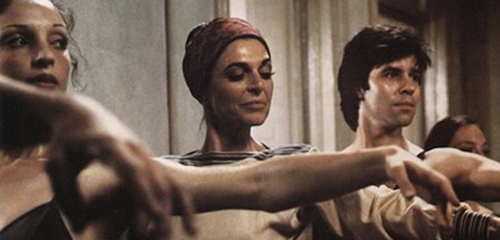
The Turning Point (1977, Herbert Ross) 35mm print!
March 14, 2016
Thanks to a great screenplay by gay director, playwright and screenwriter Arthur Laurents, and the performances of Shirley MacLaine, Anne Bancroft and future ballet legend Mikhail Baryshnikov (making his big-screen debut), Herbert Ross’s THE TURNING POINT received 11 Academy Award nominations in 1977, and became a cult classic amongst dancers and enthusiasts. But despite its reputation, THE TURNING POINT hasn’t been screened in New York theaters in years, which is why we’re so thrilled that our guest presenter, celebrated young New York dance artist niv Acosta has chosen it. In Ross’s acclaimed drama about the world of professional dance, MacLaine and Bancroft play two ballet dancers whose lives take dramatically different turns. Years ago, DeeDee (MacLaine) left the company to raise a family and open a dance studio, while Emma (Bancroft) became a world famous ballerina. Conflict arises when DeeDee’s daughter is accepted into Emma’s company, leading to major changes for both women.

Pom Poko (1944, Isao Takahata) 35mm print!
February 8, 2016
In this powerful and provocative anime from the legendary Studio Ghibli, a race of magical, shape-shifting dogs who resemble raccoons band together to fight back when capitalist developers threaten to build over their home. The film is a favorite of DarkMatter, (Alok Vaid-Menon & Janani Balasubramanian) the South-Asian trans performance art duo dedicated to challenging the standard cultural conversations surrounding trans and non-binary people of color in both straight and LGBT communities. They write, “Raccoons are associated with trash, nighttime, danger, and disease...In this film they are powerful, creative, imaginative, and community driven -- all while under incredible economic and environmental duress from human civilization…” You won’t want to miss this post-screening discussion.

Slaves of New York (1989, James Ivory) 35mm print!
January 4, 2016
This fabulously fun adaptation of 80’s NYC it girl Tama Janowitz’s hit short story collection follows a quirky fashion designer (Broadway legend Bernadette Peters) as she tries to find love and success in the kooky downtown art scene. The film’s story, soundtrack, and - most importantly - wardrobe, was an inspiration to our guest presenter, fashion designer Brad Callahan (BCALLA) whose wild and outrageous creations are favorites of Lady Gaga, Miley Cyrus, and every fashion-forward drag queen in Brooklyn. “The Stephen Sprouse fashion show in the middle of the movie is major,” Callahan writes, “and a gallery scene inspired my ‘Drawing is Fun’ collection.” Join us as we kick off 2016 in style!
2015

Natural Born Killers (Director's Cute) (1994, Oliver Stone)
December 14, 2015
Hitch a ride on route 666 with Mickey and Mallory, the celebrity crime couple at the decentered core of Oliver Stone's most controversial film. Screened in its full, unwieldy director's cut, carnage collides with zealous media moguls all set to a searing soundtrack littered with Nine Inch Nails, L7 and Patti Smith. For author, graphic novelist and The L Word scribe Ariel Schrag, "something about Mallory Knox's rage, her fuck-all attitude, her shitlist ass kicking spoke to everything queer and ready to burst inside my fourteen-year-old self... At that age the intensity of this frenzied, hallucinatory, collage-style film felt like some version of the truth."

Fame (1980, Alan Parker)
November 23, 2015
Everyone remembers FAME’s Oscar-winning title song, but how many of us can recall the brilliant way the film depicts the struggles of developing artists? Over four years, a group of teenage performers at NYC’s High School of the Arts deal with issues familiar to anyone in creative fields – from rejection to self-discovery to sacrifice and beyond. Since helping others learn to navigate those waters is part of our mission at Q/A/F, we’re thrilled that our guest presenter, multi-disciplinary artist Kia LaBeija has chosen this wonderful film. Kia writes, “Creativity stimulates minds, forms discipline and shapes well rounded young adults. This film is one of my favorites.”

Vagabond (1985, Agnès Varda)
October 19, 2015
The Goddess of the French New Wave, Agnès Varda, opens this poetic opus with a drifter -- played by the brilliant Sandrine Bonnaire -- found frozen on the roadside. Told through flashbacks, Vagabond traces the route of Mona, as she moves through French farmlands, wandering in and out of the lives and loves of men and women, alike. "It’s rare to see a young woman’s life portrayed in such utter singularity, outside of society, and with a will so strong," writes K8 Hardy - artist, filmmaker and founding member of the queer feminist journal LTTR. "The power of this film shook me to the core and also made me realize that it is possible to make something without the traps of sexism."

Hush... Hush, Sweet Charlotte (1964, Robert Aldrich)
September 21, 2015
“Suspense that starts with an agonized whisper and mounts to a shattering climax!” With all the teeming ingredients of a Southern Gothic potboiler, sweet Charlotte lives a life of demented seclusion, haunted be the mysterious slaying of her married lover some 36 years prior. When a visitor arrives in the form of her estranged cousin, secrets erupt in this Hollywood Golden Age têt-à-têt between first class stars Bette Davis and Olivia de Havilland. For performer and playwright Charles Busch, the film was a turning point, “I had my father take me to the opening day. The stars were there, promoting the film. I was transfixed,” confesses Busch, “studying how a legendary actress behaves.”

Friday (1995, F. Gary Gray)
August 17, 2015
“Bye, Felicia!”
Friday was hailed as an instant classic the moment it hit theaters in 1995, thanks to a breakout performance by Chris Tucker and its loving send-up of familiar black neighborhood figures. For tonight’s guest, poet Angel Nafis, whose work has been compared to Ntozake Shange and June Jordan, seeing her world reflected on screen was a powerful experience, but even more important was the presence of “impossibly fine” actress Nia Long, as a “black girl next door” who wasn’t a stereotype. Nafis found a rare on-screen role model, and felt, “almost itchy with the desire to put her face near my face.” Don’t miss this special 20th anniversary screening.

James Baldwin: Price of the Ticket (1989, Karen Thorsen)
July 20, 2015
In February, QAF audiences packed the IFC for A LITANY FOR SURVIVAL, about the poet Audre Lorde. This month, we’re thrilled to present another classic film about a landmark black literary figure. PRICE OF THE TICKET brilliantly weaves rarely-seen archival footage from over 100 sources with intimate interviews and eloquent public speeches to form an astounding portrait of the legendary writer and Civil Rights leader James Baldwin. For award-winning Young Adult author Jacqueline Woodson, who dreamed of meeting Baldwin, the film “shows us his brilliance and thoughtfulness, his before his time-ness,” and “allows us to meet the man who changed so many lives.” As August, 2015 marks James Baldwin’s 90th birthday, we are proud to present this valuable and vibrant documentary masterwork in celebration of one of New York’s most significant sons.
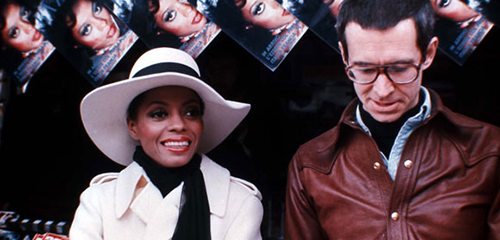
Mahogany (1975, Berry Gordy)
June 8, 2015
Black Summer Nights is thrilled to kick off Gay Pride Month with this one-of-a-kind melodrama turned gay cult classic starring Diana Ross as a working class woman whose meteoric rise from shopgirl to high fashion model tohaute couture designer is challenged by her relationships with a dashing politician (Billy Dee Williams) and a malevolent gay photographer (Anthony Perkins). We were originally planning on welcoming Tony award-winning, actor, singer and playwright COLMAN DOMINGO (SELMA, PASSING STRANGE) as our guest host tonight, but Colman’s been cast in a fantastic new film and has been suddenly called away. But he’ll still be intro-ing the film via Skype, and then, since we couldn’t leave you without a FABULOUS guest for the post-screening Q&A, we’re thrilled to welcome the one and only RHONDA ROSS, Emmy-nominated actress, jazz singer, and daughter of DIANA ROSS & BERRY GORDY, the star and director of Mahogany!!! We’re thrilled to have Rhonda with us to offer her incredible insights into the legacy of this fabulously fun film!

Looking for Langston (1989, Isaac Julien)
May 11, 2015
We are thrilled to kick off BLACK SUMMER NIGHTS with this Teddy Award-winning film, which became a cult hit thanks to director Isaac Julien’s sensual and dreamlike portrait of the gay poet Langston Hughes and his affairs during the Harlem Renaissance. For our guest host tonight, the musician and performance artist M. Lamar, whose work regularly explores black history and sexuality, the power of this and other Julien films is seeing, “Black men, black beauty and black homosexuality on screen as it has never been seen before or since.” He continues, “In the wake of Ferguson I would love for us to look at this film and think about how black men are seen in our culture and how this film disrupts that white supremacist view.”

To Sleep With Anger (1990, Charles Burnett)
April 13, 2015
When a seemingly well-adjusted family gets a visit from a mischievous old friend named Harry (Danny Glover), his actions turn their entire world upside down. Is Harry evil? The devil? Or something else? And will the family be able to stop him before it’s too late? Acclaimed writer-director Charles Burnett’s (KILLER OF SHEEP) third feature is a brilliantly observed family drama which draws on Black folklore to explore the tensions that run beneath all our stabile lives. Standout performances from Glover, Sheryl Lee Ralph, Mary Alice and Ethel Ayler helped net it four Independent Spirit Awards and a special jury prize at Sundance. The rarely screened film is also a favorite of our guest host, the amazing singer-songwriter Toshi Reagon, who recently celebrated 31 legendary years performing at Joe’s Pub and has worked with everyone from Lenny Kravitz to Pete Seeger. “The first time I saw it I stood up and clapped when it was over,” she writes. We’re sure you will too.

Batman Returns (1992, Tim Burton)
March 23, 2015
Tim Burton put the goth back in Gotham for his hit 1992 sequel BATMAN RETURNS, which features a villainess who finds her strength through kinky black bondage wear, a theme song by goth queen Siouxsie and the Banshees and a script by black comedy genius Daniel Waters (HEATHERS). Though it was criticized by parental groups for being too dark, BATMAN RETURNS nonetheless struck a chord with a generation of “middle-American, tortured oddballs” like our guest presenter, performance artist and goth opera wunderkind Joseph Keckler, who remembers being “entranced by the deformed and power-hungry Penguin (Danny DeVito) and even more by the revelation of Catwoman (Michelle Pfeiffer): undergoing a vampire-like interspecies resuscitation, she transforms from the scattered, apologetic and subservient Selina Kyle to an oversexed vigilante, whip in hand. Still floating around in the collective unconscious of my generation, like trash in the sewers of Gotham, are fantasies of being with her and being her, of coming back to life with claws.”

A Literary For Survival: The Life And Work of Audre Lorde (1995, Ada Gay Griffin & Michelle Parkerson)
February 23, 2015
Audre Lorde was a poet, a lover, a mother and a warrior. Standing on the front lines of civil and sexual rights struggles, Lorde’s voice rang out with a passion that inspired a generation of activists and artists. A LITANY FOR SURVIVAL traces Lorde’s contribution to the fields of poetry and civil justice, including many interviews with authors like Adrienne Rich and Sapphire, who saw Lorde as a mentor and mother. “I saw the film when it first came out and the Audre Lorde whose presence I got to experience through the film continues to push me,” described Jennifer Miller, performer, dancer and founder of the Circus Amok, a New York based circus-theater company founded in 1989. “I remember being shaken and jolted and led and fed and dropping my jaw and righteous anger and leaving knowing I could do better.”

To Die Like A Man (2009, João Pedro Rodrigues) 35mm print!
January 12, 2015
Tonia rules the drag club scene of Lisbon. But when she decides to transition from male to female, what fates lay in store for her younger lover, her faith, her son and herself? TO DIES LIKE A MAN is a striking epic from acclaimed Portuguese filmmaker João Pedro Rodrigues (O Fantasma). Voted Best Undistributed Film of 2009 by the Village Voice, Rodrigues's film is a lyrical and fantastical melodrama that Columbian artist Carlos Motta applauds as a, “beautiful meditation on gender identity, drag, gay culture, aging and death.” Like much of Motta’s work, the film “addresses some the many challenges and vulnerabilities of living a queer life: How does one construct oneself in the world as a queer person? How does one create alternative relationships, families, ties?”
2014

Young and Wild (2012, Marialy Rivas)
December 15, 2014
“WE, the fornicators!" Daniela – a bi Chilean sex blogger / schoolgirl – must shoulder the hellfire of her Evangelical Christian family after being caught in the act and ousted from her staid school system. Snatching the World Cinema Screenwriting award at Sundance, this explicit and ecstatic romp is a poppy teen portrait of the AIM age. For Iranian-American filmmaker Desiree Akhavan (APPROPRIATE BEHAVIOR), it was the "first film I've seen that effectively depicts the very real interactions people have over the internet, as well as one of the most honest portrayals of teen sex, love and lust out there."

In Celebration: All Over Me (1997, Alex Sichel)
November 10, 2014
In June, filmmaker Alex Sichel died at the age of 50, after a 3-year battle against breast cancer. A central figure in the early years of New Queer Cinema, Alex was also a screenwriter, a beloved teacher at both Columbia and NYU, and a fiery, opinionated member of both the Queer and Film Communities. In her honor QAF is proud to present her gorgeous first feature, ALL OVER ME, a coming-of-age drama -- born out of the riot grrrl movement -- about a teenager from Hell’s Kitchen (To Die For’s Alison Folland) who falls in love with her bad-girl best friend (Tara Subkoff, of the cult fashion line, Imitation of Christ). The evening will also include a short clip from A FILM ABOUT ANNA, the extraordinary film Alex was working on about her illness at the time of her death. Many of those closest to Alex, including her sister and co-screenwriter Sylvia Sichel, actress Folland, and producer Dolly Hall, will join us for this special, community-wide remembrance.

Liquid Sky (1982, Slava Tsukerman)
October 27, 2014
Androgynous fashion models, dope dealing performance artists, UFOs and killer orgasms are just a few of the elements that made Russian director Slava Tsukerman’s Warholian sci-fi film an instant cult-classic upon its release in 1982. Most alluring to the LGBT crowd was co-writer and star Anne Carlisle, who brilliantly played both bisexual model Margaret and her skuzzy drug-addict nemesis Jimmy (the scene where both characters have sex is surely a first in film history). The film’s vision of New York City as the coolest, strangest, most exciting place on Earth was particularly appealing to a generation of artists, freaks and queers, including our guest presenter, Russian-American artist and writer Slava Mogutin who moved here after being exiled for his subversive and pro-gay writings and activism in 1995.
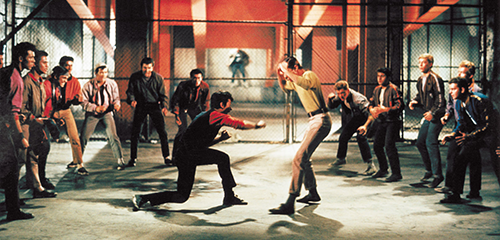
West Side Story (1961, Jerome Robbins & Robert Wise)
September 8, 2014
It took four of New York’s leading gay theater artists – Leonard Bernstein, Jerome Robbins, Stephen Sondheim and Arthur Laurents – to brilliantly update one of the most beloved straight love stories in history, William Shakespeare’s Romeo and Juliet. For our guest presenter, acclaimed choreographer Miguel Gutierrez (whose most recent show premiered at the 2014 Whitney Biennial) the Academy Award-winning film adaptation was his favorite film growing up, even though its “weird mix of codes” set him up for a “lifetime of confusion about being a queer, Latino dancer." If you’ve only seen it on TV, don’t miss the chance to see it on the big screen. Tonight, tonight...

The Queen (1968, Frank Simon)
August 11, 2014
Before there was Drag Race, there was The Queen. This seminal documentary about a 1967 NYC drag contest goes behind the scenes, recording the rehearsals, the conversations, and the jealousies that emerge in the lead up to the big competition. For drag king Murray Hill -- “the hardest working middle-aged man in show business” -- it was also “the first glimpse of gay/drag life that I'd ever seen.” Starring the legendary Flawless Sabrina, and including cameos by Andy Warhol, Edie Sedgwick and Mario Montez, we can’t think of a better way to end our Summer of Drag than with this perfectly preserved time capsule of the pre-Stonewall New York drag scene.

Hedwig and the Angry Inch (2001, John Cameron Mitchell) 35mm print!
July 7, 2014
20 years after Hedwig and the Angry Inch first appeared as a revue at the legendary rock n' roll drag party Squeezebox, the creators of Brooklyn’s BUSHWIG festival are carrying the torch with their annual dragstravaganza, featuring the most exciting young queens in NYC. We’ll be joined by some of the girls and BUSHWIG co-founders Matty Beats (aka Horrorchata) and Simon Leahy (aka Baabes Trust), who writes, “We grew up with Hedwig, and love it because it deals not only with performative gender expressions but also the idea of multiple genders in one being. It was the first film to bring these ideas to a mainstream audience.” Join us for this groundbreaking film, plus a special surprise or two.

Suddenly, Last Summer (1959, Joseph L. Mankiewicz) 35mm print!
June 9, 2014
Cannibalism. Homosexuality. Lobotomy. Only Tennessee Williams could pull together this Gothic mix and write a film as moving and beautiful as this. Elizabeth Taylor stars as a young woman who, at the insistence of her wealthy aunt (Katherine Hepburn) is being evaluated to receive a lobotomy after witnessing the death of her cousin. For the legendary Latina drag queen Barbra Herr – who started out in Times Square’s Sally’s Hideaway before owning the stages of Escualita, The Monster, and Friend’s Tavern -- the film’s depiction of violence against homosexuals “is still alive and well in our society today in this country and all over the world.”

Outrageous! (1977, Richard Benner)
May 12, 2014
Summer of Drag gets kicked off with this cult classic about a hairdresser whose schizophrenic roommate convinces him to turn his passion for imitating Hollywood starlets into a full-fledged career. Before long Robin (played by the brilliant Canadian drag superstar Craig Russell) is wowing crowds with his impressions of Judy Garland, Bette Davis, Mae West and more. Our guest host is the legendary drag superstar Lypsinka (aka John Epperson), who calls Outrageous! “the best feature film about drag performance and what it means to have chosen such a weighted, fraught profession.” Come out and celebrate the beginning of a very glamorous summer!

I Shot Andy Warhol (1996, Mary Harron)
April 14, 2014
Why did the lesbian playwright shoot the gay artist? No, it’s not the set-up to a joke, but the central question of Mary Harron’s whirling true-crime biopic about the woman who almost killed pop artist Andy Warhol for “a lot of real involved reasons.” Was Valerie Solanas (Lili Taylor) crazy? Was Andy out to get her? Or was she just too damn weird, even for the Factory? This surprisingly funny look at the chaotic conclusion of the pop art scene was a pivotal film for playwright and filmmaker Madeleine Olnek (Codependent Lesbian Space Alien Seeks Same) who calls it “unique, subversive” and “brilliantly directed.”

The Aggressives (2005, Daniel Peddle)
March 24, 2014
This acclaimed documentary -- made by one of the fashion worlds most sought after casting directors -- picks up where Paris is Burning left off, focusing on a group of six NYC lesbians who dress and identify as men, blurring the lines between butch dyke and trans-male identities. For our guest host, writer-artist-performer and member of NY's own House of Ladosha, Juliana Huxtable, the film explores “the complexities of how desire is negotiated between the multitude of gender types in the ballroom community." You won't want to miss this rare screening of a film that for many in the Community has already transcended to “Legendary!"

Song Sung Blue (2008, Greg Kohs)
February 24, 2014
In the ’90s, Lightning and Thunder were Milwaukee’s biggest husband and wife Neil Diamond cover band. This hilarious and gut-wrenching documentary follows the loving couple’s high moments (performing with Pearl Jam) and very low moments (accidents, marital turmoil, illness, and more). Virtually unseen since winning both audience and jury awards at the Slamdance Film Festival in 2008, it’s a fascinating look at a very different kind of performance art. The brilliant NYC avant-pop star, film, video and visual artist Cody Critcheloe (of SSION) is our guest tonight. He picked the film because “I love love stories. It’s tragic and beautiful and made me cry really hard. I’ve never forgotten it.” Turn on your heartlight and join us.

Rebecca (1940, Alfred Hitchcock) 35mm print!
January 13, 2014
New bride Joan Fontaine is thrilled after marrying rich and charming Laurence Olivier, but everything comes tumbling down when she moves in with him and his creepy housekeeper, Mrs. Danvers, played with gothic lesbian perfection by Dame Judith Anderson. Will the memory of the first Mrs. DeWinter ruin their bliss? And just how did she die, exactly? Hitchcock’s Hollywood debut netted him his only Best Picture Oscar and the fascination of queer film fans like actress, comedian and singer Lea Delaria (currently tearing it up as a lesbian inmate on Netflix smash Orange Is the New Black). She says “To really appreciate Blue is the Warmest Color, Bound, Go Fish, and others, we need to acknowledge the lesbian undertones of Rebecca.” Manderley awaits!
2013

Law of Desire (1987, Pedro Almodóvar)
December 9, 2013
Sex. Desire. Obsession. While those are all givens in an Almodóvar movie, Law of Desire is a special kind of absurdist romance that made Pauline Kael write, “Almodóvar’s tone is not like anyone else’s… It doesn’t disguise its narcissism; it turns it into bright-colored tragicomedy.” Porn director Pablo has a steamy one-night stand with a young fan, Antonio (Antonio Banderas). But while Pablo is still in-love with his ex, Antonio falls into an obsession. Meanwhile, his transsexual sister, Tina (Carmen Maura), struggles with her own misogyny. Join us for what’s sure to be a festive, glamorous evening, presented by performance artist and downtown legend, Carmelita Tropicana!

Victim (1961, Basil Dearden)
November 4, 2013
The first film in the English language to ever use the word “homosexual”, Basil Dearden’s intense drama features an extraordinary performance by Dirk Bogarde (a British matinee idol whose own homosexuality has been well-documented), playing a married barrister who becomes a victim of a blackmailer targeting closeted gay men in London. Visual artists McDermott& McGough first saw the film in their teens, and it into their own hidden desires: “Today, homosexual blackmailing may not have so much power. But with the anti-gay laws passed in Russia and how homosexuals are treated in Africa, the Middle East, etc., Victim still resonates powerfully.”

Dancer in the Dark (2000, Lars von Trier) 35mm print!
October 14, 2013
Icelandic songstress and alterna-gay icon Björk stars in director Lars von Trier’s Palme d’Or winning musical melodrama about a good-hearted factory worker who toils to save enough money for an operation to cure her son of the same genetic blindness that she’s been afflicted with. Caught in tragic circumstances, Selma retreats into imaginary musical numbers to express her sorrow and pain. For our guest artist Jacolby Satterwhite, von Trier’s blending of realism, fantasy and surrealism was a major inspiration on his thrilling, critically heralded video and performance work.

Over the Edge (1979, Jonathan Kaplam)
September 30, 2013
In this late 70s masterpiece of teen angst, out-of-touch parents set off a chain of events that inspire their children to commit an astonishing act of rebellion. Kaplan’s realist drama was so controversial that distributor Orion Pictures shelved the film for two years. For our guest presenter Amos Mac, publisher of the groundbreaking trans zine Original Plumbing, the film is a bittersweet reminder of “the cruel joke of my adolescence.” You won’t want to miss this provocative cult classic featuring a 15-year-old, midriff-baring wearing Matt Dillon in his first film role.

My Beautiful Laundrette (1986, Stephen Frears)
August 19, 2013
This queer cinema landmark about a young British Pakistani who opens up a laundromat with his white punk lover (a very young Daniel Day-Lewis) was a late 80s inspiration for an entire generation. For acclaimed visual artist Chitra Ganesh, “the film’s greatness comes from not only being one of the first films to represent queerness in South Asian subjects,” but also as story of queer desire “animated by dynamics of immigration, class, colonialism, and the dubious promise of urban subcultures that were liberatory and racist in equal measure.” A film that will remind you what queer cinema has been and what it could be again!

Harold and Maude (1971, Hal Ashby)
July 22, 2013
What could be queerer than the unlikely love story of Ruth Gordon and Bud Cort? Not much, and we couldn’t be more excited to have director Sebastian Silva, of this summer’s wonderful, hilarious CRYSTAL FAIRY (2013), present this Hal Ashby classic. You probably know this, but here it goes: 20-year-old Harold (Cort, who lived on-and-off with Groucho Marx for seven years) is a suicidal wealthy heir who meets the 79-year-old, eccentric Ruth (Gordon), who teaches him the value of banjo playing, and “making the most of his time on earth.” Filled with the most uplifting, inspiring gallows-humor you’ve ever seen, don’t miss HAROLD AND MAUDE – and feel free to sing along to Cat Stevens’ “If You Want to Sing Out, Sing Out.“

Performance (1968, Nicolas Roeg and Donald Cammell)
June 3, 2013
Performance takes viewers on a hallucinogenic trip through the underbelly of 1960s bohemia as seen through the eyes of a sadistic gangster on the lam (an ultra-glam James Fox). Filmmaker and activist Gregg Bordowitz first saw the film in 1987 during the height of the AIDS crisis. "It appealed to my queer sensibilities with its bisexuality, gender confusion, and passion, and taught me that 'performance' is a matter of self-constructed persona embracing both the good and evil in the psyche.” Performance endures as a bold testament to a time of seismic change, and reminds us that the concept of self is always open to interpretation.

Ms. 45 (1981, Abel Ferrara)
May 6, 2013
Abel Ferrara’s morbidly funny masterpiece of feminist rage -- and the most heart-warming of all rape revenge films -- Ms. 45 stars the bewitching Zoe Lund as a mute seamstress, who, after being assaulted twice in one day, starts to kill men with her .45 caliber pistol. Performance artist Viva Ruiz has long been taken with this gritty urban fairy tale: “As a native New Yorker, I swoon over the images of NYC at its 1981 most romantically trashy, authentic and unsterilized = R E A L.” Real indeed, and not to be missed on the big screen.

Set It Off (1996, F. Gary Gray)
April 15, 2013
In the 90’s, lesbian chic was all the rage, but as documentary filmmaker Yoruba Richen remembers, there was (and remains) few images for black women to identify with, which is why this film, about 4 women who rob a bank, meant so much to her: “When Set it Off came out we had a reason to go to the movies on a Friday night, bring our dates and swoon over butch Queen Latifah and beautiful Jada Pinkett. The film showed black women being bad and sexy and going for what we wanted. I ate it up and began to dream that maybe one day I could make films that showed us in all of our complexity- fearless, flawed and determined.”

Ashik Kerib (1988, Sergei Parajanov)
March 18, 2013
ASHIK KERIB is the last completed film by Sergei Parajanov (THE COLOR OF POMEGRANATES), an Armenian filmmaker who was imprisoned by the Soviet Union for “incitement to suicide and homosexuality.” Dedicated to the director’s friend Andrei Tarkovsky, this delightful adventure about a poor boy who must spend 1001 days accumulating riches in order to marry a wealthy girl is told through sumptuous tableaus, with colorful characters moving and spinning across the screen in richly decorated costumes, creating the impression of a folk dance musical. At the center of the film is the luminous presence of the beautiful actor Yuri Mgoyan, often speculated to have been the director’s lover. Parajanov, who never denied his homosexuality, was championed by Fellini and Bertolucci, and has been deeply influential on My Barbarian, the LA-based performance and video group, in large part because of the director’s “ability to imbue depictions of folk cultural forms with a queer sensibility and magical eroticism in the face of Soviet power.” Join us for a rare screening of this magical film, and a provocative discussion with My Barbarian’s Alex Segade and Malik Gaines!

The Brother From Another Planet (1984, John Sayles)
February 18, 2013
John Sayles’s comedy gives a smart, political edge to the oft-told “stranger in a strange land” sci-fi story with African-American actor Joe Morton as “The Brother”, an alien stranded in New York City. Chased by two white Men in Black, he must also negotiate a myriad of class and racial challenges. The film’s connection between “alienness” and “blackness” resonated strongly with musician and performer Geo Wyeth (who released his first studio album, Alien Tapes): “I wish I had seen this as a teenager… If you have ever felt your own body permeating unseen dimensions or worlds, unreachable by language or logical perception, you will connect to this film.”

Three On A Match and Bubbles (1930, Mervyn Leroy)
January 14, 2013
Featuring Bette Davis, Joan Blondell, and a blazingly memorable performance by Ann Dvorak as the doomed, sybaritic heroine, Three on a Match perfectly embodies the forbidden pleasures of Pre-Code Hollywood that seduced our presenter, New Queer Cinema pioneer Tom Kalin (Swoon, Savage Grace). “At an impressionable age, I stumbled upon the mirror-world of Pre-Code films on late night television,” Kalin says, “these movies dared to show marital discord with pleasure-seeking female protagonists who flaunted convention.” Preceded by the remarkably dream-like Bubbles (featuring the young Judy Garland). Join us for a special evening of deep drama and sinuous sensuality!
2012

Annie (1982, John Huston)
December 10, 2012
What? Annie, that big budget classic 1982 kids movie based on the hit Broadway show, is some kinda queer film? Yes!, says the brilliantly talented downtown singer, actress, playwright and Our Hit Parade regular Erin Markey. The story of a fearless little redhead orphan trying to find a loving family resonated with Markey, who says “I worked it out so that I could turn the age of 18, leave my parent's house and become a queer-- AKA an orphan. Being queer in a world that generally considers it criminal or invisible means that there is not really a map for what a successful life should look like. Being an artist helps too. So Annie's movie musical orphan lifestyle seemed like the most exciting fit.” Not to mention the cast of fabulous female stage legends – Bernadette Peters, Ann Reinking, Carol Burnett as the wonderfully cruel Miss Hannigan, and newcomer Aileen Quinn as little orphan Annie. Come see the film through Erin Markey’s eyes and remember – tomorrow is only a day away!

Norman... Is That You? (1976, George Schlatter)
November 19, 2012
Called the "first pro-gay fag joke" by Vito Russo, NORMAN... IS THAT YOU? stars comedian Red Foxx and the iconic Pearl Bailey as an African-American couple who discover their only son is gay - and that his lover is white. Adapted from a Broadway play of the same name about a Jewish family, director George Schlatter (ROWAN & MARTIN'S LAUGH-IN) translates Borscht-belt Gay Jewish jokes into a collection of stereotypes about black culture. With appearances by Madame and Waylon Jennings, the result is dated, fascinating, and ultimately results in a positive attempt to show a father trying to understand his gay son. Presented by Cheryl Dunye, whose landmark feature, The Watermelon Woman (1995) explores the history of both black women and lesbians, don't miss this rare screening of a film whose original poster boasted, "There's a Sexual Revolution Going On...And All the Leaders Are in My Family!"

Jules and Jim (1961, Francois Truffaut)
September 24, 2012
Francois Truffaut’s early masterpiece follows a passionate menage-a-trois between two men and the alluring, enigmatic Jeanne Moreau over the course of twenty years. Its only fitting that legendary playwright and activist Larry Kramer (The Normal Heart, The Destiny of Me), whose work has always tackled the mysteries of human desire, has chosen to present a film that transforms old-fashioned Euro melodrama into modernist new-wave art. “With JULES AND JIM, Truffaut broke almost every rule on how to make a movie how it looked, sounded, was acted, edited, photographed, scored, and especially for me, how it was scripted. Though not often discussed as a gay love story, it has one – not an especially bold one, but then the French can be rather joyously naive about certain things, and sex is one of them.”

Rope (1948, Alfred Hitchcock)
August 20, 2012
Alfred Hitchcock’s 1948 thriller about two “best friends” hosting a dinner party for a man they’ve already murdered and hidden in the room is famous for being shot in a series of long takes, creating a fascinating mixture of play and film. But Hitchcock also pushed the envelope by casting two actors he knew were gay – John Dall and Farley Granger – to play the two leads, who were based on famed gay killers Leopold and Loeb. The coded Pre-Stonewall portrayal fascinated our guests tonight, George Chauncey, author of the seminal "Gay New York: Gender, Urban Culture and the Making of the Gay Male World," and noted queer film theorist Ronald Gregg.

I Could Go On Singing (1963, Ronald Neame)
July 23, 2012
Actress Heather Matarazzo (WELCOME TO THE DOLLHOUSE, OUR GUYS: OUTRAGE IN GLEN RIDGE) has always identified with the outsider, so it’s no surprise to learn that she has long carried a torch for the great Judy Garland. Judy’s haunting last film, I COULD GO ON SINGING is a musical melodrama about a singer who returns to London for one last show, and who reunites with the son and the lover (a great Dirk Bogarde) she had left behind. For Matarazzo, the film conveys “the experience I’ve had of feeling personally so uncomfortable in my own skin, continually asking others to validate who I am, and it truly never being enough.”

Salo, Or the 120 Days of Sodom (1975, Pier Paolo Pasolini)
June 11, 2012
Few films in the history of cinema are as infamous as Pasolini’s 1975 masterwork. Set after the fall of Mussolini’s Italy, SALO focuses on four fascist libertines who kidnap eighteen teenage boys and girls and subject them to extreme sexual and mental torture. Legendary East Village artist and activist duo Jack Waters and Peter Cramer first saw the film in Cologne in 1984, and found that it unsettlingly mirrored “the residual sense of post-Nazi Germany still intact.” Titillating and terrifying, SALO (rarely shown on 35mm) is impossible to see without feeling both incriminated and aroused… just as Pasolini would have wanted.

Thundercrack! (1975, Curt McDowell)
May 21, 2012
An insane X-rated black comedy from the minds of two late, great underground cult film auteurs, George Kuchar and Curt McDowell, THUNDERCRACK! begins as an Old Dark House-style gothic horror but swiftly turns into an outrageous gut-busting camp sex fest. According to our guest, the brilliant author Laurie Weeks (Zippermouth), who first saw the film in 2000, “Guided by humor, curiosity, and sheer delight in the black-and-white gorgeousity of its own anarchy, the film is queer to the core.” You won’t want to miss this rarely screened and not-on-DVD masterpiece whose poster promised, “Ecstasy so great that all heaven and hell became but one SHANGRI-LA!”

The Killing of Sister George (1968, Robert Aldrich)
April 23, 2012
“The story of three consenting adults in the privacy of their own home!” proclaimed the poster for this brilliant 1968 lesbian classic about a sadistic soap opera actress whose relationship with a much younger lover crumbles when her TV character is “killed off.” It stars the magnificent Beryl Reid, sexy Susannah York and Coral Browne (Vincent Price’s beard) and was directed by Robert Aldrich (Whatever Happened to Baby Jane?). Our guest host, NYC drag legend Lady Bunny is chock-full of tidbits about this favorite, which she claims has the best lesbian bar sequence in film history (“even better than Foxy Brown”). *Lady Bunny will not be presenting as originally scheduled. A special guest will be announced at a later date. We look forward to welcoming Lady Bunny back at a later date*

Postcards From America (1994, Steve Mclean)
March 19, 2012
It’s hard to believe that Steve McLean’s landmark of queer cinema was finished only two years after the death of its subject, artist and provocateur David Wojnarowicz. A passionate, sad kaleidoscopic ride through New York gay life, the film highlights the intensely personal nature of Wojnarowicz’s work, from his Jersey roots, to his years hustling on and off the West Village piers. For filmmaker Rose Troche, who worked on the film while she was finishing her own queer groundbreaker, go fish, the film “epitomized a moment when we began to believe in our voice...and represents the beginning of a community and collectivity that still exists.”

Runaway Train (1985, Andrey Konchalovskiy)
February 27, 2012
RUNAWAY TRAIN is the highly propulsive story of two men who escape from a maximum-security prison via a runaway train pummeling through the Alaskan wilderness. One of the most exhilarating films you’ll ever see, this 1985 action masterpiece stars the two great hunks of the era, big-lipped Eric Roberts and Jon Voight in what is arguably his most memorable performance. The film astounded our February guest, choreographer Elizabeth Streb, and inspired her to start an Action Lab that would similarly stretch the boundaries of human possibility. For Streb, the film is also a very queer reminder that “in choosing whom we love, we break all rules.”

Come Back to the Five and Dime Jimmy Dean, Jimmy Dean (1982, Robert Altman)
January 30, 2012
On the 20th anniversary of James Dean’s death, a group of female fans reunite to reminisce about happy days gone by. But when a mysterious yet familiar looking stranger arrives, the truth behind the women’s faded memories come out. Photographer Jack Pierson fondly recalls the excitement amongst his friends (Mark Morrisroe & Tabboo!) over the arrival of Robert Altman’s 1982 cult classic, which starred Cher in her first breakthrough role, along with icons Karen Black, Sandy Dennis, and Kathy Bates. It’s also one of only a few Altman films to feature an LGBT main character.
2011

The Servant (1963, Joseph Losey)
December 19, 2011
We couldn’t have a chillier, darker, or queerer film for December: Joseph Losey’s 1963 adaptation of Harold Pinter’s The Servant. Aristocratic blond Tony (James Fox) hires butler Hugo Barrett (Dirk Bogarde) to look after his house, but soon the roles begin to shift. A film about tops and bottoms, The Servant is a favorite of Drew Daniel and M.C. Schmidt, aka Matmos, the musical duo behind some of the most cutting-edge music to emerge in the last 15 years. Daniel writes, “the real center of this movie’s power comes down to the slow burning, competitive, passionate bond between two men.”

Pay It No Mind: Marsha P. Johnson (2011, Michael Kasino and Richard Morrison)
November 28, 2011
Marsha P. Johnson was a revolutionary trans activist, Stonewall instigator, Andy Warhol model, drag queen, prostitute, and Saint, as well as a downtown NYC fixture from the 1960’s through her too-soon demise in 1992. Johnson persevered through a life embodied by her middle initial P, which stood for “Pay It No Mind.” A tribute from one queen to another, the magical Michael Musto presents the very special world premiere of Michael Kasino and Richard Morrison’s powerful documentary. Johnson’s friends and companions will also be present to discuss her important legacy.

Desperately Seeking Susan (1985, Susan Seidelman)(1985, Susan Seidelman)
October 24, 2011
DESPERATELY SEEKING SUSAN is ostensibly about a bored housewife (Roseanna Arquette) who becomes obsessed with a woman named Susan (Madonna), but on its release in 1985 it became something much more: the mainstream’s introduction to New York’s Downtown scene and the “big break” for the Material Girl herself. The film also has a surprisingly avant-garde pedigree, with guest stars including performance legends Ann Magnuson, Richard Hell, John Lurie, and Arto Lindsay. Inspired by Jacques Rivette’s Celine and Julie Go Boating, SUSAN is a tale of two women whose personalities meld and shift – something our guest presenters, choreography duo robbinschilds (Sonya Robbins and Layla Childs) explore in their dance-based video pieces. See it on the big screen!

Saturday Night and Sunday Morning (1960, Karel Reisz)
September 26, 2011
One of the defining films of the 1960s British New Wave, Karel Reisz’s rarely screened Saturday Night and Sunday Morning stars Albert Finney in his debut role as a rebellious factory worker juggling relationships with both a girlfriend and a married woman. The film’s raw subject matter and style had a profound influence on many British filmmakers, including Ken Loach, Mike Leigh, and our guest presenter Andrew Haigh, whose wonderfully honest and very sexy new film WEEKEND (opening at the IFC Center Fri 9/23) has become one of the most highly-anticipated queer films in years. Haigh writes, “Its exploration of the ‘outsider’ battling the mainstream is a theme essential to both the queer experience and to the kind of stories I want to tell.” Don’t miss it!

The Bitter Tears of Petra Kant (1972, Rainer Werner Fassbinder)
August 22, 2011
We're thrilled to finally be able to present a Fassbinder film, especially one as rich and rewarding as the classic PETRA VON KANT. Featuring the astonishing Margit Carstensen as a lesbian fashion designer who manipulate her assistant, daughter, mother, and lover – it's beloved by our guest presenter, critically-acclaimed choreographer Jack Ferver, who calls it a "wickedly funny, sexy, and gorgeous film about how insane we can all be." Sumptuously filmed by longtime collaborator Michael Ballhaus and featuring Fassbinder regulars Eva Mattes, Hanna Schygulla, and Irm Hermann.

All That Jazz (1979, Bob Fosse)
July 25, 2011
An outrageous autobiographical musical about a man addicted to speed, Vivaldi, Alka-Seltzer, and sex? God bless the seventies. Roy Scheider stars as Broadway legend Bob Fosse's alter-ego Joe Gideon, a pill-popping womanizer struggling to choreograph his latest show and avoid the beautiful Angel of Death (Jessica Lange) who keeps stopping by to flirt. It's naturally the all-time favorite film of the amazing "sadomasochistic transsexual dyke and gender outlaw" Kate Bornstein, who first saw it upon its release in 1979 and will happily expound upon its "cornball genius and laugh-a-minute tragedy." It's showtime, folks!

Paris is Burning (1990, Jennie Livingston)
June 27, 2011
"Opulence. You own everything!" Jennie Livingston's famously quotable documentary PARIS IS BURNING took America on a then-unseen journey into Harlem's vogue scene, following a cast of determined queens who serve maximum realness while dealing with issues such as AIDS, poverty, racism, and homophobia. The film's powerful and honest portrayal of a marginalized community left its mark on filmmaker Dee Rees, whose forthcoming film, PARIAH, is about an African-American lesbian from the Bronx. "The themes of freedom, expression of identity, and finding family/community are universal," Rees writes. In other words – LEGENDARY!

Johanna D'Arc of Mongolia (1989, Ulrike Ottinger)
May 23, 2011
German feminist filmmaker Ulrike Ottinger's boldly original epic stars the masterful French actress Delphine Seyrig, in her final screen role, as an ethnographer named Lady Windermere who befriends six other women on the Trans-Siberian Railway, then gets captured by a Mongolian warrior princess. This uncompromising film greatly influenced our guest presenter, artist Emily Roysdon. She writes: "Ottinger's work re-imagines the impossible. Her characters, their lives and their environs, are beyond counterculture. They make new worlds." Come join us on this incredible, strange, and rarely seen journey.

Desert Hearts (1985, Donna Deitch)
April 25, 2011
A very sexy, very romantic movie about lesbians playing in a theater that serves popcorn? That wasn't happening anywhere, anytime until Donna Deitch succeeded in making Desert Hearts in 1985. Pioneering experimental filmmaker Su Friedrich chooses a feel-good movie that was as radical in the mainstream when it came out as her own highly personal films have been within the Avant-garde. As Friedrich puts it, "It took Desert Hearts to introduce the mainstream to our world (or at least a corner of it set in Reno, Nevada, circa 1959) and more importantly to give us something to really enjoy while we ate our popcorn – large, please, with butter."
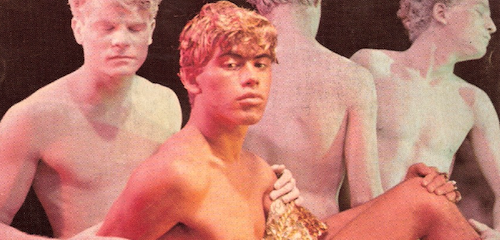
Pink Narcissus (1971, James Bidgood)
March 21, 2011
When filmmaker James Bidgood recently hosted Queer|Art|Film, there was much discussion about his underground erotic gay masterpiece Pink Narcissus. This month, we're thrilled to welcome Jonathan D. Katz, curator of the groundbreaking – and censored – gay portrait show Hide/See, to screen Bidgood's wild, thrilling, and very hot film. Painstakingly created over six years, Pink Narcissus imagines a young hustler's journey from innocence to depravity, and features some of the sexiest "trade" of the '60s, as well as multiple cameos by legendary playwright Charles Ludlam. A bona fide queer masterpiece, don't miss Pink Narcissus on the big screen!

Alice's Restaurant (1969, Arthur Penn)
February 28, 2011
For ever-revealing playwright/filmmaker/librettist Craig Lucas (Longtime Companion, Prelude to a Kiss, The Light in the Piazza), this remarkable film by the late Arthur Penn – based on folk singer Arlo Guthrie's era-defining autobiographical song – was a film that "carried with it such an ineffable ache of sorrow...that it wiped the smirk of bohemia right off the face of the '60s." Guthrie plays himself in the film, reenacting his persecution at the hands of small-town local law officials, and in Penn's wise, life-loving follow-up to Bonnie and Clyde, Lucas saw "the birth of a kind of American moviemaking" that he knew he wanted to be a part of. It's a movie you won't soon forget.

The Outsiders (Director's Cut) (1983, Francis Ford Coppola)
January 31, 2011
It's '80s hunk vs. '80s hunk when Patrick Swayze, Matt Dillon, Tom Cruise, C. Thomas Howell, Ralph Macchio, Emilio Estevez, Rob Lowe, and a simmering Diane Lane become players in a violent gang war between rich and poor teens in the early '60s. Coppola's adaptation of the classic coming of age novel – with its gang of sensitive, romantic outlaws – captivated writer Michelle Tea, who today leads her own band of punkish outsiders as the founder of the queer spoken word performance company, Sister Spit. Don't miss this rare Director's Cut screening, which corresponds more closely with S.E. Hinton's book.
2010

One Sings, The Other Doesn't (1977, Agnes Varda)
December 13, 2010
“Women are made, not born,” said Simone de Beauvoir. And Agnes Varda sets out to prove it in this unabashed paean to female solidarity. The genesis of this goodhearted story about the intimate friendship between two very different women came straight out of Varda’s experience traveling in the US, and witnessing the birth of Women’s Lib at the end of the 1960s. Powerhouse poet and performance artist Pamela Sneed brings us this rare screening of Varda’s vibrant, colorful film. A contrast in feminist style that’s not to be missed!

If... (1968, Lindsay Anderson)
November 15, 2010
Starring the ever-charismatic Malcolm McDowell, this still-shocking social satire of fascistic British mores and ritualized boarding school torture holds special meaning for this evening’s presenter Genesis P-Orridge, the pandrogynous founder of the anarchistic industrial bands Throbbing Gristle and Psychic TV. Raised in the UK, Genesis underwent years of hellish bullying at a British private school he/rself, noting that the film “is not nearly as vicious and appallingly sick psychologically as it really was for me.” You won’t want to miss an evening that’s guaranteed to be both highly personal, and eruptive.

The Thief of Bagdad (1940, Michael Powell)
October 11, 2010
A wild and thrilling tale involving genies, flying horses, beautiful princesses, and dastardly villains, THE THIEF OF BAGDAD’s incredible colors and fantastical innovations made a huge impression on the iconic photographer James Bidgood, director of the legendary erotic underground film Pink Narcissus. During the ’60s and ’70s, Bidgood built elaborate and fantastic sets in his apartment, painted stunning male models in bright hues of pink, blue, and green, and then snapped countless homoerotic pictures, influencing later photographers like Pierre et Gilles and David LaChappelle. At 77, Bidgood remains as much of a treasure as THE THIEF OF BAGDAD, and we’re thrilled to welcome him for a very special evening of Queer|Art|Film.

The Films of Act Up (2010, Various)
September 13, 2010
When the ever-influential writer and theorist Douglas Crimp first published an essay called Mourning and Militancy in 1989, he set off a bomb in both the art and AIDS activism worlds in which he was deeply entrenched. In conjunction with the monumental “ACT UP New York” show opening at the artists’ space White Columns, Queer/Art/Film is excited to have Crimp as this month’s guest artist, presenting a highly personal selection of activist videos that have meant the most to him, including Fast Trip, Long Drop by Gregg Bordowitz, and works by Matt Ebert, Ryan Landry, Maria Maggenti, and Jean Carlomusto, many of whom will be with us for tonight’s screening!

Funeral Parade of Roses (1969, Toshio Matsumoto)
August 23, 2010
Made in 1969 when homosexuality was still very much taboo in Japan, Toshio Mastumoto’s extraordinary FUNERAL PARADE OF ROSES must have been a shock to the senses of even the most open-minded avant-garde filmgoer. The film begins as the tale of two rival drag queens at a hip drag club but eventually becomes a transgressive Warhol-meets-grindhouse twist on the Oedipus story, intercut with Bergman-esque interviews with the actors in the film answering questions about homosexuality and drag. It was reportedly one of Stanley Kubrick’s favorite films and a noticeable influence on A Clockwork Orange. It was also a big influence on our guest presenter, Singaporean filmmaker Loo Zihan, whose wonderful debut film Solos, featured a frank portrayal of a student’s illicit affair with his much older male teacher, and shocked his conservative, homophobic country, who immediately banned the film. This is a must-see. Digital projection.

Faster Pussycat! Kill! Kill! (1965, Russ Meyer)
July 26, 2010
“Ladies and Gentlemen, welcome to violence!” So begins Russ Meyer’s gorgeous, hilariously campy B-movie about three big breasted strippers with short tempers who wind up on a crime spree filled with murder, kidnapping, and s-e-x. Camp for sure, but Meyer goes deeper, with a depiction of a disintegrating family straight out of a William Inge melodrama. A huge cult hit in 1965, Faster Pussycat! Kill! Kill!’s success inspired legendary gay porn director Joe Gage to start thinking of making his own sex filled B-movies, including Kansas City Trucking Company, a landmark in gay porn. Don’t miss this rare film screening of Meyer’s most influential film, a cornerstone of both camp and punk culture, and certain to turn everyone on, the boys and the girls!

Mademoiselle (1966, Tony Richardson)
June 14, 2010
For the brilliantly original cultural critic and poet Wayne Koestenbaum (The Queen’s Throat, Jackie Under My Skin), this is the film that confirmed his most sneaky tendencies, “a love of beauty, a secret wish for punishment, an addiction to classrooms, and a fear of small towns.” Based on a Jean Genet story, adapted by Marguerite Duras, directed by bisexual Tony Richardson, and starring glorious icon Jeanne Moreau, MADEMOISELLE is the story of a repressed schoolmarm who lusts after the tough working men in her country village by day, and burns down their farms by night. “What Moreau accomplished with roulette wheel in Jacques Demy’s Bay of Angels,” adds Koestenbaum, “she pulls off with muddy high heel in Mademoiselle.”

Time Square (1986, Allan Moyle)
May 17, 2010
Though little seen when it came out in 1980, Alan Moyle’s punk-teen-misunderstood-youth girl flick -– the other “Runaways” -- was meant to be the next Saturday Night Fever, and has one of the most remarkable rock n' roll soundtracks ever, including tunes by the Patti Smith Group, The Pretenders, Talking Heads, Roxy Music, and dyke-rocker Suzi Quatro. Shot on location in and around a pre-Giuliani Times Square, the story of two teenage gals on the run -- who start their own punk band and become accidentally famous (thanks to D.J. Tim Curry!)-- is both a document of a New York that was, as well a still-fresh portrait of female adolescent angst in all its pain and glory.

Born in Flames (1983, Lizzie Borden)
April 26, 2010
Experimental maverick Barbara Hammer chooses Lizzie Borden’s groundbreaking early-indie, a futuristic feminist drama, that is as much a document of early 80s New York, as a cry for Patty Hearst-style revolution. It is ten years after the "Second American Revolution," and the leader of the Women's Army mysteriously dies... setting off women across the nation to take down The System. The film that heralded the arrival of Queer Cinema is also a who’s who of the New York radical/performance scene, with a cast that includes the late Ron Vawter, and a very young Katherine Bigelow!

Portrait of Jason (1967, Shirley Clarke)
March 29, 2010
Filmmaker Rodney Evans (Brother to Brother) first saw this explosive landmark of nonfiction film when he was 16-years-old and looking for black, gay history anywhere he could find it. Filmed over the course of one night at the Chelsea Hotel, Shirley Clarke’s pioneering work is a portrait of Jason Holliday, a daringly flamboyant cabaret performer with charisma to spare, a knack for drama, and a life that’s provided him with plenty of stories to tell — about racism, homophobia, parental abuse, show business, drugs, sex, prostitution, the law, and whatever else he can think of while the cameras are rolling. Unavailable for many years, and screened now courtesy of MoMA, don’t miss the film Ingmar Bergman called “the most fascinating I’ve ever seen.”

The Lost Films of Charles Ludlam (1987, Charles Ludlam)
February 22, 2010
For years singer/songwriter Anohni dreamed of seeing THE SORROWS OF DOLORES and MUSEUM OF WAX, the rare 16mm films by the legendary gay playwright and Ridiculous Theatrical Company director Charles Ludlam. We contacted Ludlam’s surviving partner Everett Quinton (the host of a marvelous Queer/Art/Film screening last Fall) who told us that the films were just sitting there on a shelf in his closet. Now we have made a digital transfer of both of the prints and are thrilled to take a first look at them with Anohni as our guest host. THE SORROWS OF DOLORES is a feature based on early silent serials like The Perils of Pauline, while the MUSEUM OF WAX is a short horror film starring Ludlam. Both films feature regular Ridiculous cast members like Everett Quinton, Minette, “Crazy Arthur” Kraft, Lola Pashilinski, John D. Brockmeyer, and Black-Eyed Susan. Begun in the late 1970s and still uncompleted at the time of Ludlam’s death from AIDS in 1987, these films have only been screened 3 or 4 times for private audiences. Anohni will introduce the screening and participate with a Q&A along with Everett Quinton.

The Devils (1971, Ken Russell)
January 25, 2010
It makes perfect sense that Justin Bond, that self-proclaimed “tranny witch” who gleefully mocked religion during his days in the duo Kiki & Herb, would select an ultra- blasphemous film for his QUEER/ART/FILM selection. Adapted from an Aldous Huxley novel, Ken Russell’s 1971 cult-classic THE DEVILS stars Vanessa Redgrave as a hunchbacked Mother Superior in 17th century France, whose sexual obsession with a handsome priest (Oliver Reed), spirals out of control. The film was considered so shocking when it premiered in 1971 that it received an X rating, and was sliced by the censors. But don’t worry, we will be screening the full, uncut version of the film, courtesy of the British Film Institute. Expect lesbianism, torture, orgies, masturbation, and incredible production design from another controversial British filmmaker — Derek Jarman! EXPECT TO BE SHOCKED!
2009

The Group (1966, Sidney Lumet)
December 3, 2009
In a season devoted to Queerness and the Theatrical, it is apt that we have theater critic and man-of-letters Hilton Als bring the fall series to a close with The Group, a "high minded potboiler," adapted from the novel by Mary McCarthy, about a group of Vassar girls (including a nineteen year-old ingenue named Candice Bergen) facing such difficult after-college challenges as divorce, alcoholism....and life as a lesbian! ere’s Hilton on THE GROUP: When I first saw THE GROUP, on the "Million Dollar Movie," that pre-TCM repository of flicks one was too young to see during their original release, I was a boy living in the Bedford-Stuyvesant section of Brooklyn. From the film's opening frames, I was gobsmacked by how familiar the film's protagonists were to me. Their emotional lives, and interest in the emotional lives of other women, felt as immediate and true as a home movie, despite the film's being about college educated white women who come of age between Roosevelt's New Deal and Eisenhower's cracked and arid reign. Still, in the film of my life, the opinionated, working class black women I knew, who viewed lesbianism as more of a commonplace than one's own male queerness, spoke for me. For a long time, I made their difference was my own: I knew no other. "The Group," was not only another window into the world of women who raised me, but into the lovely language--visual and verbal--of what makes queerness just that: different.

Tropical Malady (2004, Apichatpong Weerasethakul)
November 5, 2009
Cinematically inspired painter Angela Dufresne – whose vibrant and dreamy canvases are often riffs on images pulled from the screen – presents this controversial film from the Wunderkind of Thai Cinema. A mystical love story between a young soldier and the country boy he seduces, the film is a "feral narrative," as Dufresne calls it, "with influences as diverse as Kurosawa, Vuillard, and Peter Hujar." Love it or hate it, you won't have a neutral bone in your body after you've seen it on the screen. Here’s Angela on TROPICAL MALADY: Apichatpong Weerasethakul records with the subtle mortal grace and light of Peter Hujar. He clumsily yet effortlessly combines methods of cinema verité and mythical stories into feral narratives, especially in this one, Tropical Malady. Subjectivity oozes from every character, every tree and every wall of his scenes, fogging conventions, dimming ideologies and illuminating the hallucination of our socially constructed identities. Like Kurasawa, Vuillard or Vermeer—to move backwards in time through his lineage as I see it—he is ruthless, tender and sincere. These are all attributes of a great artistic sensitively and as Hujar embodies it so wonderfully, the eyes of an outsider, the marginal ones, who from their birds eye view, can see better the world than those who actually live in it not self-consciously.
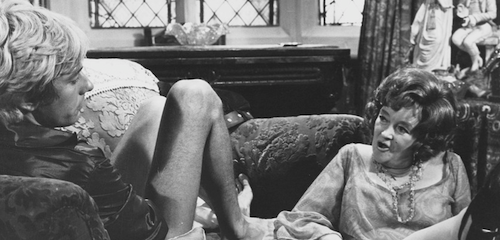
Entertaining Mr. Sloane (1970, Douglas Hickox)
October 1, 2009
Don’t miss the next Queer/Art/Film at the 92YTribeca on Thursday, Oct. 1, when John Cameron Mitchell presents Entertaining Mr. Sloane, a horny comedy about a libidinous lodger and the brother and sister who want him dearly. Here’s John on SLOANE: Entertaining Mr. Sloane is the unsung black comedy gem of Swinging Sixties-era British film. Closely adapted from Joe Orton's 1964 hit play, it concerns a certain young libidinous lodger fought over by a wacky middle-aged brother and sister. It's Pinter crossed with Dame Edna. It combined the broad, skeptical music hall humor I learned from my youth in a Scottish Catholic boarding school with the giddy homo outrage I felt coming out in the AIDS-benighted 80's. Orton, the openly queer, rudely promiscuous bomb-thrower of the British stage, was all the rage in the mid 60's to the point of being commissioned to write a screenplay for the Beatles (sadly unrealized). Some folks aspire to play Hamlet and Lear. The old men in Beckett and Orton are the only roles I still feel the need to essay. And maybe Kath in Sloane, though it's impossible to imagine topping Beryl Reid's tour de force in this film.

So Evil My Love (1948, Lewis Allen)
September 17, 2009
Join us for the opening night of the Fall Season of Queer/Art/Film, when Everett Quinton, the legendary star of Charles Ludlam’s Ridiculous Theater, will present this over-the-top noir in which Victorian widow Ann Todd gets caught up in l’amour fou with the handsome and dangerous Ray Milland. As Quinton describes it, “intrigue, sex, blackmail, robbery, murder, and false accusations….what else more could you want?” EVERETT on SO EVIL MY LOVE: "This is why I love So Evil My Love. One morning I was watching television and it came on. I had never heard of it. I was blown away. I knew Geraldine Fitzgerald and always was happy whenever a film of hers came on ... just because I was happy to know such a big star personally. I have always been a fan of these film noir thrillers from childhood so it wasn't hard to get hooked. But I didn't realize how stunning I would find this film. The acting ... Geraldine Fitzgerald blew me away ... and Ann Todd is amazing and Ray Milland is stunning. I couldn't believe how marvelous ... I mentioned a moment to Geraldine ... which I won't spoil for anyone ... but it made her happy that I loved the film so much ... And the story is fabulous ... intrigue, sex, blackmail, robbery, murder and false accusations. What else could you want? I even stole a plot point for my play Call Me Sarah Bernhardt. What a great morning that was for me.""

Je, Tu Il, Elle (1976, Chantal Akerman)
July 30, 2009
Join us for a special night, when novelist, playwright, and media activist Sarah Schulman will present Chantal Akerman’s Je, Tu, Il, Elle, one of the extraordinary Belgian filmmaker’s most sublime and personal films. Here’s Sarah on the movie: Along with the feature Les Rendez-Vous d'Anna, Ackerman's 1974 Je, Tu, Il, Elle is among her few overtly lesbian works. Ironically, when we showed this in the NY Lesbian and Gay Film Festival in the 1980's, we had to sneak around to get a print because the Belgian genius was not showing her work in explicitly gay festivals. It's a film about what we are willing to endure and accept we must go through to simply be in the presence of the beloved, no matter how problematic she may turn out to be. What makes this singular film especially endearing is that a very young Ackerman herself plays the lead and through performance establishes the fundamentals of her highly original filmic style."

Tongues Untied (1989, Marlon Riggs)
July 16, 2009
If you’ve never seen Tongues Untied, or its been as long ago as it is for me (MOMA, 1989, with Marlon Riggs introducing), join me at 7:30PM on Thursday, July 16 when filmmaker and media artist Thomas Allen Harris will present a rare screening of the late Marlon Riggs’ seminal work, Tongues Untied, as part of the series QUEER/ART/FILM at the 92Y Tribeca. Here’s Thomas on the movie: Marlon Riggs made his groundbreaking film, Tongues Untied, motivated by a singular imperative: "to shatter the nation's brutalizing silence on matters of sexual and racial difference." While politicians denounced it as 'pornographic art' and PBS stations refused to air it, Tongues Untied showed us the power of film-video-art as a tool for piercing the barricades between culture and politics, using a sharply honed black queer aesthetic as uncompromising as it is beautiful. Twenty years later it still serves up bitter sweet insights into the tortured psyche of modern culture."
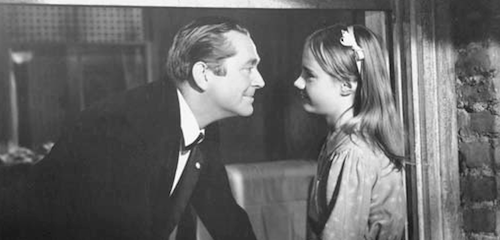
A Tree Grows in Brooklyn (1945, Elia Kazan)
July 2, 2009
Don’t miss the charming and talented Lisa Kron (Well, 2.5 Minute Ride, The Five Lesbian Brothers and more) presenting a rare screening of Elia Kazan’s 1945 film version of the great local classic, A Tree Grows in Brooklyn, as part of the series, QUEER/ART/FILM at the 92Y Tribeca (200 Hudson @ Canal). The series has been pretty wonderful so far, and I hope you all can take part, and see what’s been going on. (I’m alas out of town for this one...). And if you raising any adolescents at home, by the way, this is a perfect night to bring ‘em along! Here’s Lisa on the movie: "Many years ago my then girlfriend and I were watching Siskel and Ebert at the Movies and they did a segment on their recommended video rentals. I can't remember exactly what they said about A Tree Grows in Brooklyn but I do remember that we got our asses up off the couch on a dreary Sunday evening and went right over to Kim's Video and rented it. And, as Gene and Roger promised, we were blown away by the complete lack of sentimentality in this clear-eyed, emotionally unsparing film. It was adapted from the Betty Smith novel about a girl coming of age in a family beset by poverty and alcoholism and it was Elia Kazan's first film."

Queer & Unavailable (1900, various artists)
June 25, 2009
"For some reason a lot of the best queer film content is not available to the general public. Banished either by conspiracy or oversight, or by Richard Carpenter, this content demands to be seen! We can't say what will be shown but expect TV specials, gay episodes of TV shows and Red Foxx..." - Kenny Melman

8 1/2 (1963, Federico Fellini)
June 18, 2009
Join me for the third night of QUEER/ART/FILM at the 92YTribeca when filmmaker and all around artist extraordinaire Jennie Livingston will be with us to present a rare 35mm print of Fellini’s 8 1/2. If you haven’t seen it, its not to be missed, and if you have, when was the last time on a big screen, with a bunch of other queers and artists?? So far, the evenings have been lively and thought provoking-- I’m still mulling over the word “permission” that John Kelly spoke of in reaction to Jean Cocteau -- and with Jennie leading the ship, this week will certainly be no exception.

Blue (1993, Derek Jarman)
June 11, 2009
Blue is the last of iconoclastic queer filmmaker Derek Jarman’s 12 features, completed only four months before his death, and after his vision had been subsumed by constant blue light. The film’s continuous blue screen becomes an absorbing canvas for audiences’ visions, as Jarman’s poetic, angry, wistful and sometimes humorous accounts of his illness create an atmospheric wall of sound. For me, the collective experience of viewing this film in a theater is unmatched, and it’s an arresting and transcendent gift from a queer legend. - Matt Wolf

Blood of a Poet (1930, Jean Cocteau)
June 4, 2009
What better way to start off June, the gayest month of the year, than with the launching of one of our most exciting new events, QUEER/ART/FILM, a new film series of all things hybrid and poly-sexual at the 92Y Tribeca. Curated by Butt magazine contributing editor Adam Baran and filmmaker Ira Sachs, the series invites some of the most exciting, innovative (and homosexual) artists from the dance/performance/film/visual and literary arts to present and discuss their favorite films, in rare prints, on the big screen! The series asks the question: How does film create a link from one queer generation to the next, from John Kelly to Jean Cocteau to Jennie Livingston to Derek Jarman to Marlon Riggs to Chantal Akerman to Kiki & Herb to the Five Lesbian Brothers, to…..you! Join us every Thursday in June, and bi-weekly in the months to follow, to explore these unexpected pathways from one artist to the next, true excavations of history, and queerest of cinematic events. The series opens this Thursday, June 4, at 7:30PM with the performance artist and occasional Joni Mitchell impersonator John Kelly presenting a rare print of Jean Cocteau’s 1930’s masterpiece, Blood of the Poet.
Gallery
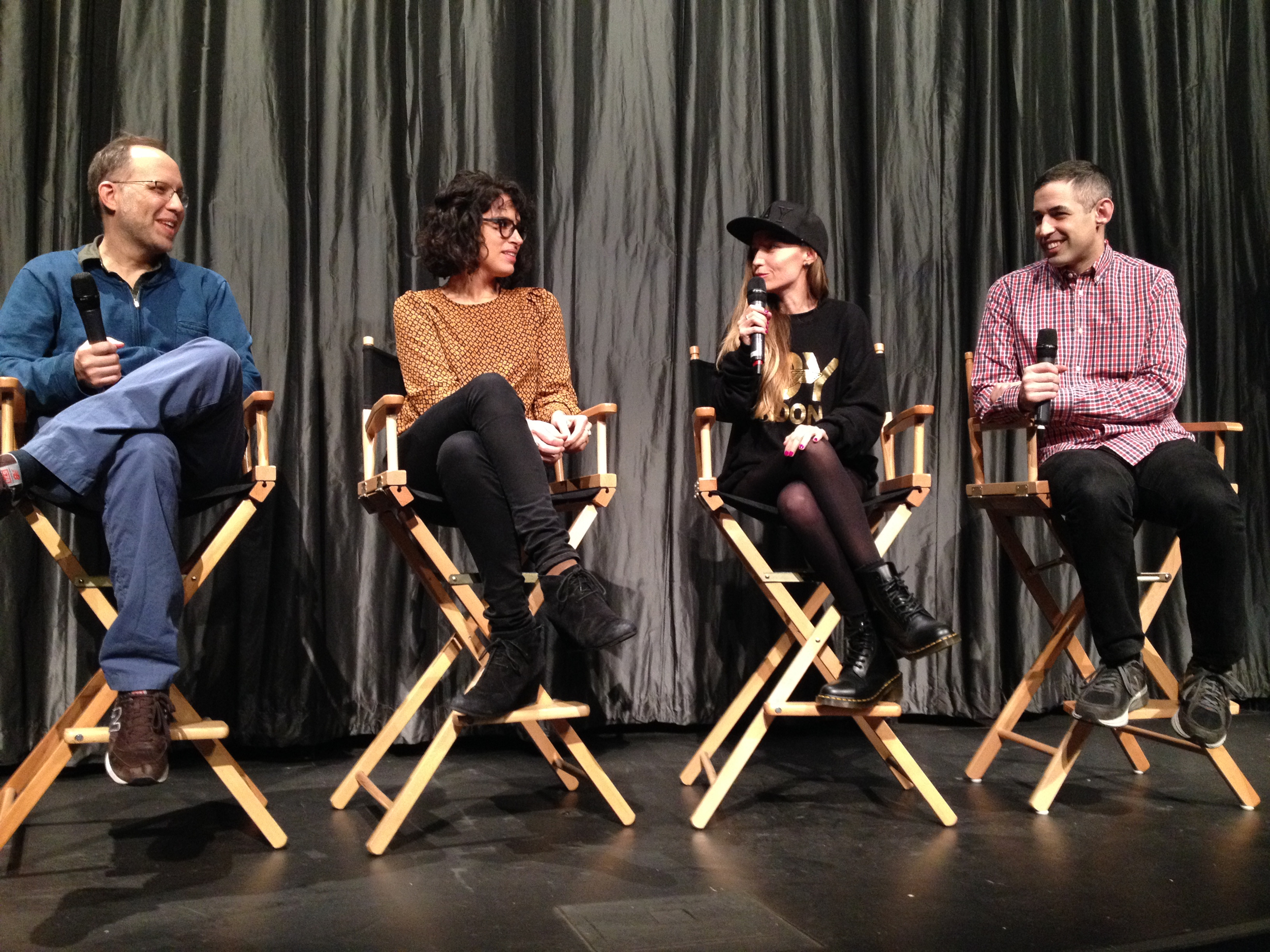
Queer|Art|Film co-curators Ira Sachs and Adam Baran on stage with presenter Desiree Akhavan and director Marialy Rivas at the 2015 screening of Young and Wild. (Photo by Vanessa Haroutunian)
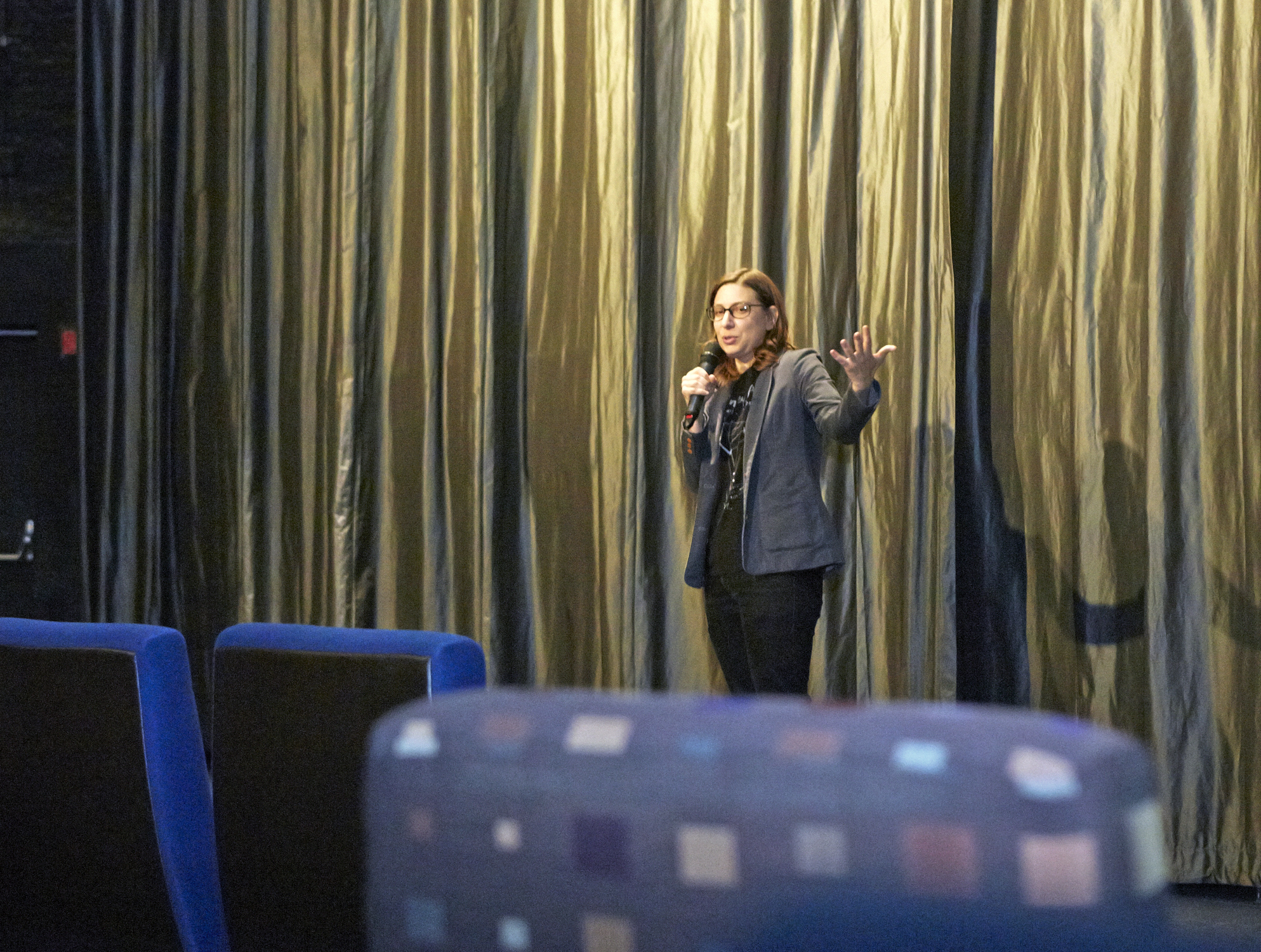
Queer|Art|Film presenter Ariel Schrag introducing Natural Born Killers, December 2015. (Photo by Eric McNatt)
Queer|Art|Mentorship Mentor Moe Angelos at the 2016 screening of Slaves of New York. (Photo by Eric McNatt)
Queer|Art|Mentorship Fellow Troy Michie at the January 2016 screening of Slaves of New York. (Photo by Eric McNatt)
Queer|Art|Mentorship Fellow Mylo Mendez at the December 2015 screening of Natural Born Killers. (Photo by Eric McNatt)
Hari Neff and Queer|Art|Mentorship Fellow Colin Self at the August 2014 screening of The Queen. (Photo by Ryan Morris)
Queer|Art|Mentorship Mentor Carrie Moyer and partner Sheila Pepe at the February 2015 screening of A Litany for Survival: The Life and Work of Audre Lorde. (Photo by Ryan Morris)
Queer|Art|Mentorship Fellow Kerry Downey and Mentor Carrie Moyer at the February 2015 screening of A Litany for Survival: The Life and Work of Audre Lorde. (Photo by Ryan Morris)
Queer|Art Board Member Lily Binns at Queer|Art|Film. (Photo by Eric McNatt)
Queer|Art|Film presenters BUSHWIG before the July 2014 screening of Hedwig and the Angry Inch. (Photo by Ryan Morris)
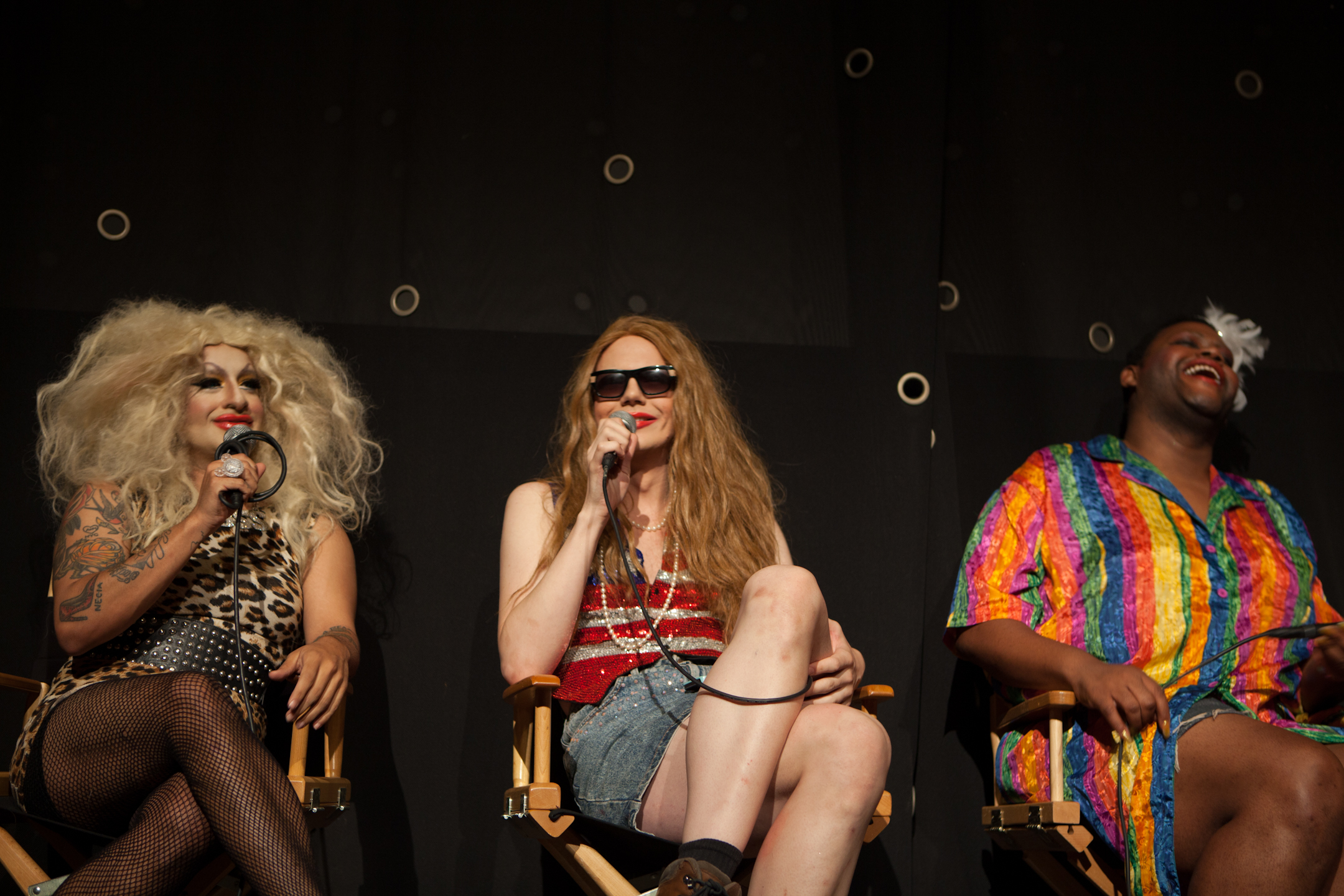
Queer|Art|Film presenters Horrochata, Macy Rodman and Merrie Cherry of BUSHWIG on stage at the July 2014 screening of Hedwig and the Angry Inch. (Photo by Ryan Morris)
Queer|Art|Film audience at the July 2015 screening of Hedwig and the Angry Inch. (Photo by Ryan Morris)
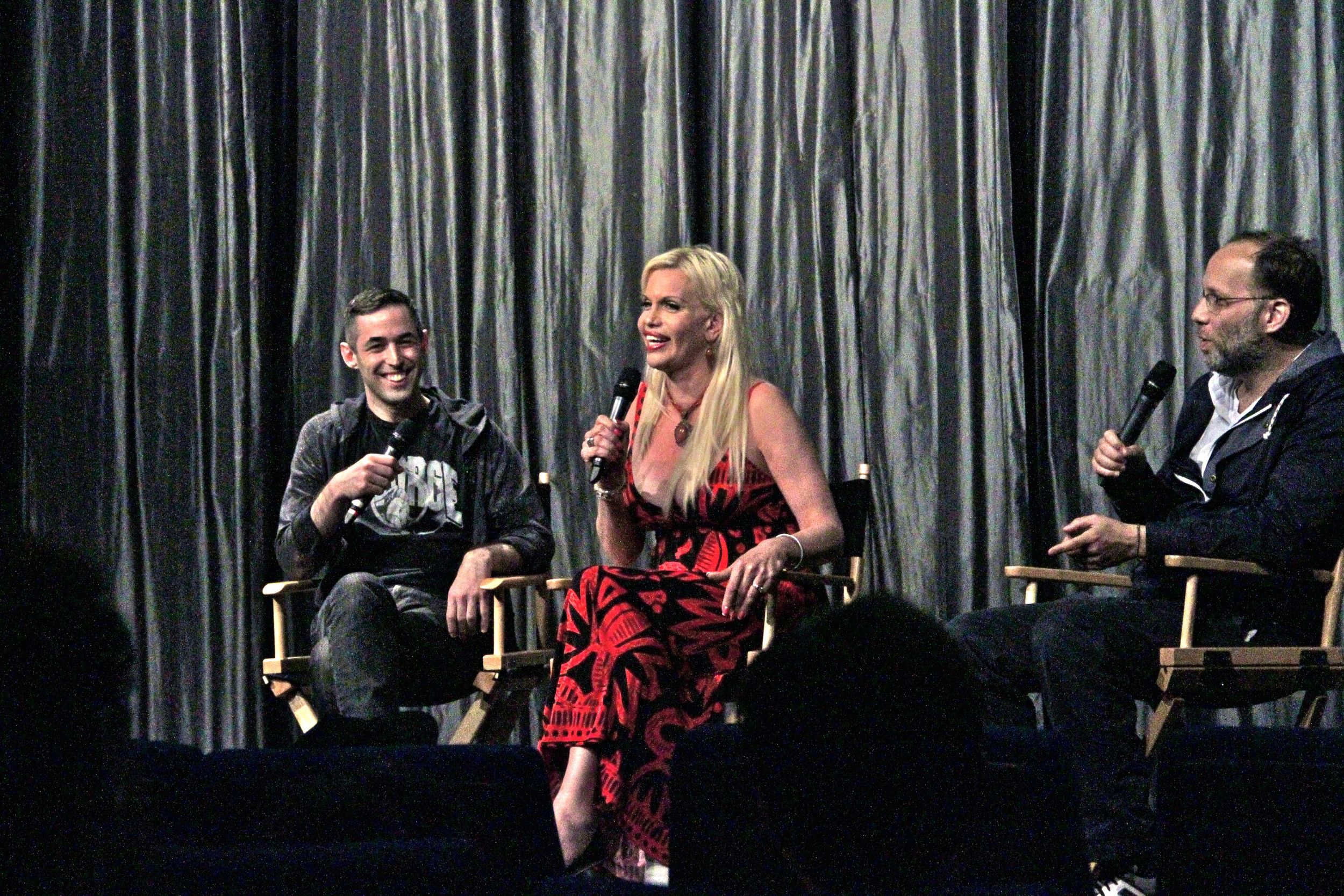
Co-curators Adam Baran and Ira Sachs on stage with presenter Barbra Herr at the June 2014 screening of Suddenly, Last Summer. (Photo by Richard Davis)
June 2014 screening of Suddenly, Last Summer. (Photo by Richard Davis)
Drinks at Julius' post June 2014 screening of Suddenly, Last Summer. (Photo by Richard Davis)
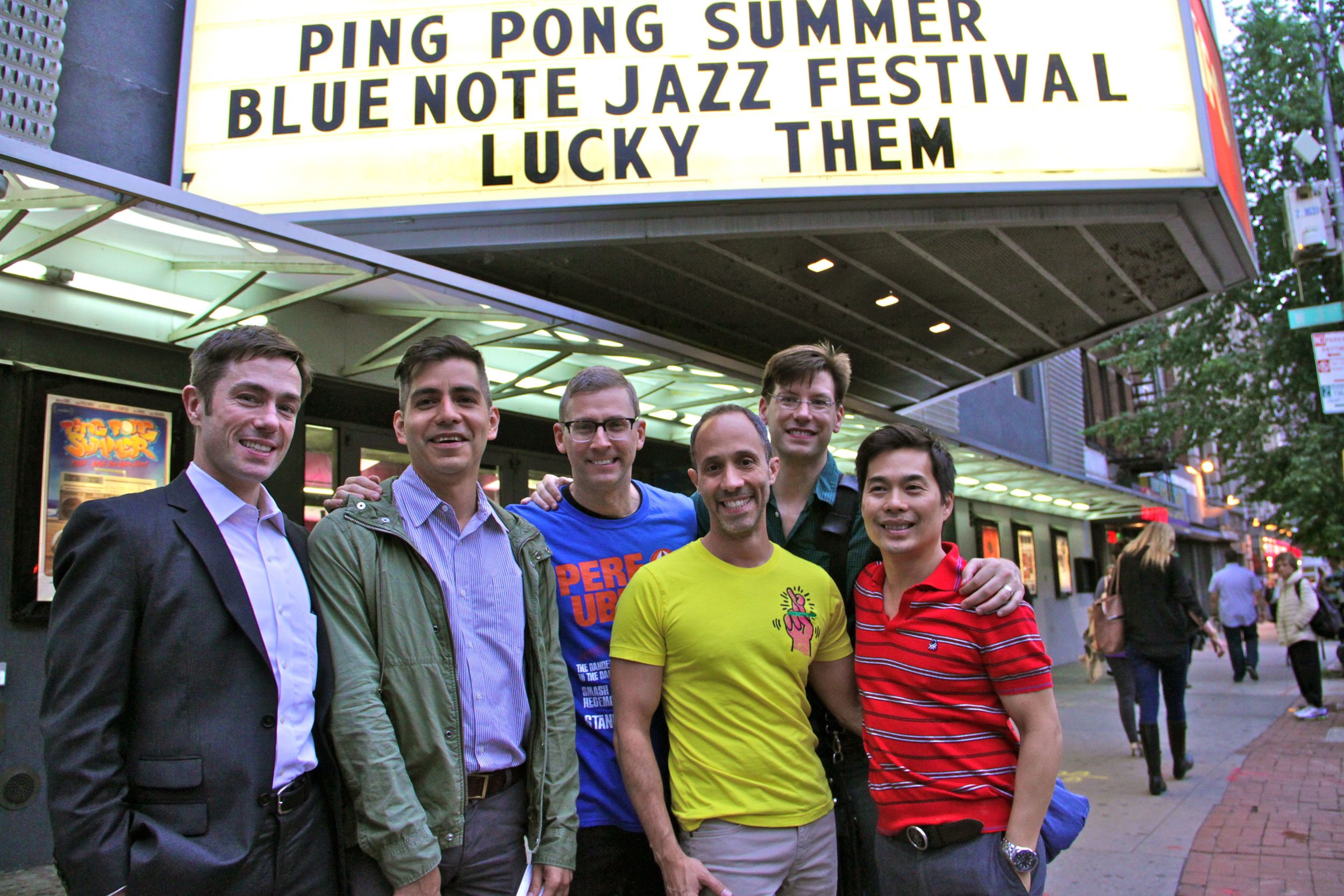
June 2014 screening of Suddenly, Last Summer. (Photo by Richard Davis)
Co-curator Adam Baran and Colby Keller at the June 2014 screening of Suddenly, Last Summer. (Photo by Richard Davis)
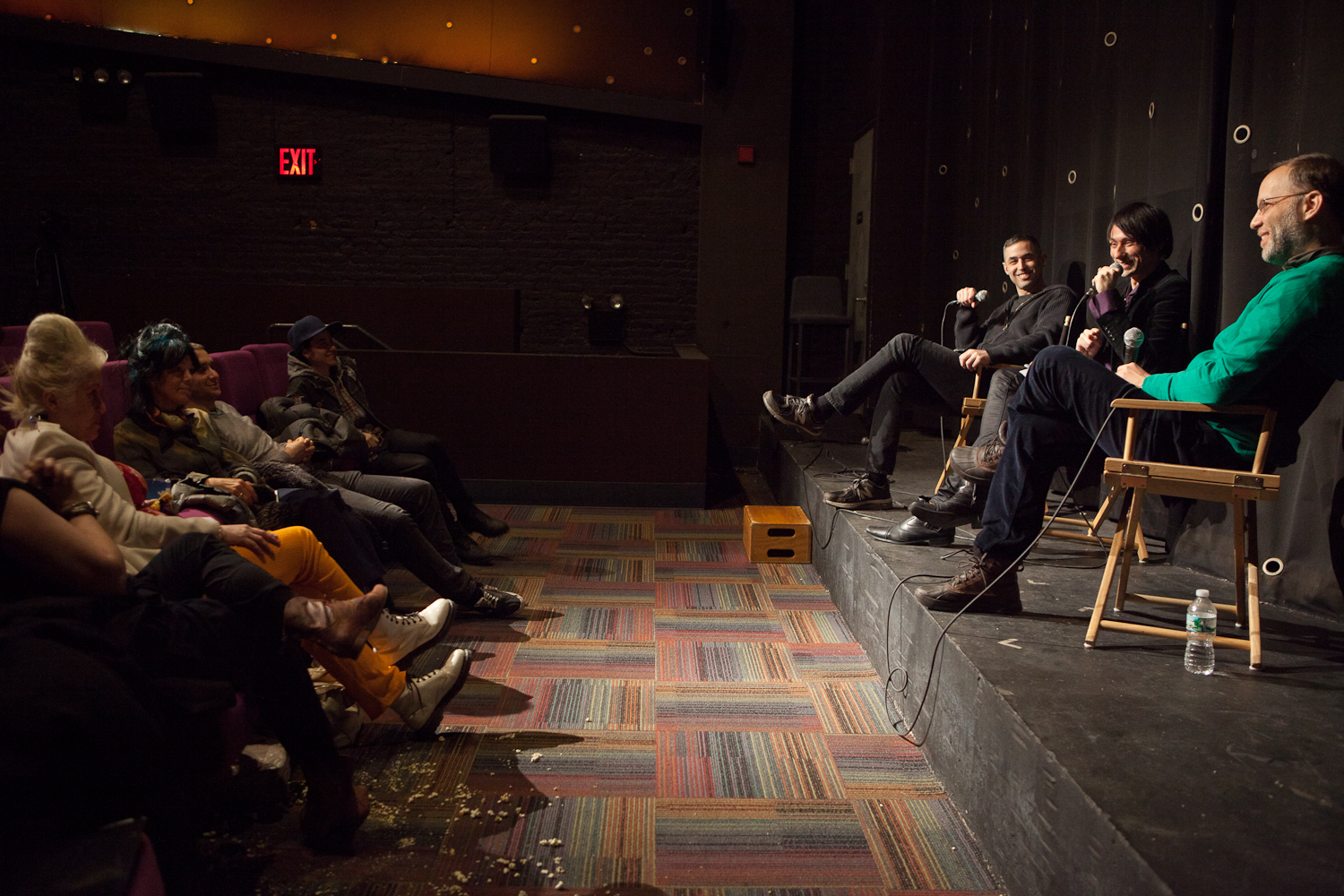
Queer|Art|Film co-curators Adam Baran and Ira Sachs on stage with presenter Joseph Keckler at the March 2015 screening of Batman Returns. (Photo by Ryan Morris)
(Photo by Ryan Morris)
Friends of Queer|Art|Film at Julius' after the May 2014 screening of OUTRAGEOUS!. (Photo by Ryan Morris)

Queer|Art|Film presenter John Epperson with Charles Busch at the May 2014 screening of OUTRAGEOUS!. (Photo by Ryan Morris)
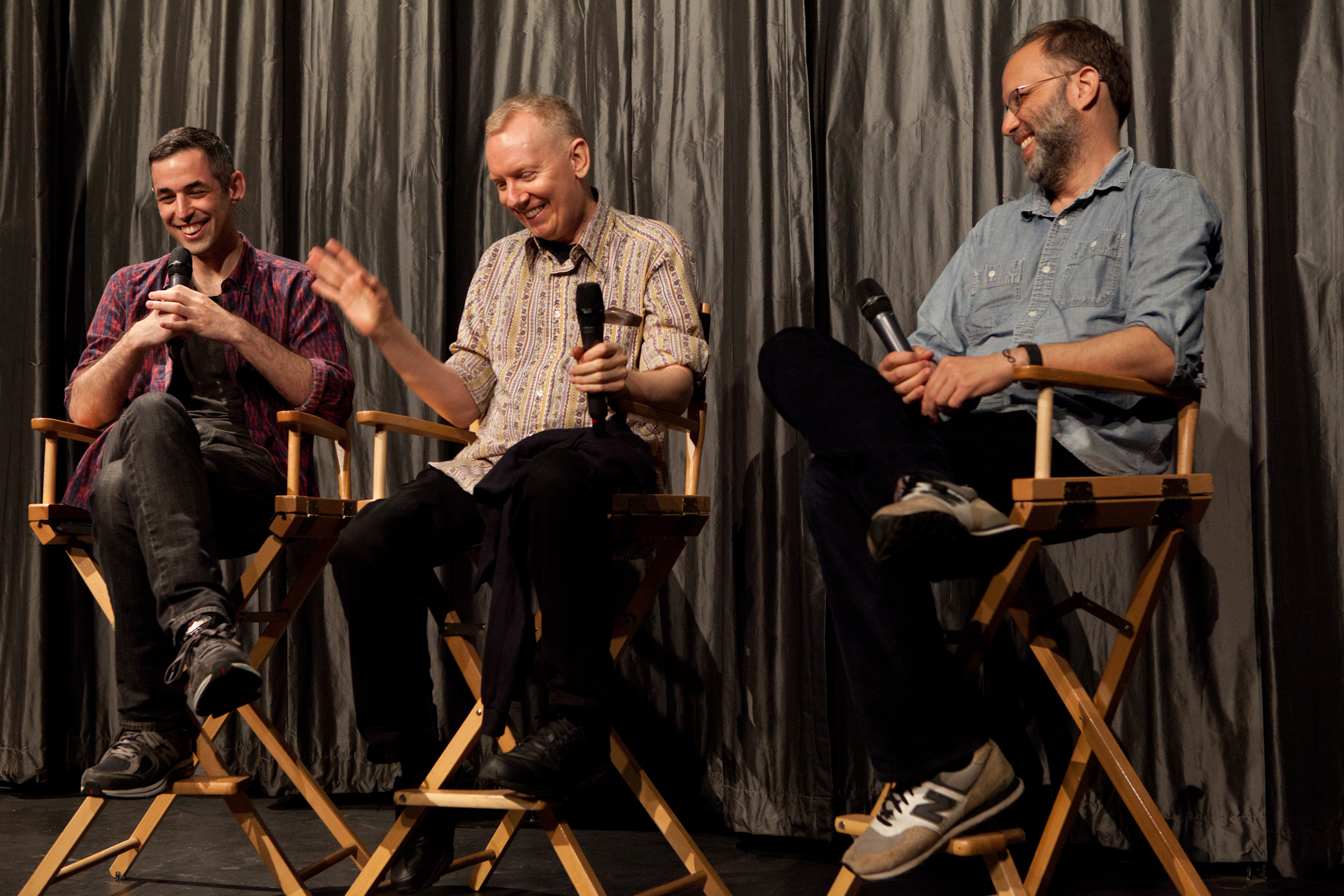
Queer|Art|Film co-curators Adam Baran and Ira Sachs on stage with presenter John Epperson at the May 2014 screening of OUTRAGEOUS!. (Photo by Ryan Morris)
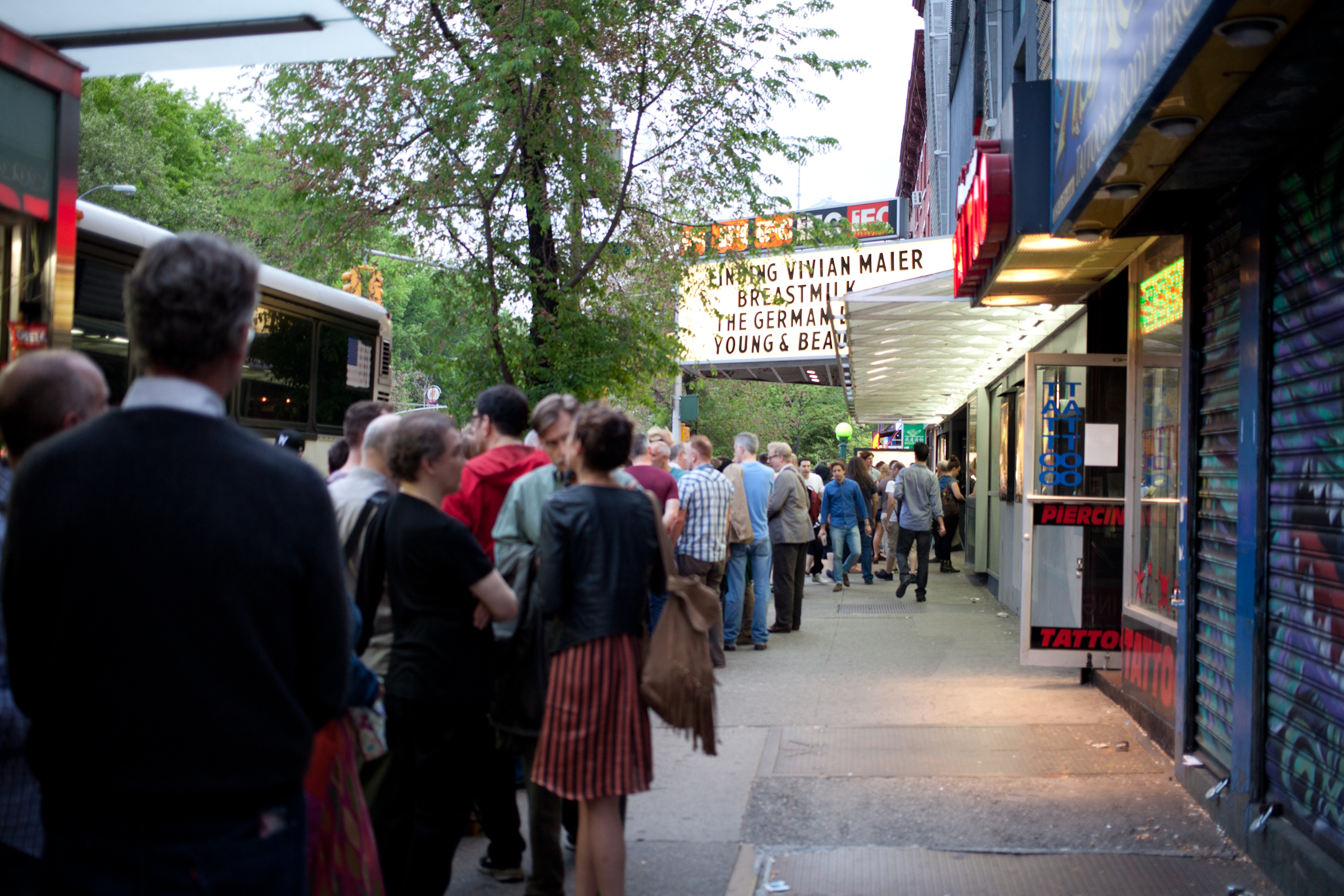
(Photo by Ryan Morris)
Queer|Art|Film presenter John Epperson introducing the May 2014 screening of OUTRAGEOUS!. (Photo by Ryan Morris)
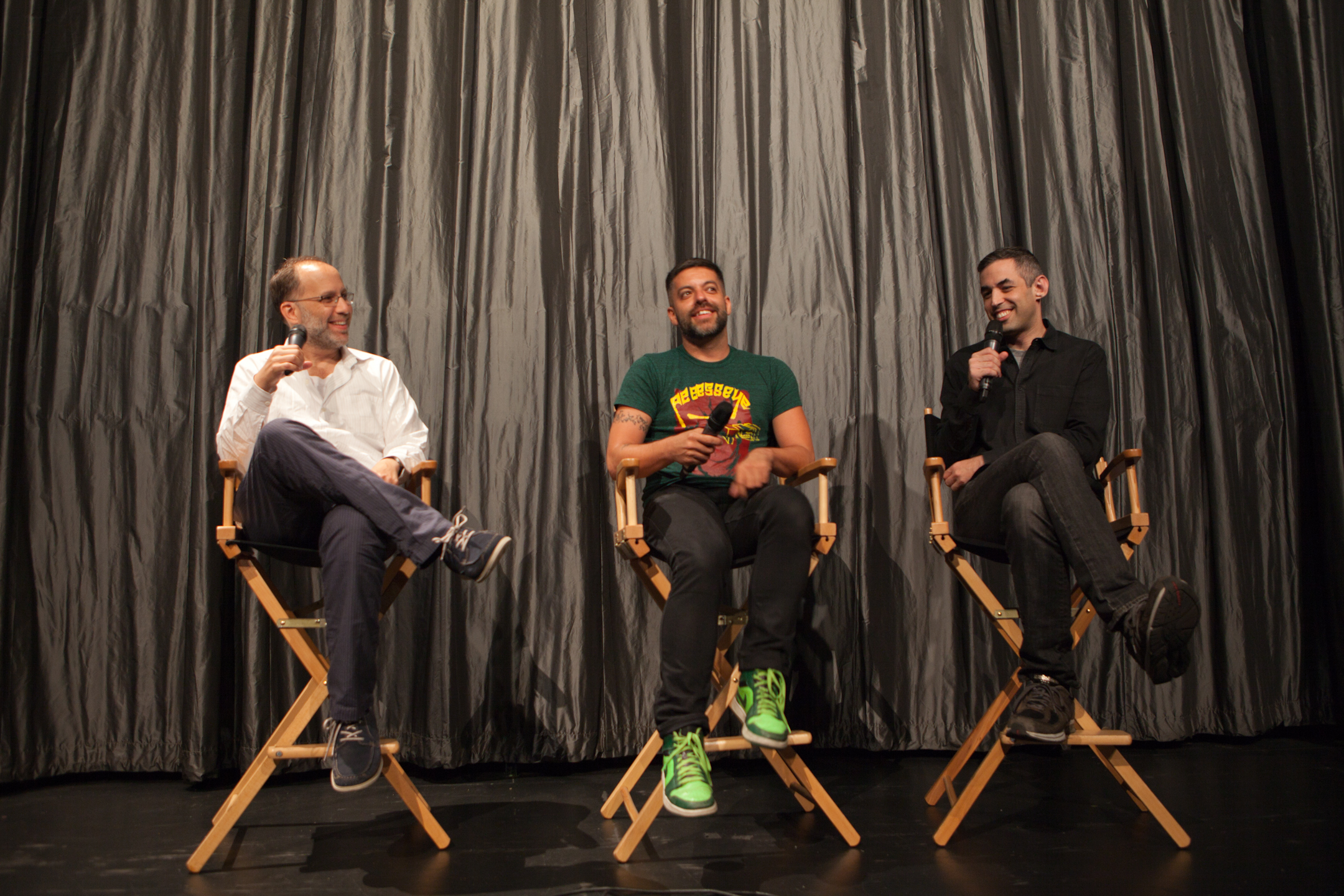
(Photo by Ryan Morris)
(Photo by Ryan Morris)
(Photo by Ryan Morris)
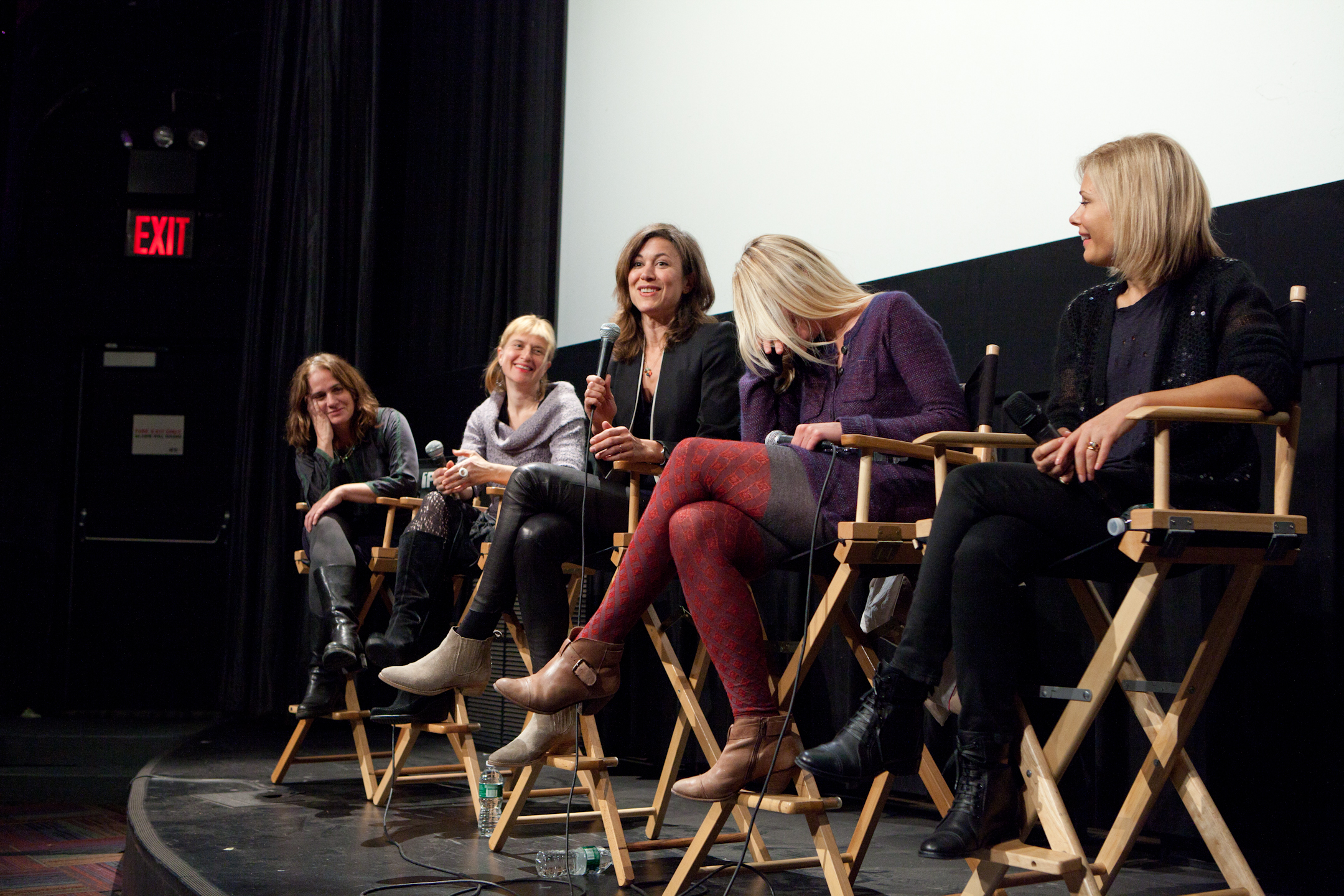
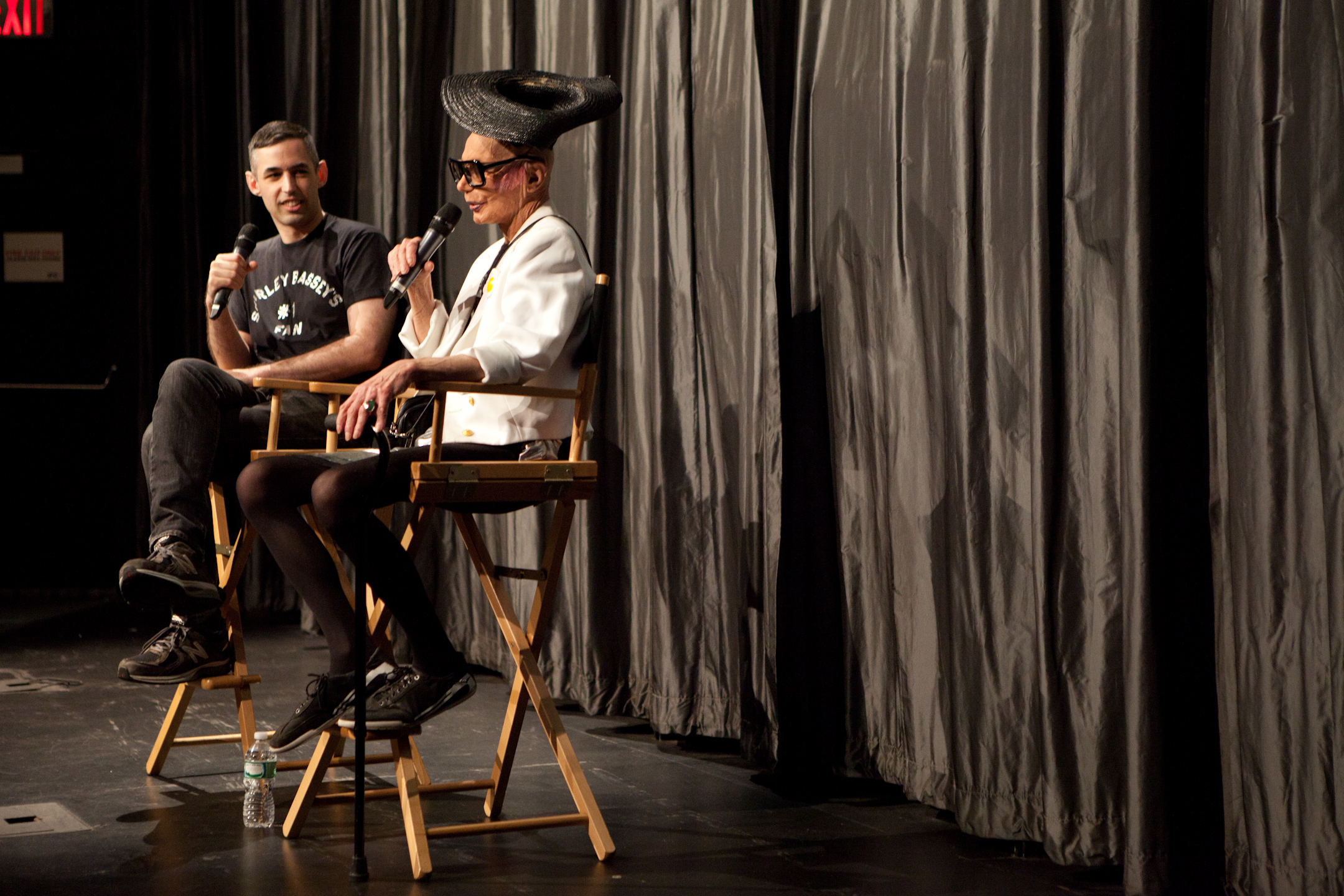
Co-curator Adam Baran on stage with special guest Flawless Sabrina at the August 2014 screening of The Queen. (Photo by Ryan Morris)