
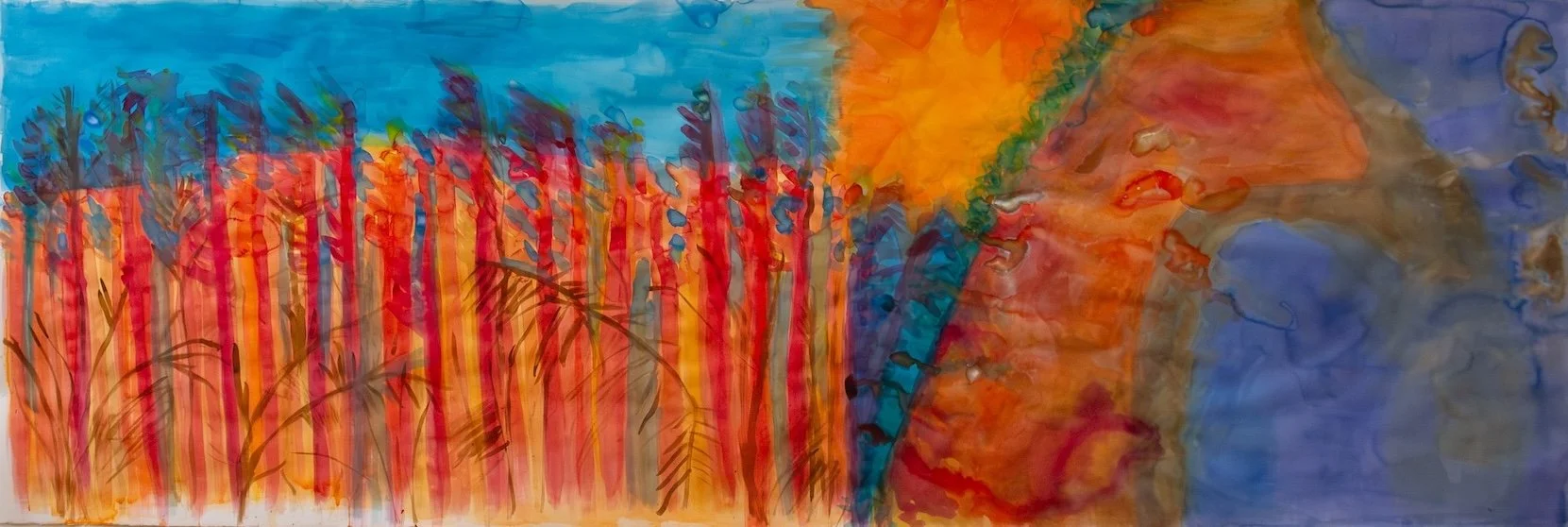
In the mid-20th century, Fire Island established itself as “America’s first gay and lesbian town.” New Yorkers and visitors from around the country alike flocked to the island for an idyllic escape from the persecution of the rest of the world. Today, its reputation has shifted from that of a safe haven from political attacks to a beautiful if sometimes gauche vacation destination for affluent, homogeneous white gay men.
Sacred and Profane, an exhibition in collaboration with BOFFO at Leslie-Lohman Museum uniting the creative forces of Multi-Year QAM Mentor Pamela Sneed and performance artist Carlos Martiel, presents a different perspective. To Sneed, it is an island full of ghosts.
Sneed and Martiel both completed BOFFO artist residencies on the island in 2022 and 2024 respectively. While Sneed was moved to investigate an element of the island’s past that has been left out of its popular narrative, Martiel became interested in present-day race relations on the island. Sneed began to produce paintings and natural-material collages inspired by the history of slave pens on Fire Island, while Martiel engaged viewers in a durational performance piece in which his naked body, initially covered by tropical fruits, was revealed as attendees consumed the fruit.
Sacred and Profane, which was on view at the Leslie-Lohman Museum through April 12, was the result of three years of excavation. Towards its closing, Sneed led a walkthrough of the show and the process of shaping it as it shaped her in turn.
For Sneed, a poet, painter, performer, and a New York gravitational force, Sacred and Profane began through her investigation of the little-known history of slavery on Fire Island and the surrounding waters. "It's the first show of its kind," Sneed says. "So it's just the beginning of something, I hope, much larger."
The challenge she set herself was archival and artistic in equal measure. Slavery's paper trail is deliberately incomplete; registries exist but are restricted, permissions are required, researchers are territorial. "What's come up with this project a lot is a lack of evidence," Sneed says. "A lot of Black history in America has not been documented or the documentation has been destroyed. So then as the artist, you have to piecemeal things together, you have to invent." She bought a slave inventory off eBay, she bought a slave collar, and she purchased documents — the seller of one of which sent her a receipt for the purchase of slaves decorated with Confederate flags, which she included in the show along with the inventory.
“This is an inventory just the way you would do a shop inventory,” she says. "[But] I wanted people to understand that we're talking about real people, real bodies.
Alongside the documents are her interventions on them, marks made in red and black across archival text. The red, she says, was blood. "We have this bloodless crime because we don't have the evidence, but these were real bodies, real blood." She traced old markings in a battered 18th-century book called The Enormity of the Slave Trade, found on eBay. The process of marking was akin to “moving through intuitively with the materials," she says. "Bodies come through. I was thinking about blood, thinking about veins."
The largest watercolor in the show is called Invasive Species. She thought the tall reeds on Fire Island were beautiful until someone told her they were an invasive species that would kill everything if left to grow. "I thought: oh wow. It's a metaphor." The materials throughout the show carry memory in their substance, from cowrie shells, a currency of the transatlantic slave trade, to sand dollars carried back from Fire Island by hand. Shells, she notes, are understood in many traditions as conduits, a way to speak to the spirit world through the natural one.
The series called Crown came from a desire to "offset some of the depravity and some of the horror with something beautiful. Not to be stoic, but that we've retained our dignity through all of this horror." The runaway ad pieces place George Floyd, Breonna Taylor, and Keith Porter in the visual language of 18th-century advertisements for escaped enslaved people, granting them a kind of retrospective agency while making a pointed observation about the cost of Black life across time. "In slavery, if you were caught as a runaway, they're not going to kill you immediately. You're property, they want to reserve that," Sneed says. "But in this century, it's just shoot to kill. We have less value. So there's this irony that we have less value [in freedom] than in slavery."
The Cuban-born performance artist Carlos Martiel enters the exhibition through a different door. Sneed recommended him for his own BOFFO residency, and their collaboration began informally. "Everybody who came to the house, I was like, 'OK, you have to contribute something to my project,'" she says. They went to the beach, decorated Martiel’s body, and placed him at the water's edge. "It was this feeling of: what would happen if the body was emerging from the water?" In Martiel's subsequent work — including Cuerpo (2022), Gran Poder (2023), and Custody (2025) — he examines Black captivity, oppression, racism, and spirituality through endurance-based performance. "All of this is their performance documentation," Sneed says, "thinking about ways that the Black body is cannibalized on Fire Island. That's really the conversation of the work."
Sacred and Profane is a show that refuses comfort, refuses resolution, and refuses to let Fire Island remain the uncomplicated paradise it has imagined itself to be. "[Slavery] is the ground of all of America," Sneed says, "and so you can say [the island] is this queer paradise or whatever, but you have to acknowledge the roots."
Sneed has been engaged in the literary, political, and spiritual work of keeping the memory of the dead present and demanding dignity for the living for years, and she is clear-eyed about what drives her. "Yeah, I want credit — look at my work," she says, laughing. "But it is a labor of love. I'm doing it because I feel like it's important for these people to be recognized, for this history to be recognized. That's where I gain a lot of satisfaction."
Sacred and Profane ran at the Leslie-Lohman Museum of Art, 26 Wooster Street, from February 20 through April 12, 2026.
COLLECT A LIMITED EDITION PRINT BY PAMELA SNEED
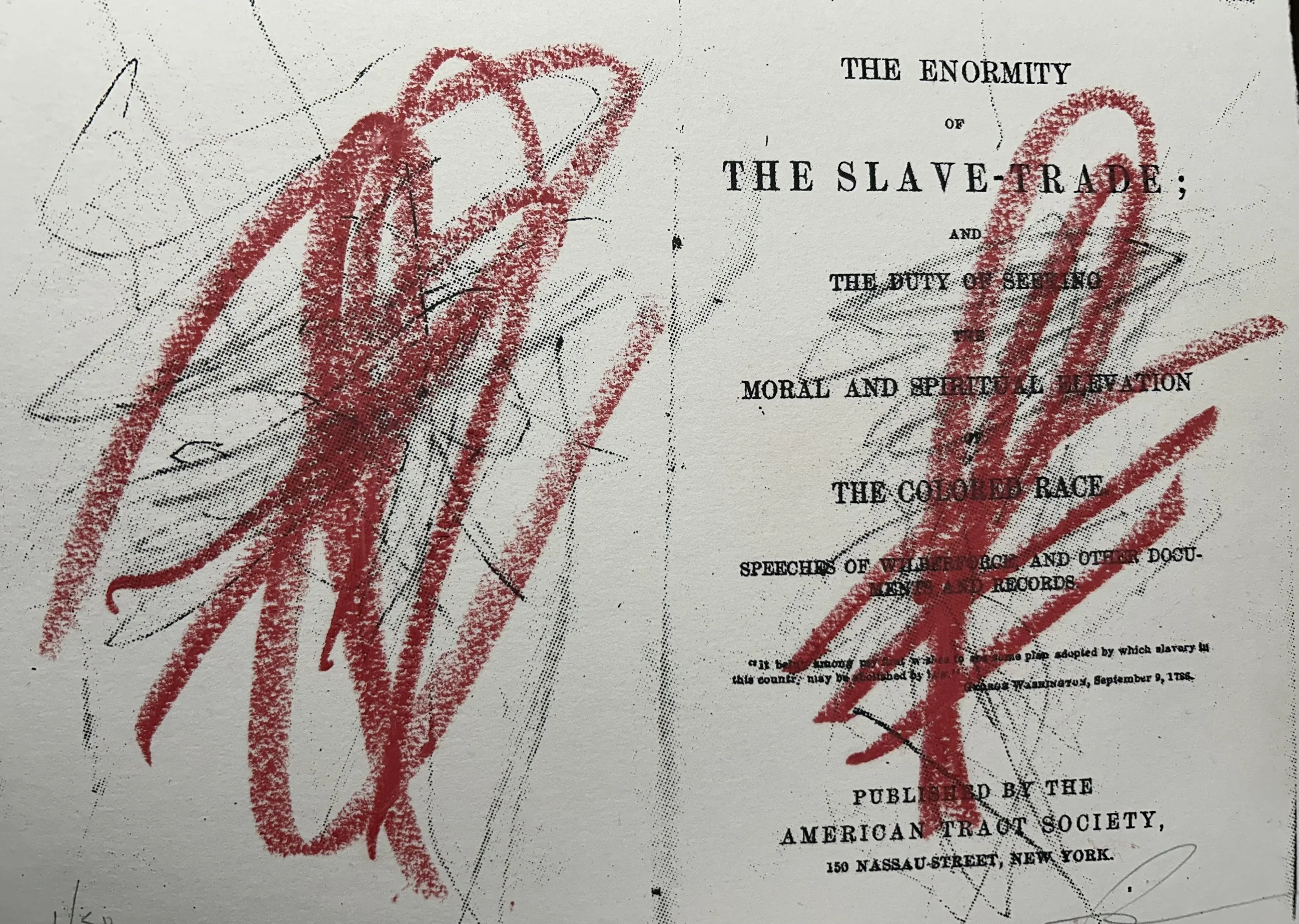
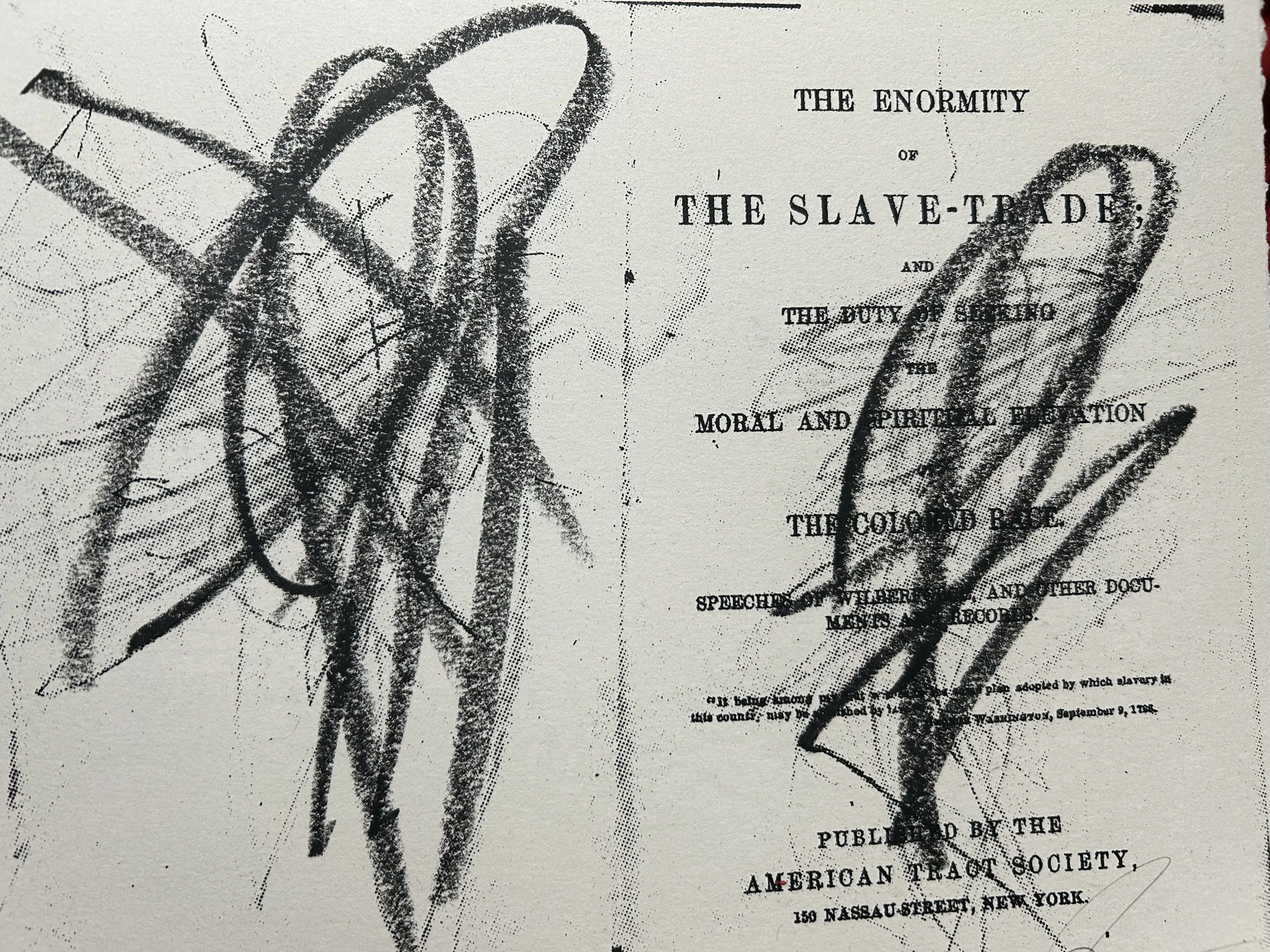
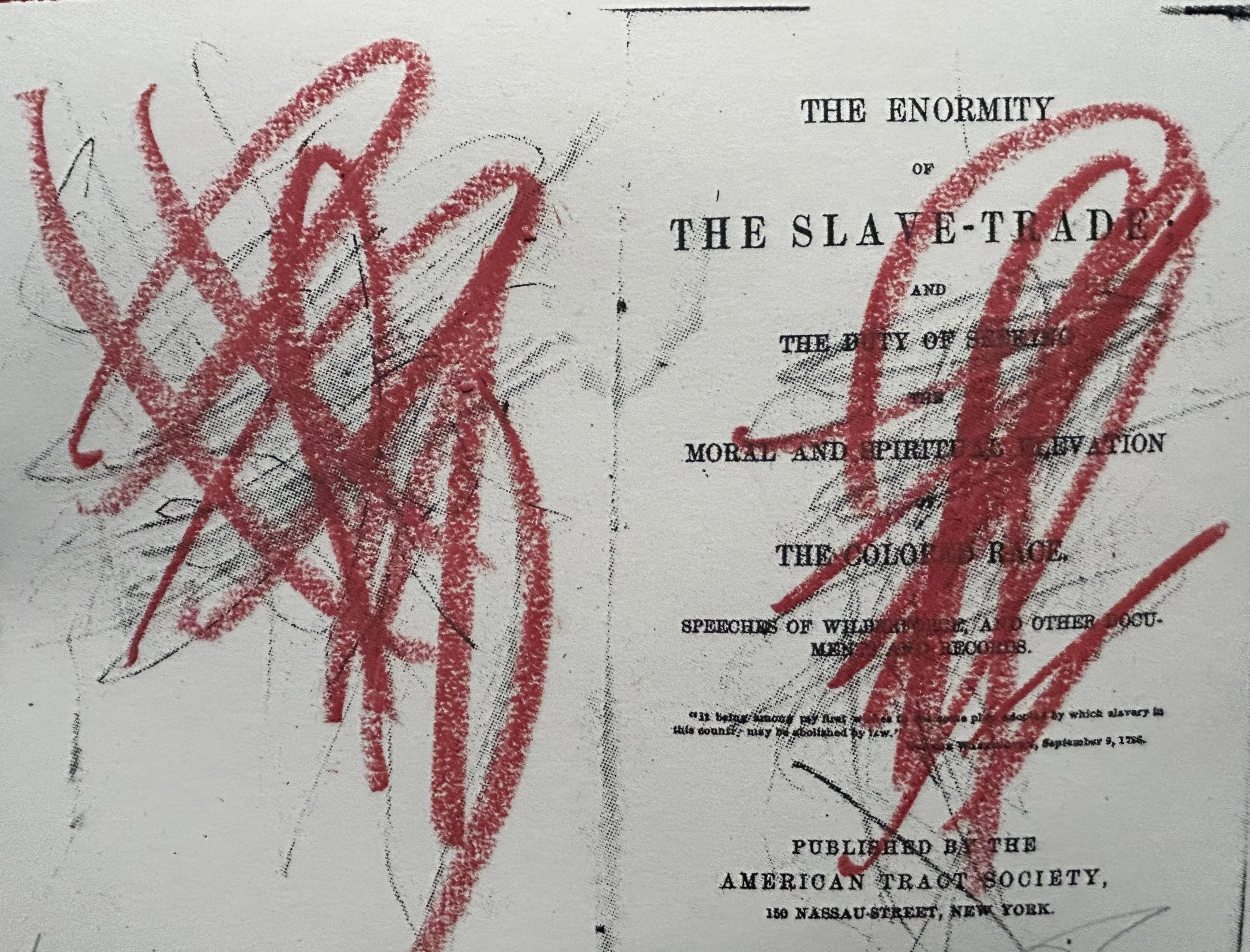
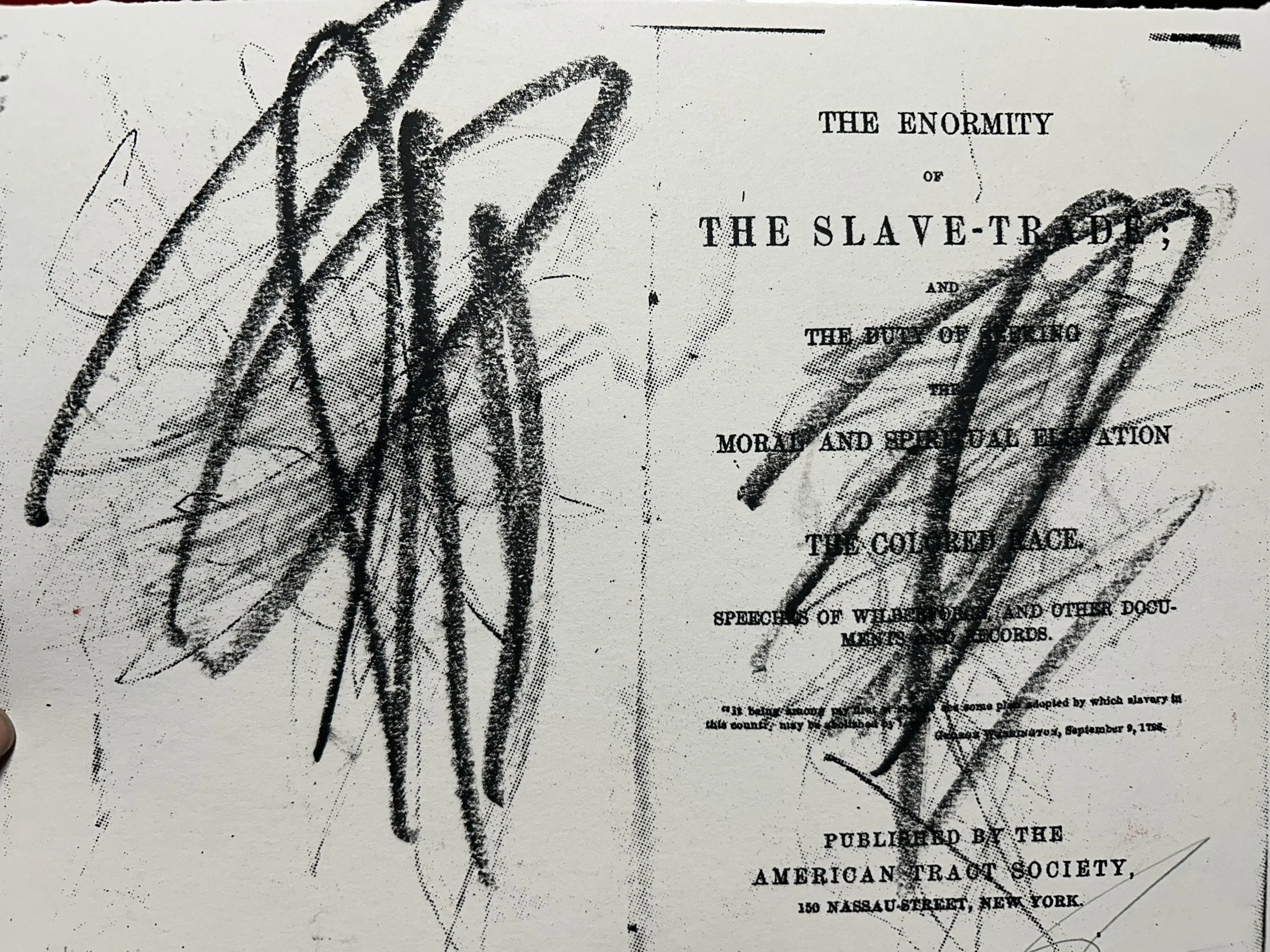
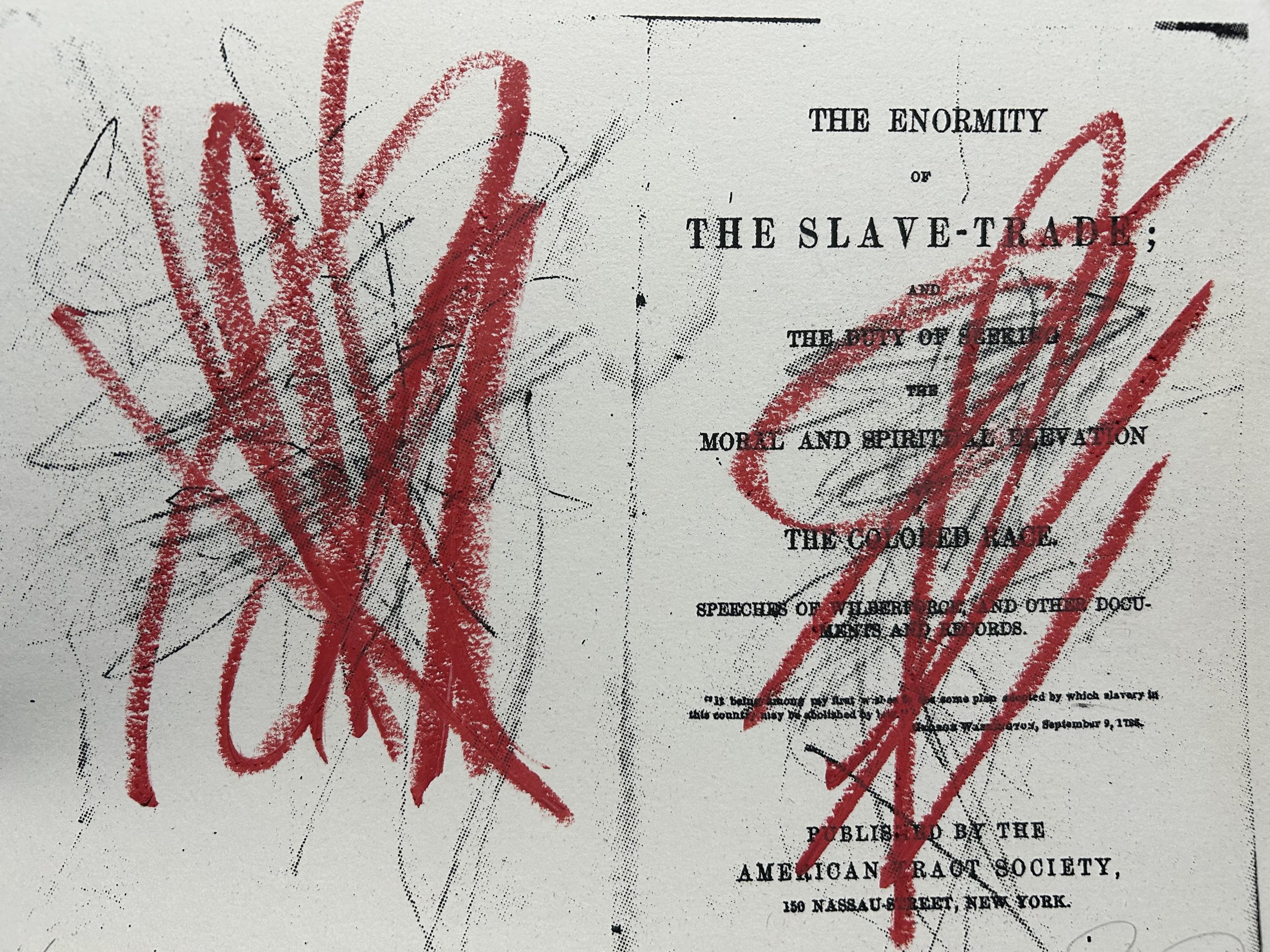
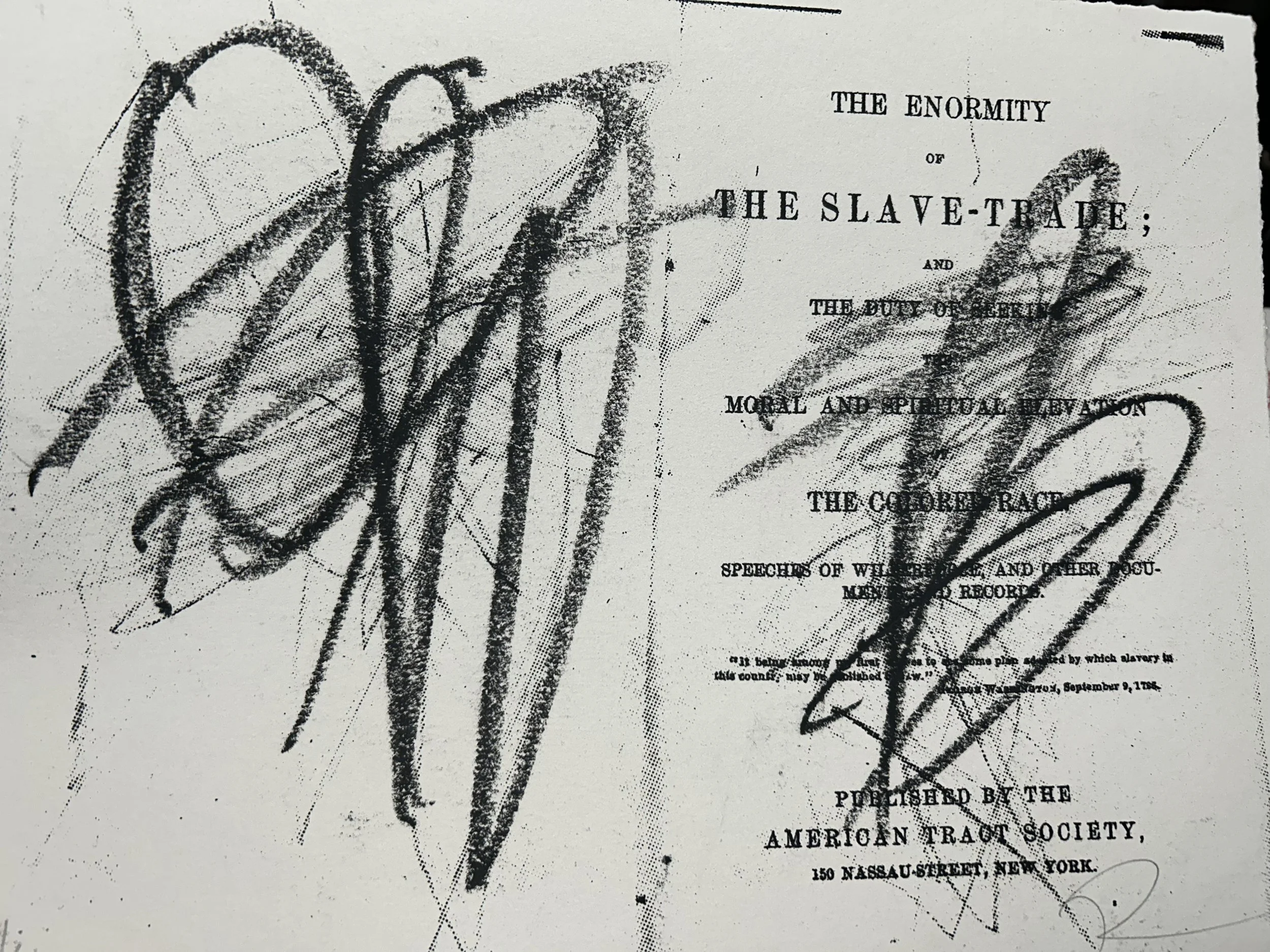
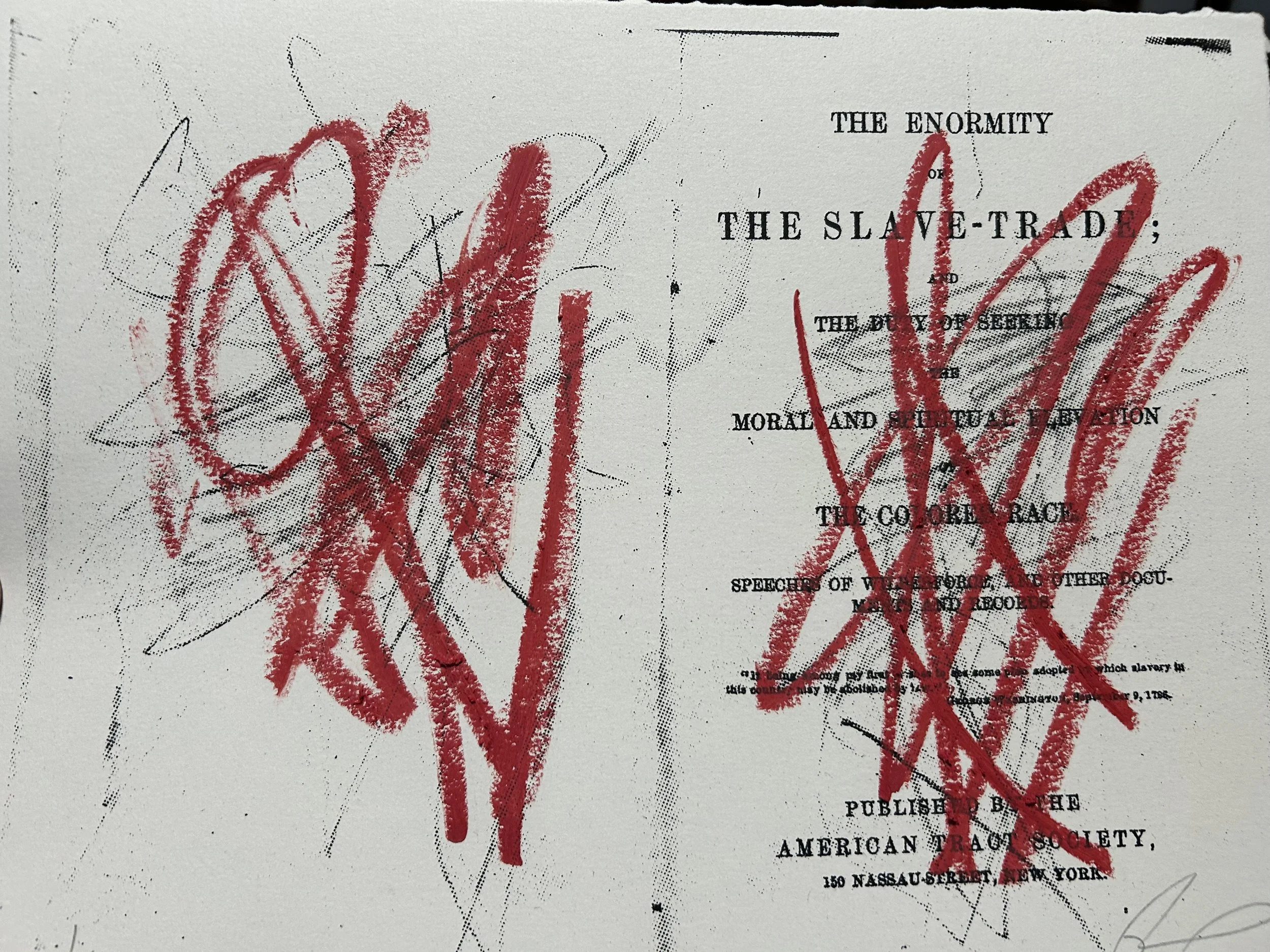
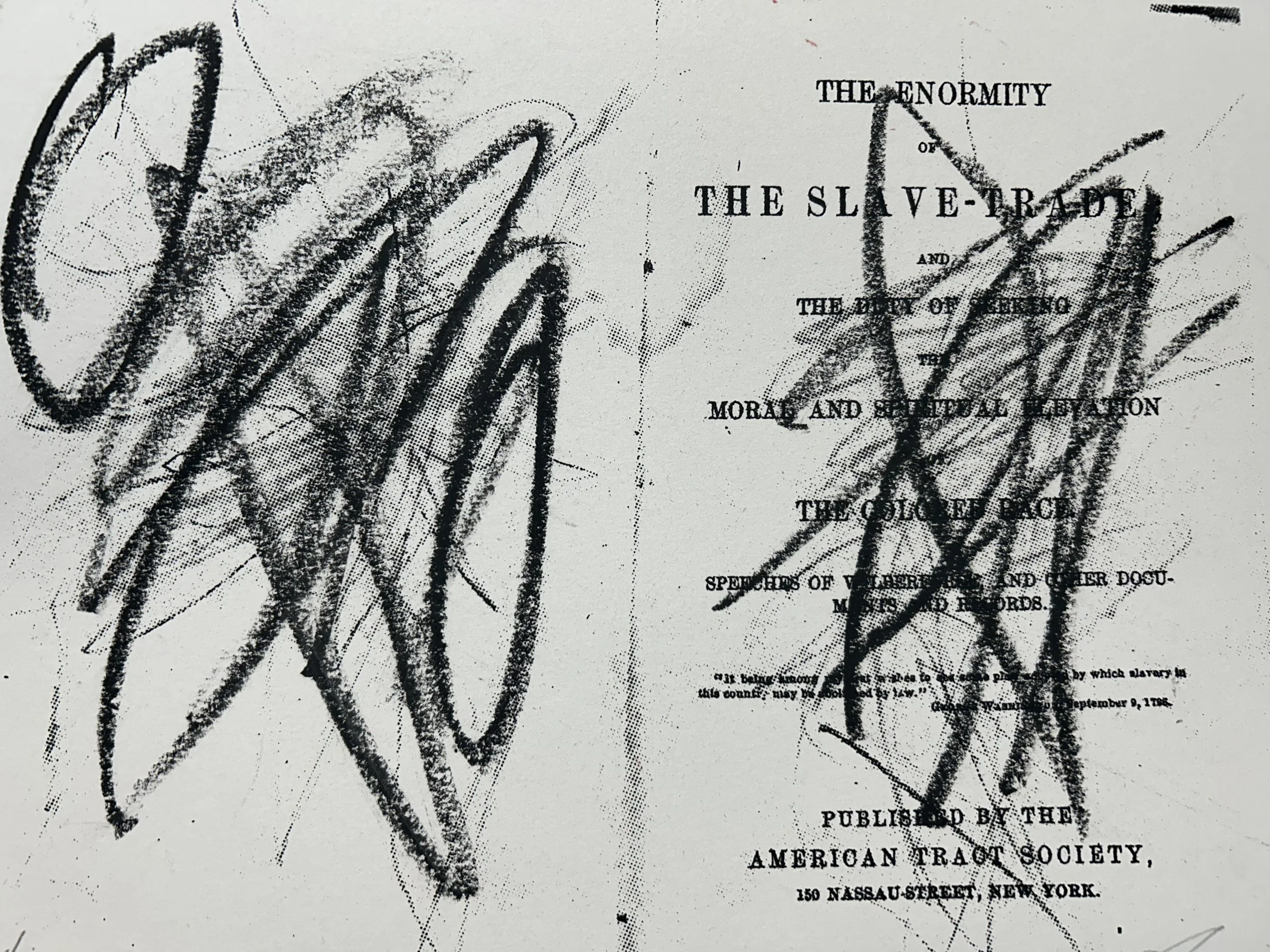
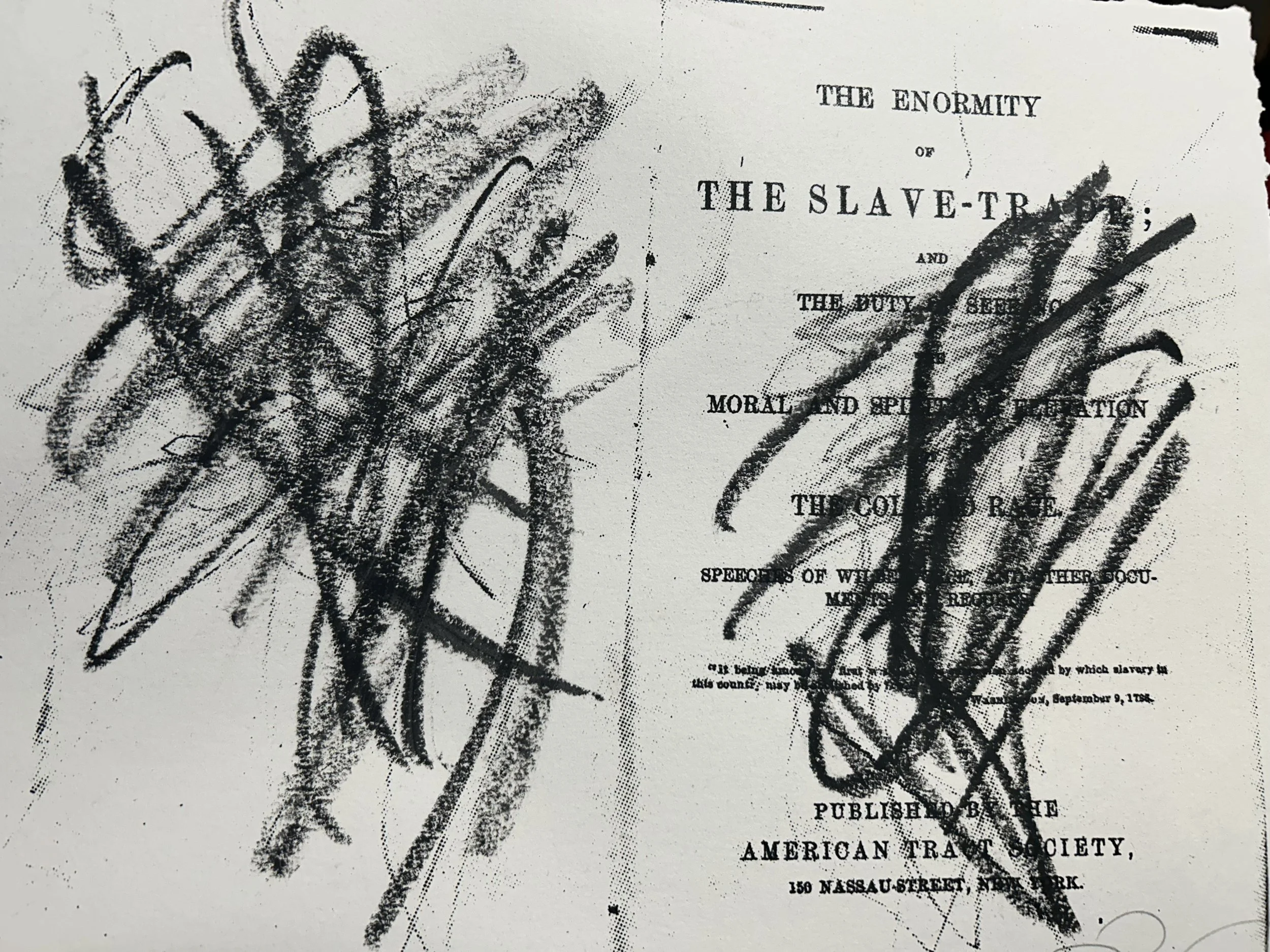
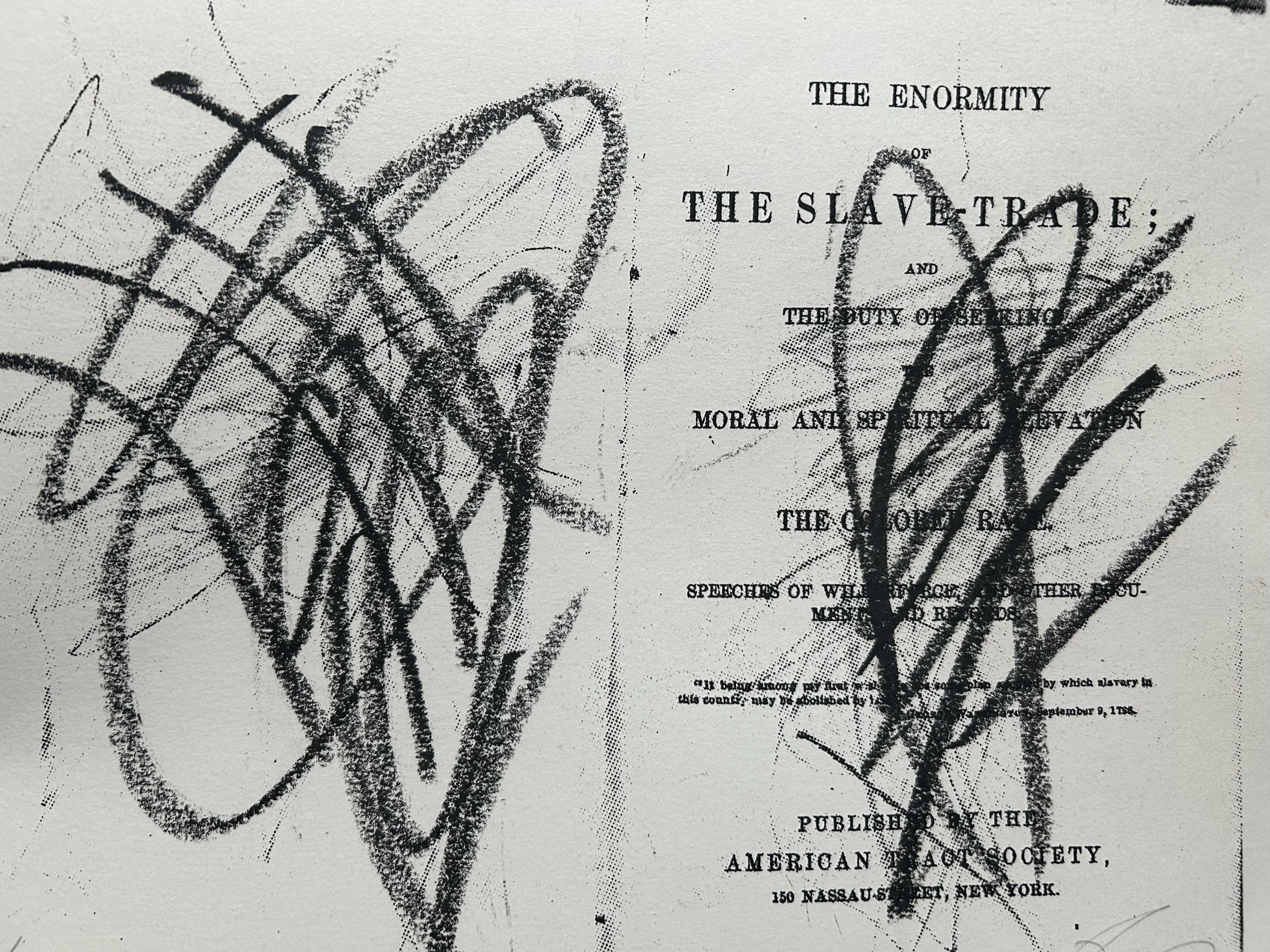
Following the exhibition’s successful run, Sneed is now hosting an online print sale based on one of the exhibited works. Currently up for sale are limited edition screen prints, all numbered and signed by the artist. As a variable edition, each print features a unique oil stick intervention (or a “disruption mark,” as Sneed calls them), meaning every work is individualized. The text serving as the prints’ foundation is appropriated from The Enormity of the Slave Trade, a vintage book of abolitionist text published in New York in 1846. The first iteration of these prints were displayed in Sacred and Profane, and are in the process of being acquired by the museum.
Limited Edition Print: $175.00 (+ $15 shipping)
Screen printed by Dugood Press (2026)
9 in. x 12 in. Edition of 50.
All proceeds go to the artist.